Dust kicks up on the dirt road as the milk truck rolls up to a dairy farm, ready to pick up raw milk for delivery to a local processing plant. But as the hauler meticulously hooks up his hose to the bulk tank and gathers milk samples, there’s often a few more things he must unload: farm supplies.Sometimes it’s a refill on I-Deal Barrier teat dip, others it’s a san spray rubber hose and a new bulk tank brush. Originating at the MMPA merchandise warehouse, members have access to a wide variety of farm supply products sold at a reduced cost.

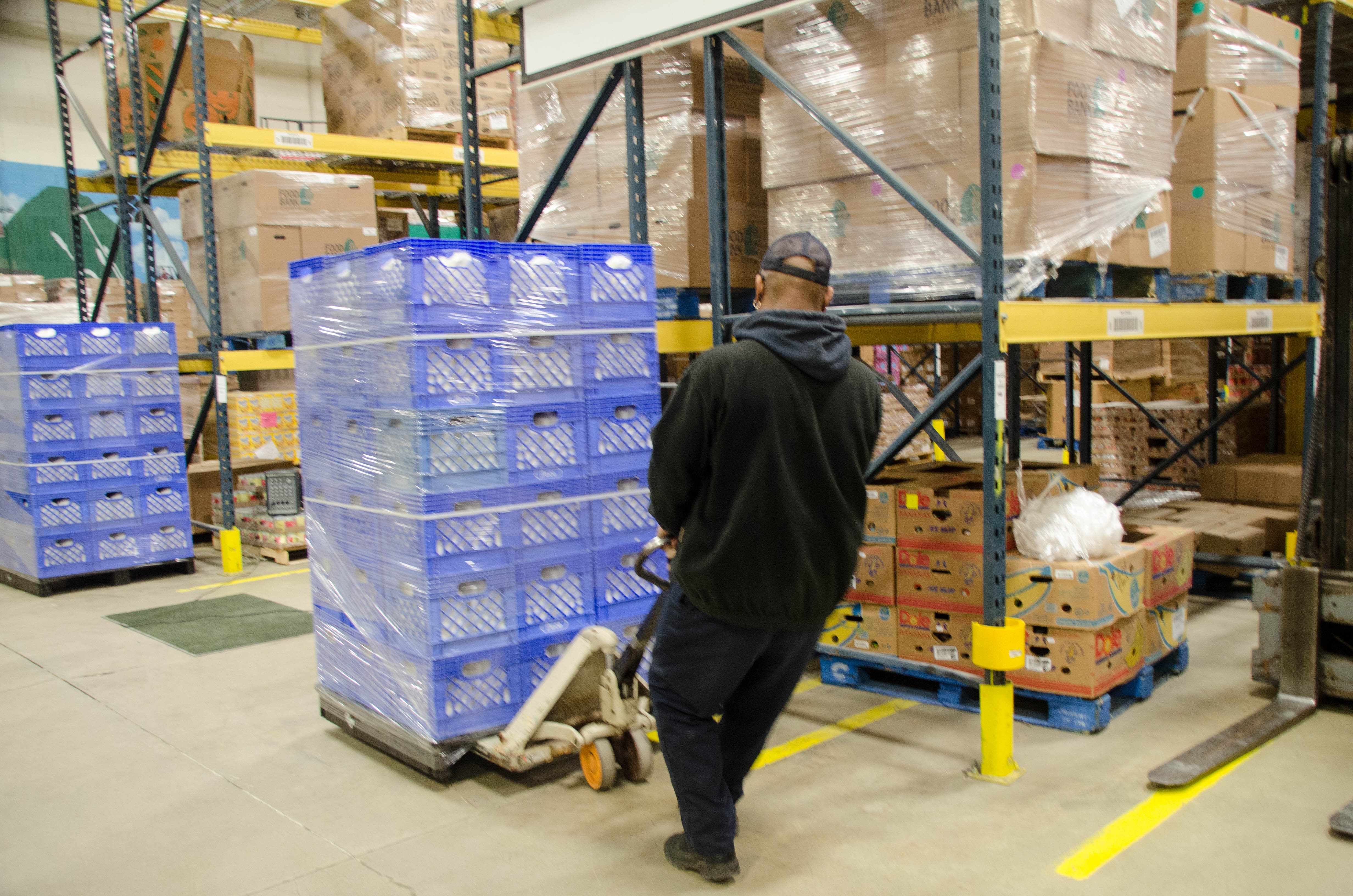
Midst rows of industrial shelving on concrete floor in Mt. Pleasant, Michigan, a team of four merchandise staff manage members orders, prep deliveries, mix teat dip and track the vast inventory. Orders disperse from the warehouse destined for MMPA farms by hauler delivery, direct shipping or member pick-up.

“It is a huge benefit for us to order supplies through our hauler. We don’t have to wait for a route delivery truck service to stop on a designated day and hope that they have what we need on the trailer. The merchandise program warehouse has pretty much everything we need here on our dairy,” remarked Casey Sparks of Hesperia, Michigan.

The merchandise program supplies many of the needs of MMPA’s farms, big and small, in Michigan, Indiana, Ohio and Wisconsin. Started in the early 1970’s, the merchandise program was added to help member farms have a consistent and reliable source for cleaning supplies and parts. It has since grown to add many product lines and options for members to order. Support from vendors is available for some products as well. Commitment to service, consistent quality, convenient delivery and comparable prices can all describe the MMPA merchandise program.

Commitment to Service

The merchandise program is a service for any MMPA member to provide them with products they may need to help a farm do what they do best: provide a clean, safe food while caring for their animals.

Punctuality is a priority for warehouse staff members to insure farms get what they need as soon as possible. Orders for parts not in the newly revised merchandise catalog may be ordered through vendors if not kept in stock. Staff work hard to provide great customer service to members and haulers helping them do their jobs.

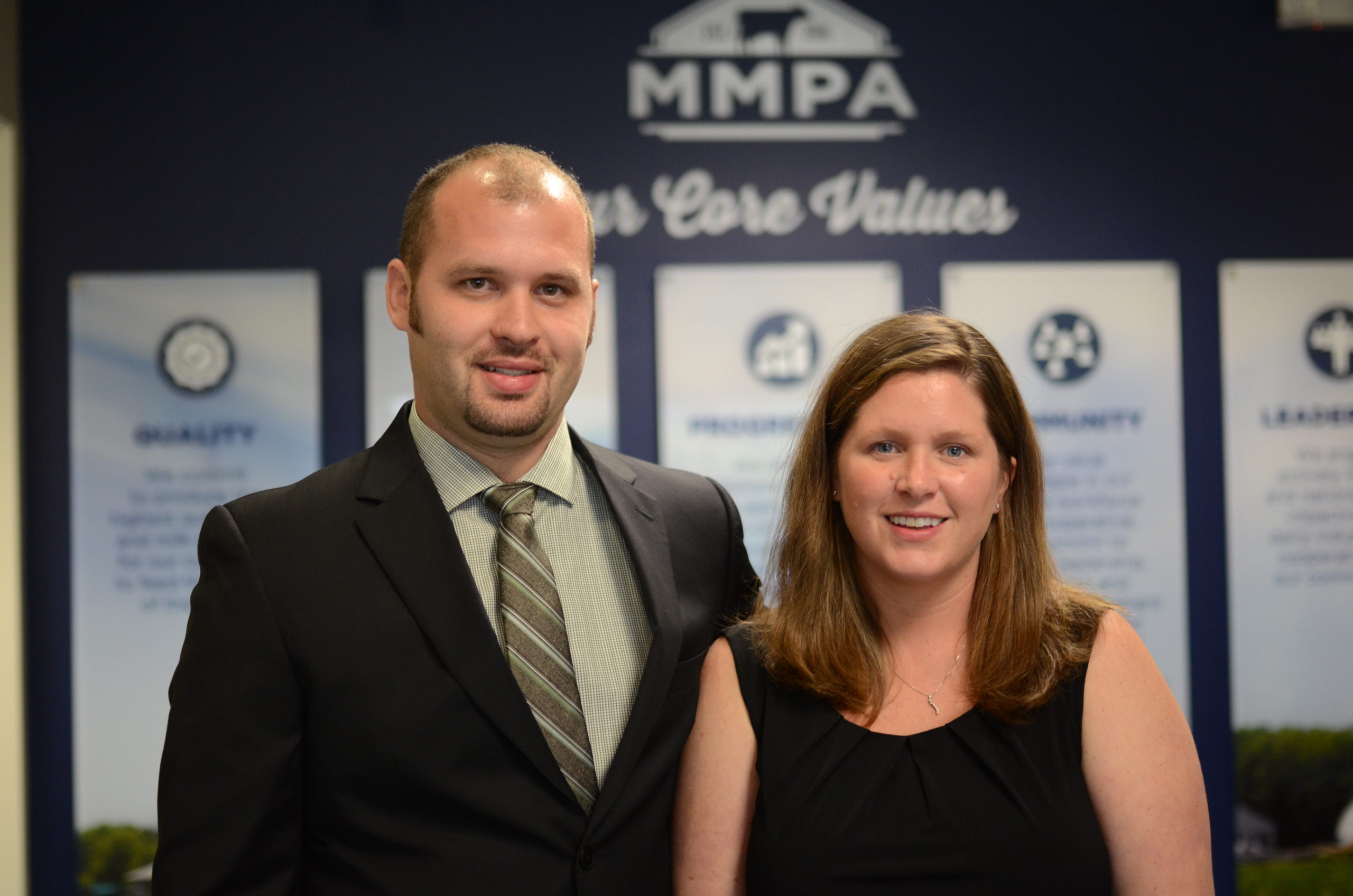
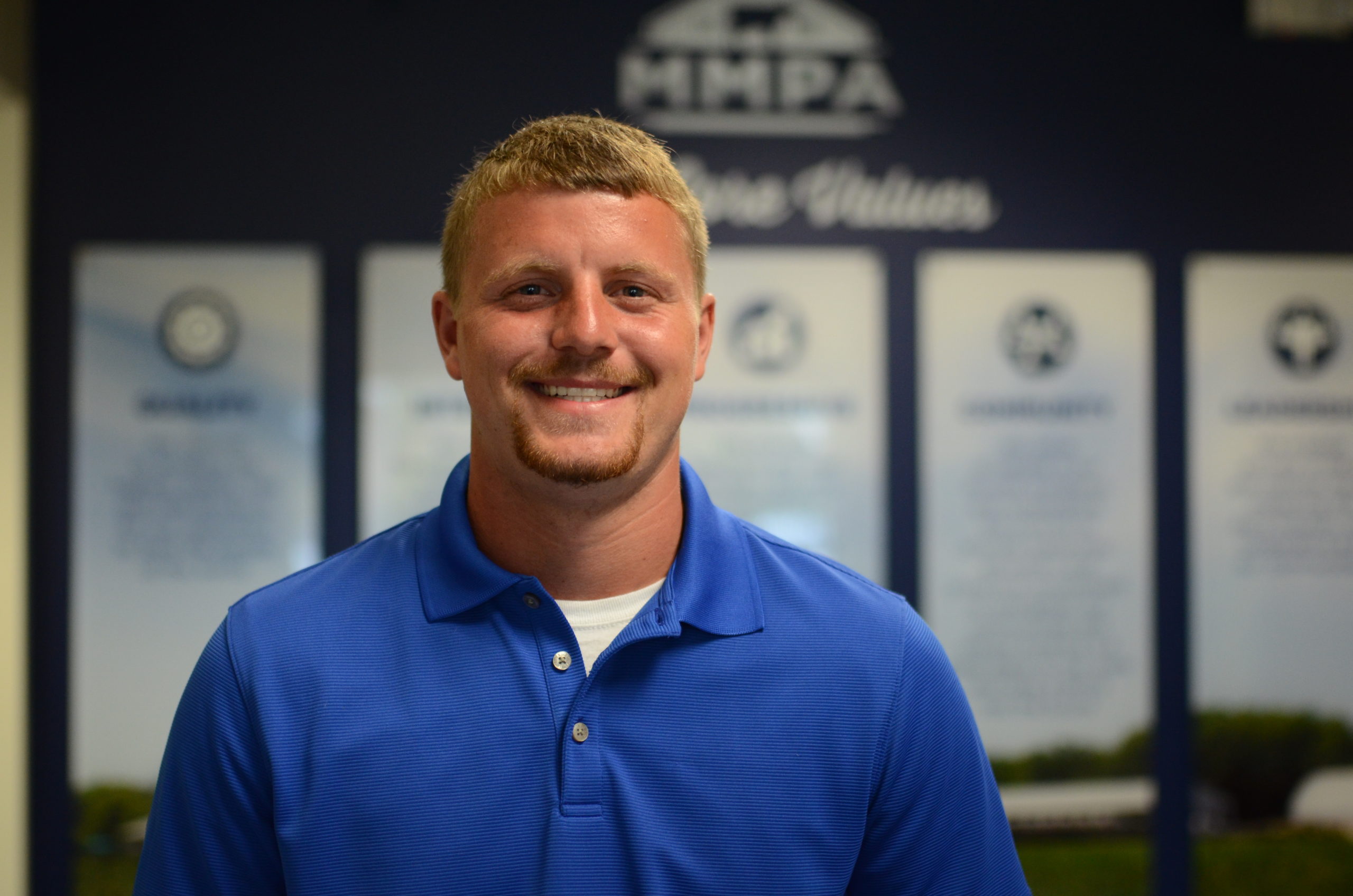
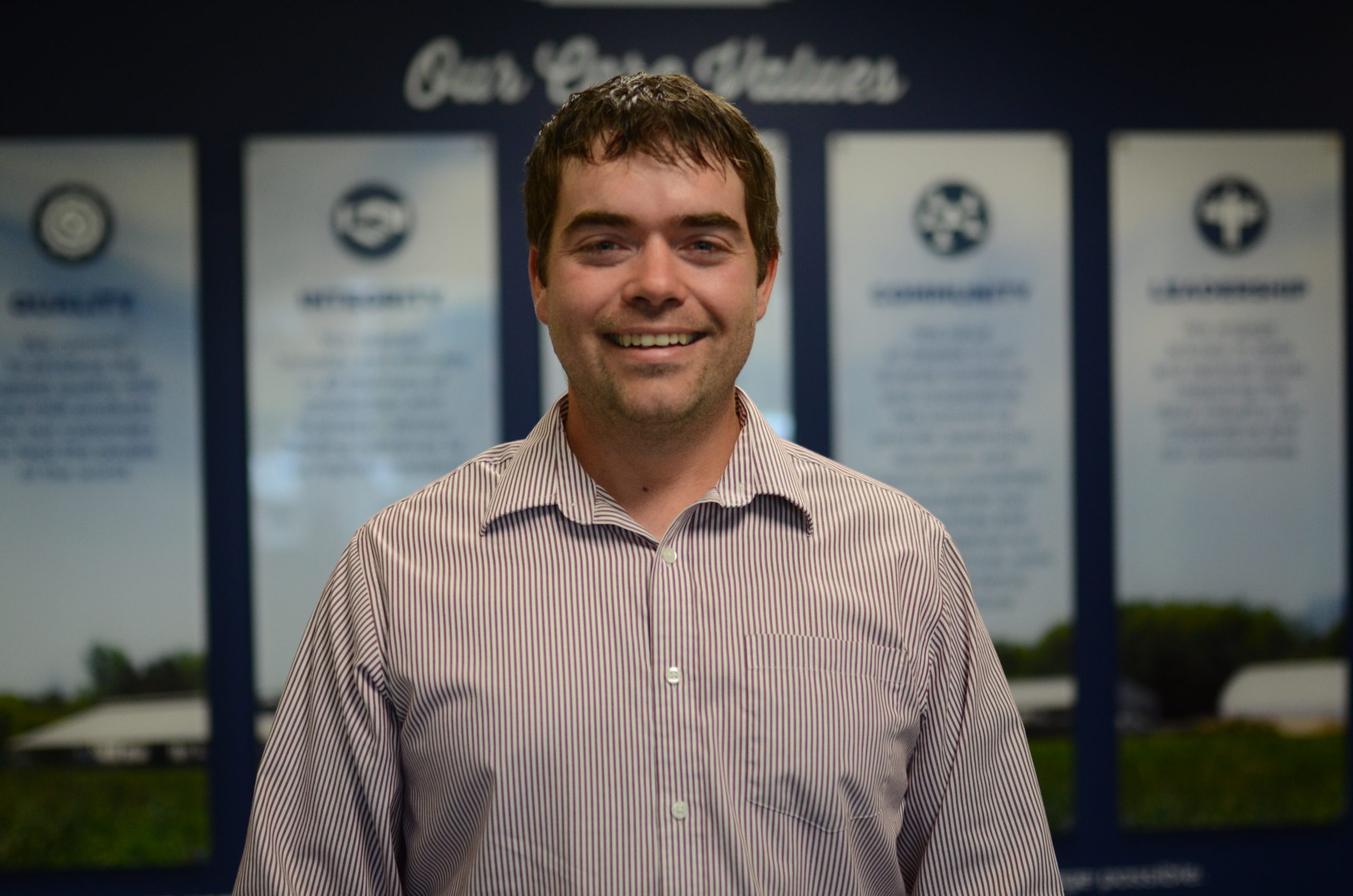
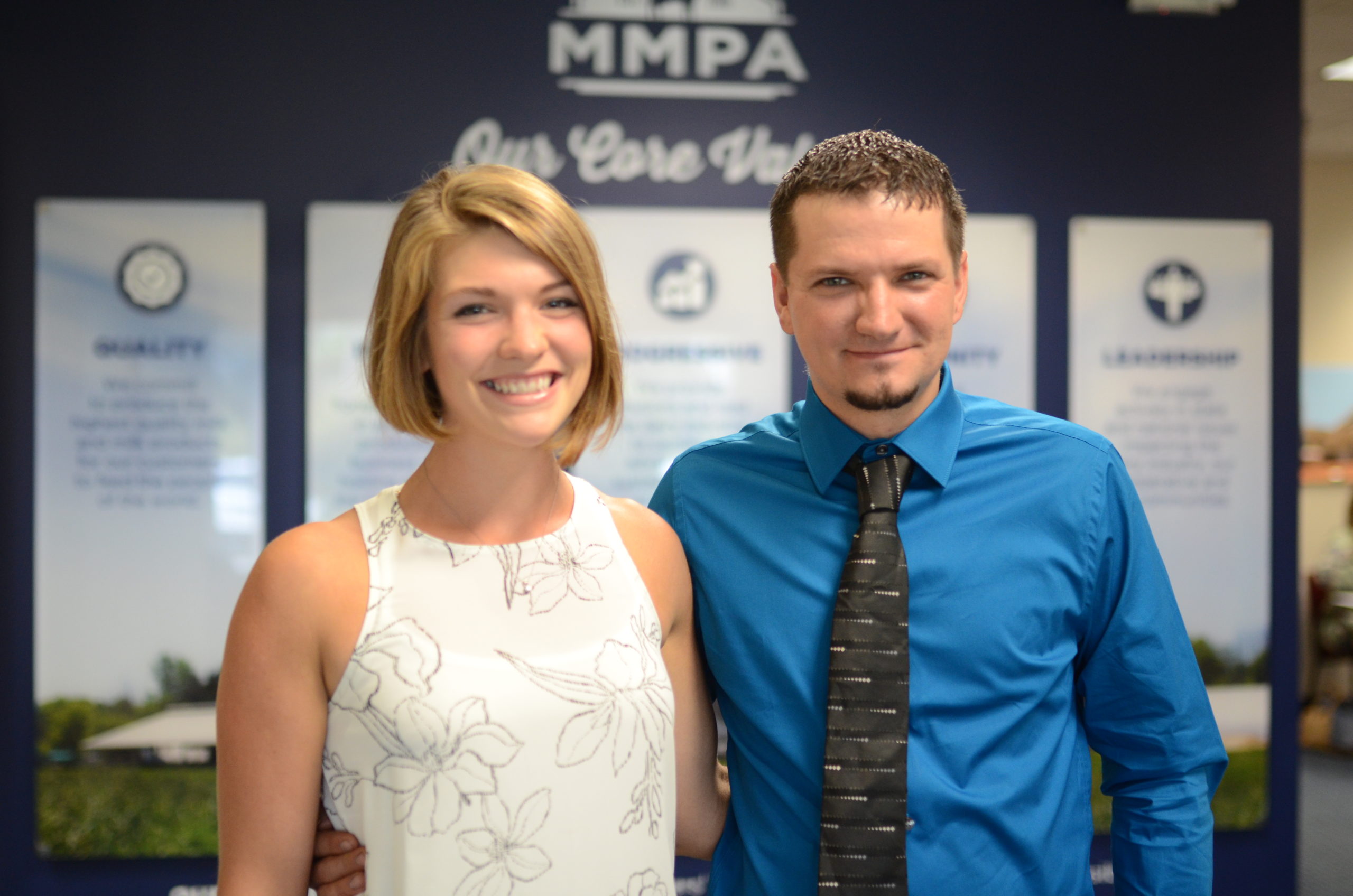
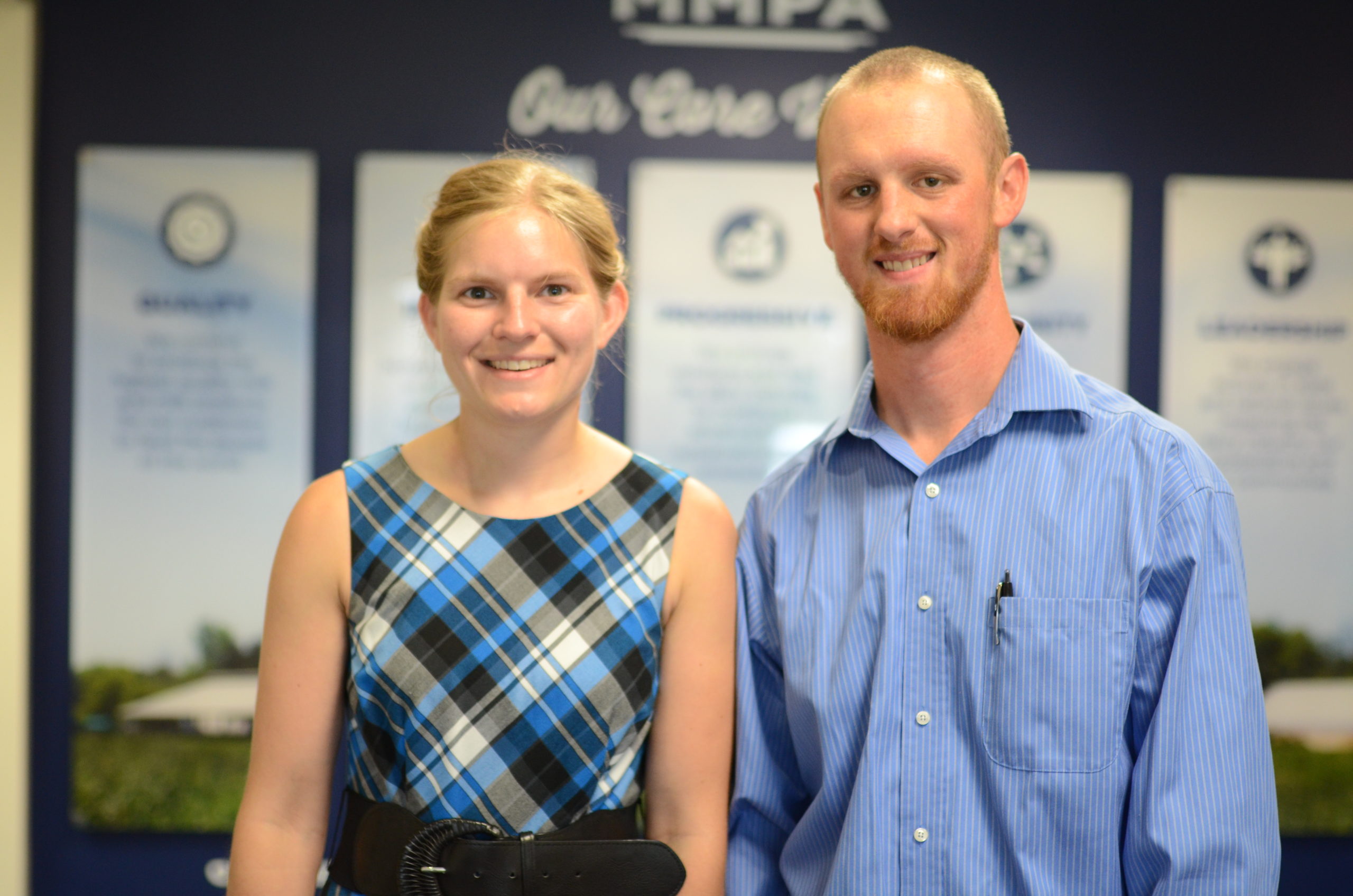
With only four merchandise supervisors throughout the long-standing program, it shows the commitment to providing quality and consistent service. Current team members Katie Pierson, Jake Riley, Joe Mishler and Duane Farmer have an average of 24 years of experience working with MMPA in a variety of positions from field representative to sample auditor among others.

“I enjoy working with members and their haulers to meet a farm’s needs. It is important to us to provide the right products for the job whether it is tank washer parts, towels for in the parlor or CIP detergent. One of my favorite parts of my job is when I am able to solve a problem for a farm while saving money,” said Pierson, merchandise coordinator and energy auditor.
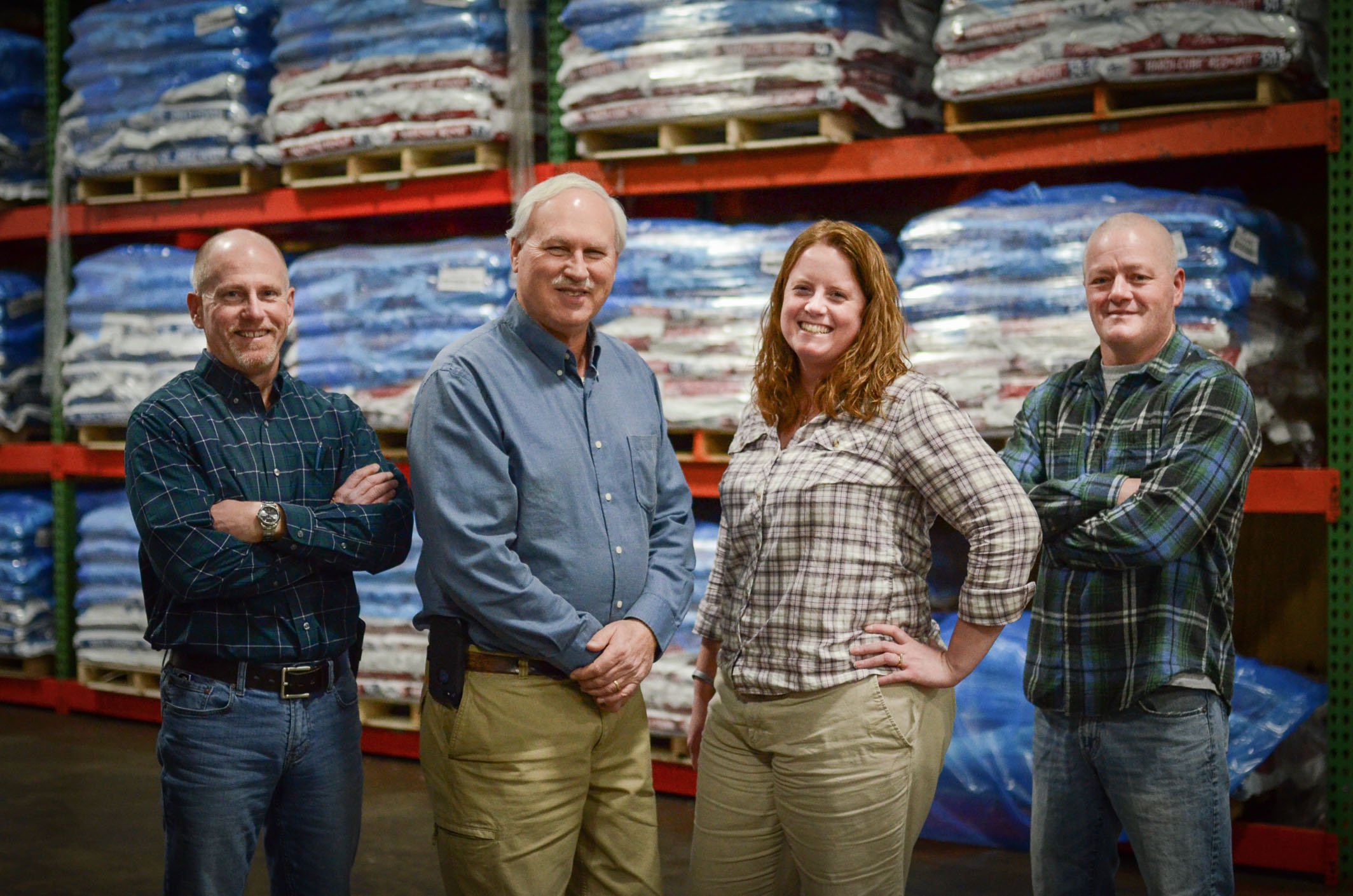
The dedicated team behind the MMPA merchandise program (left-right): Duane Farmer, Joe Mishler, Katie Pierson and Jake Riley.

Consistent Quality

“We work with our vendors to make sure we supply our farms with high quality, reliable products. Our team regularly assesses our product lineup to make sure we carry a wide variety to service our members,” shared Merchandise Supervisor Farmer. “Our goal is to provide the tools our farms need to produce
top quality milk.”

In addition to products stocked at the warehouse, members can take advantage of vendor-paired services. Land O’Lakes provides several milk replacer options for members, teams up with MMPA to provide calf care schools annually to members to share information and tips on calf rearing. Members also have access to EcoLab representatives to set up cleaning programs, trouble-shoot high count problems and preventative cleaning wash-ups for CIP (clean in place) systems. These vendor services can be facilitated with a simple phone call to the staff at the warehouse.

The program is designed to be self-sustaining in that at the end of the year, profits are returned as patronage to participating farms. “Prices can fluctuate a little throughout the year, but we work hard to receive the best rates from vendors so farms can receive products at reasonable prices,” added Farmer.

Convenient Delivery

After moving the warehouse from St. Louis, Michigan to its current location along the US-127 corridor in 2014, the merchandise team added a teat dip mixing system and increased inventory with the additional space. The new location, convenient for dispatching product deliveries, proved to be a more efficient facility and offers room for growth for the program in the future.

“Every time I call to make my order prior to the delivery date, I always find the merchandise people to be very helpful and knowledgeable about what they have. The new catalog has been a big help in ordering too,” mentioned Indiana farmer Nelson Frye. “My order always shows up on time and if I am low on something or I forgot to order something, they find a way to get it to me.”

The warehouse team also recently released a new and improved merchandise catalog for members. It provides a better look at what is available in stock in Mt. Pleasant with pictures and stock numbers for easier ordering. Farms can order from the catalog online, by fax, through their hauler or by calling the warehouse.

In addition to many haulers keeping merchandise inventory for easy delivery, farms may sign up for the direct delivery service. Deliveries can be scheduled for a few times a year up to every four weeks.

From the time the MMPA merchandise program takes an order until every last item makes its way to a member farm, the dedicated team behind the convenient program prides itself on consistent quality with a commitment to service.

–Krista Schrock

This article originally appeared in the March 2018 issue of the Michigan Milk Messenger.

Pre-dip. Massage for ten seconds. Move to the next cow in the set of four. Hurry back to the beginning to wipe the dip off and attach the milking unit within ninety seconds of starting.  Wait until cows are done milking and remove the unit. Don’t forget to post dip the teats. Repeat.

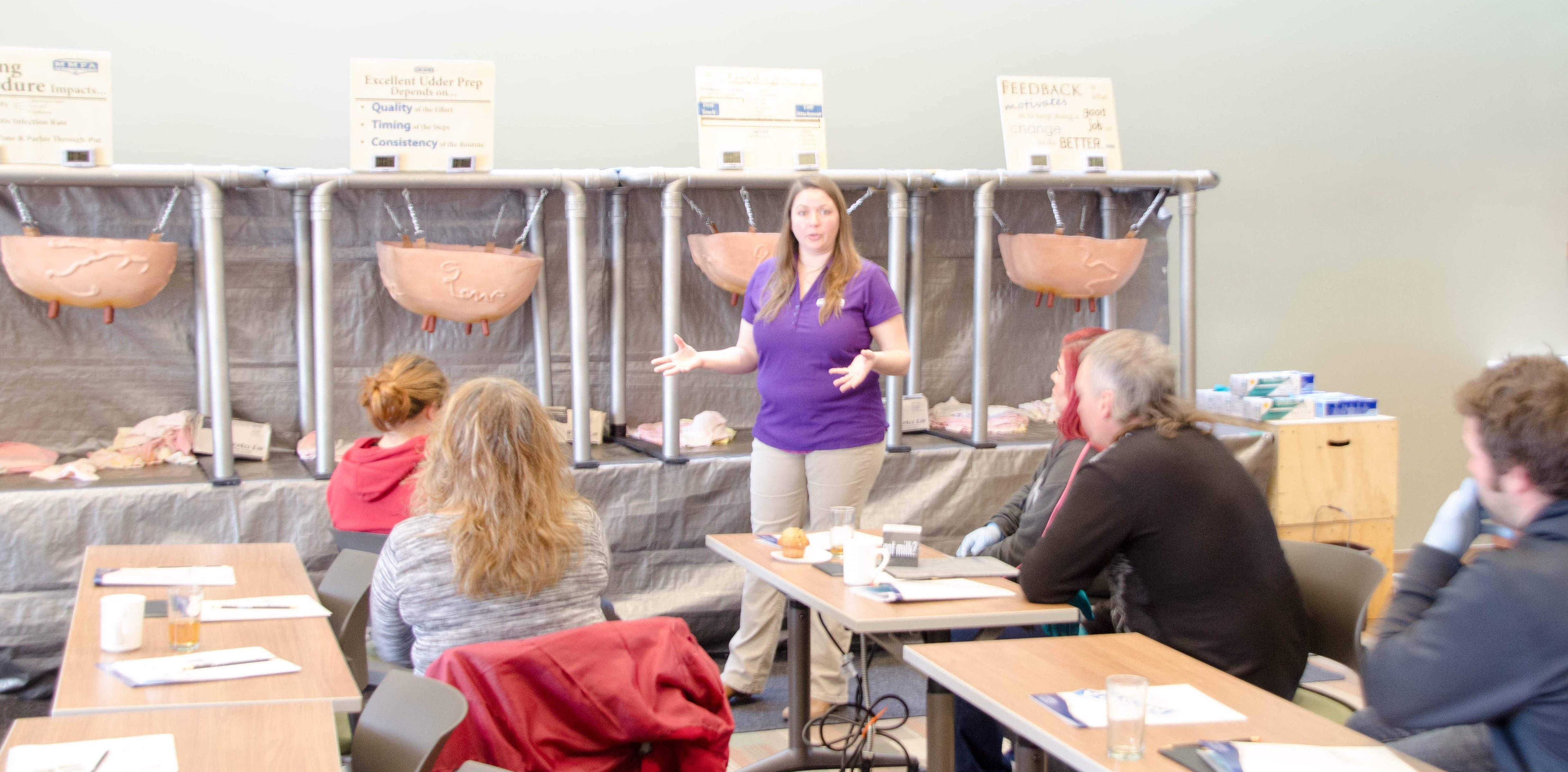
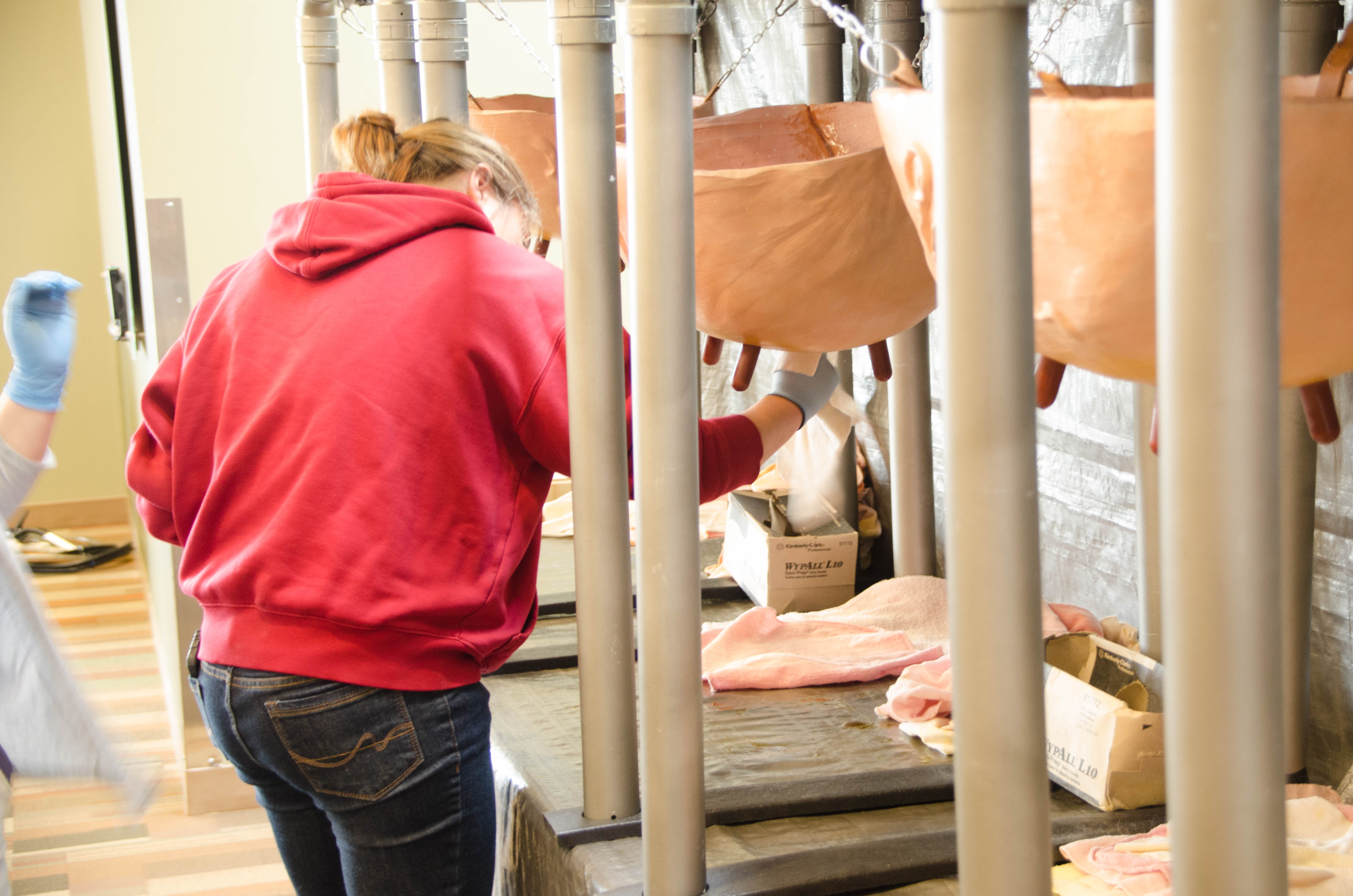
Following this routine step-by-step takes place every day on many MMPA member farms, as over 5,400 Milker Training School alum put into practice an MMPA recommended milking procedure. Milker Training School, a day-long training program that teaches participants how to milk a cow, demonstrates this procedure with practice on fake, but realistic udders in an infamous PVC pipe parlor.

The milker training school staff, including mastitis management specialist, Christy Dinsmoore, strive to reinforce proper procedures and prevent procedural drift from lowering quality on member farms.

“We focus on practical learning and hands on approaches to help make the information stick,” Dinsmoore said. “Our intent is trying to place the best tools in the milker’s hands to implement and improve.”

Christy Dinsmoore, MMPA northwest area supervisor and mastitis management specialist, leads many of the milking training school sessions.

The one-day training starts with a classroom style presentation in the morning followed by hands-on learning in the afternoon. The schools have evolved over the years, but the mission has stayed the same. The schools provide training to members and their employees to help improve the marketability of their milk. The trainings are designed for all skill levels, with topics including learning the basics of milking cows, getting a more in-depth look at mastitis—an infection in the udder—and a refresher for more experienced milkers.

“It is important for our employees to attend a milker training school because it is easy to get in the habit of cutting corners in the parlor over time,” Katelyn Packard, MMPA member in Manchester, Michigan, described about maintaining consistency in milking procedure. “The schools also offer good information on what mastitis is and why prevention is so important.”

Milker training school can trace its roots back to 1997, when now retired member representatives, Tom Herremans and Gill Johnson, were challenged by the board of directors to offer a new service to members with a class on how to properly milk cows. Their goals were to teach farmers tools to lower SCC, understand the concepts behind mastitis management and achieve their milk quality goals.

“With high employee turnover, there is always a need for retraining on farms. I loved seeing the willingness to learn and dispelling the misconceptions people had about milking cows,” recalled Herremans.

Some members find the training beneficial to managing employees. “Our farm appreciates the depth of information given throughout the day and touching on other topics such as animal care and what tools are available through the co-op merchandise program,” Packard added.

“It is very helpful, especially for our new employees, to hear what mastitis is and tips on how to prevent and detect it from someone other than their boss. They are able to ask questions as they think of them in the small group setting without the intimidation that may come from large classrooms,” explained producer Jeremy Beebe of Whittmore, Michigan.

“Having a refresher for our long time milkers is vital to reminding everyone the importance of our procedure to make quality milk. Practicing in the PVC parlor with the ceramic udders is a great teaching tool for people who will be tweaking their routine before milking real cows,” Beebe continued.

In addition to the knowledge gained and the practice in the PVC parlor, students go home with a copy of the presentation and a better understanding of what mastitis management services are available through MMPA. Basic standard operating procedures for tasks like using a California Mastitis Test (CMT) and sending a cow milk sample into the lab for SCC and culture results are available to attendees as well.

Many of the handouts and protocols accessible through the training schools are translated into Spanish for convenience. These can be obtained through a farm’s member representative or by attending a school. Also, Spanish translated classes are available upon request.

While having the same objectives, on-farm schools have a different format. The presentation is shorter and more focused toward the farm’s needs. They are geared for larger farms with employees in charge of milking. Milkers practice the routine in the parlor during milking time instead on the practice udders used at the formal schools.

“With this type of training, we can focus more on the individual farm’s milking routine so everyone receives the same message,” said Lyndsay Earl, a member representative and milker training school team member. “The dedication to the follow up and enforcement of farm’s milking routine from the farm manager is key to a successful training process and consistent experience for the cows.”

Farms can meet their quality goals with the knowledge and tools provided at milker training school. Using the MMPA recommended procedure helps make sure the cows have the same experience at every milking. “Timing and consistency can make or break a milking routine,” asserts Dinsmoore.

–Krista Schrock

This article was originally published in the February 2018 issue of the Michigan Milk Messenger

Download MTS flyer

As the NCAA Men’s Basketball season begins with courts across the country filled with athletes who have been awarded thousands of dollars in scholarship money to play basketball, dairy industry minded students are gearing up to compete for scholarships offered by one of the largest scholarship programs in the MSU College of Agriculture and Natural Resources. The Michigan Dairy Memorial and Scholarship Foundation (MDMSF) was founded by a group of visionaries who wanted to provide scholarship funds to students interested in dairy science. Now marking its 60th anniversary, the program continues to award deserving students who are planning on pursuing a career in the dairy industry after graduation.

Dr. Miriam Weber Nielson, MSU Department of Animal Science and Secretary of MDMSF Board of Directors, explained that the Foundation has awarded more than $1.5 million in scholarships to young people aspiring to careers in the dairy industry. She commented, “With more than 1,000 donors, the foundation has provided a visible way for individuals and organizations to recognize with monetary gifts the work of their colleagues and friends in the industry, while strengthening the future of the industry.”

“Gifts to the MDMSF are used to grow the endowment fund with interest from the principal used to create scholarships and support learning experiences for our students in dairy science,” Nielson commented.

When donations are made to the foundation they are recognized in one of two ways: Foundation honorees and named scholarships. Foundation honorees are named when $1,000 or more is given to recognize a dairy leader, that individual will become a MDMSF Honoree and is recognized by a plaque with the Honoree’s picture permanently installed in the MSU Livestock Pavilion and the Honoree’s name permanently inscribed on a plaque in Anthony Hall.

Named scholarships may be named for an individual or organization with a minimum gift of $50,000. A named scholarship is awarded as part of the MDMSF program and carries the name of the individual or organization that provides the funds.

Nielson feels it’s the best of both worlds, “What a great way to recognize deserving individuals in the industry, and at the same time support and encourage the young people who are the future of the industry!”

Sheila Burkhardt, MMPA Sr. Director of Member and Government Relations, was a young agriculture communications student at MSU when she was awarded a MDMSF scholarship.

“I greatly appreciated receiving the scholarship when I was a student at MSU,” she said. “The scholarship meant a lot to me not only financially but knowing the Foundation made the commitment to me and my education influenced my decision to be involved in the dairy industry after college.”

Burkhardt continued, “It is pretty amazing the number of students who have benefited from the MDMSF scholarships over the years and the many different career paths those students have pursued.”

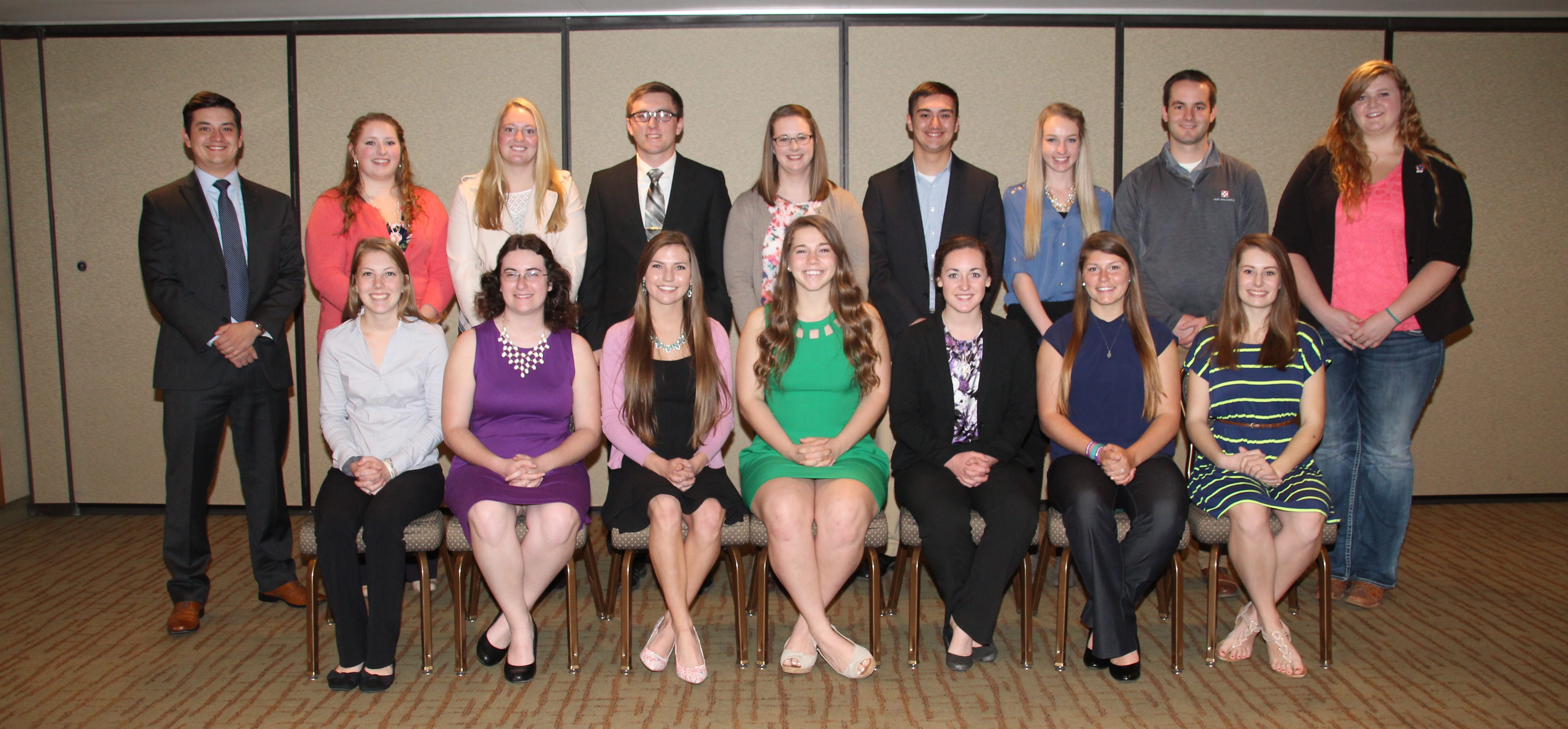
Recipients of 2016-17 Michigan Dairy Memorial and Scholarship Foundation (MDMSF) scholarships attended the 2017 MDMSF annual meeting to express appreciation to the MDMSF board for their scholarship awards. Pictured (standing) left to right are: Ethan Haywood, Evelyn Okkema, Kelly Raterink, Jared Sanderson, Stephanie Weil, Austin Haywood, Hailey Sharrard, Jorin Ouwinga, and Shelby Berens. Pictured seated left to right are: Ellen Launstein, Allison Schafer, Leta Larsen, Madeline Meyer, Marin Western, Alycia Burch, and Natalie Horning. Not pictured: Emma Blough.

Growing up on a dairy farm, Brian Troyer found his way to MSU and found a vast array of career choices when he chose dairy science as his area of interest. As the President of the MDMSF Board of Directors and recipient of the scholarship in the early 1980s, Troyer knows the value of these scholarships, “That scholarship helped me pay the bills while I was in college. I was able to reap the full benefit of what college had to offer as an undergrad at MSU and today I feel it’s vitally important to invest in the youth of our industry if we are going to thrive.”

The MDMSF is more than just a vehicle for funds for students at MSU, Nielson commented, “The Foundation, and the people and organizations who contribute to it, have encouraged and supported the education of several generations of members of our Michigan dairy industry.”

She continued, “Through generous contributions, donors have recognized the accomplishments of over 200 individuals, outstanding in various professions in the dairy industry, as Foundation Honorees. The Foundation is a great way to celebrate the accomplishments of people from all segments of our industry, something that we usually don’t do often enough! There are so many great stories to tell right here in Michigan.”

The future of the dairy industry is under constant scrutiny and youth are a vital resource for future success. According to Nielson, MSU students interested in dairy are exceptional, “They stand out as being passionate, hard-working and willing to put in extra effort when needed to help others. More so than our average student in the Animal Science department, they seem resilient, focused and determined to find their niche.”

Nielson is proud of the outstanding team work and generous support of time and money from the industry that has fueled the growth in the dairy program at MSU. She concluded, “In addition to the Foundation’s scholarships, the industry support of our programs, even in very difficult times, distinguishes MSU from many other universities in what we can offer our students. With that type of leadership, teamwork and can-do attitude in our industry as well as our young people, I’m confident that the future of our Michigan dairy industry is bright and full of new opportunities.”

–Melissa Hart

This article originally appeared in the December issue of the Michigan Milk Messenger. 
As a combat engineer in Iraq, Mike O’Farrell spent his days scanning the roads looking for Improvised Explosive Devices (IED) serving the United States military to keep his fellow soldiers safe. Today, instead of hearing bombs explode, O’Farrell listens to noisy calves at feeding time and monitors calm cows meandering through the barn to be milked by robots.

MMPA members, O’Farrell and his wife Abbie, manage their family farm in West Branch, Michigan, where they milk 115 cows with two robotic milking units. O’Farrell also serves as the Vice President of the Michigan Chapter of the Farmer Veteran Coalition (FVC), a national organization whose mission is to mobilize military veterans to feed America.

FVC strives to cultivate a new generation of farmers and food leaders and developing viable employment and meaningful careers through the collaboration of farming and military communities. They believe that veterans possess the unique skills and character needed to strengthen rural communities and create sustainable food systems. The FVC also believes that agriculture offers purpose, opportunity and physical and psychological benefits to the veterans as well.

“As a veteran, I’ve learned that farming gives you your space and gives you the chance to be out in the open and it’s a slower lifestyle but it also keeps you busy, there is always something to do,” O’Farrell commented.

One of the ways he processed his experiences in Iraq was facing the challenges of a dairy farm and being able to stay busy, not dwelling on the past. “Being on the farm has helped me to move on. I believe in hitting challenges head on,” he revealed.

O’Farrell joined the FVC after being asked to serve on the board of directors and commented that the Michigan chapter is a fairly new organization and they are now developing educational programs to help the farmer/veterans get started in their businesses. “It’s quite a diverse group of farmers, they aren’t just dairy farmers, but we have sheep farmers and vegetable growers. It’s a huge array of people involved,” O’Farrell said.

In November 2006, William O’Hare and Bill Bishop of the University of New Hampshire’s Carsey Institute published a report showing that “rural families are paying a disproportionately high price for the wars in Iraq and Afghanistan.” A study confirmed for the first time what many already knew—ever increasing numbers of those enlisted in the US military had their roots in rural America.

The FVC was formed in 2007 when a California farmer, Michael O’Gorman, organized a meeting for farmers in California’s Central Coast to talk about creating jobs on their farms for returning veterans. The idea of opening up their farms to veterans appealed to those in attendance and the Farmer Veteran Coalition was born.

According to the Farmer Veteran Coalition’s website, over the next year, the small group of volunteers searched the country for other organizations with similar missions. Of 40,000 groups organized to help veterans nationwide, they could not find one with the mission of introducing veterans to agriculture and none that addressed the new dynamic that the military would be returning, in large numbers, to small towns across the country, far from the services available to veterans in more populous areas, and just as far, sometimes, from the type of career and lifestyle the veterans they worked with were wanting to pursue.

FVC provides educational programming and fellowship funding for veterans in the beginning years of farming or ranching.

Another program offered is the Homegrown By Heroes (HBH) program. HBH is the official farmer veteran branding program of America. The HBH logo serves to inform consumers that products donning the logo were produced by military veterans. The program is available to farmers, ranchers, fishermen, and value-added producers of all branches and eras of military service.

“One of the things we would like to see with FVC is partnering retired farmers with younger veterans who want to get into farming. I believe this kind of mentoring would be very valuable,” O’Farrell explained.

“I stumbled upon farming to help me cope and work through basic challenges and I believe if we teach people about this organization, we can help a lot of people who can benefit from being in agriculture,” O’Farrell concluded.

–Melissa Hart


Membership to the FVC is open to everyone, not just veterans. To find out more about the Farmer Veteran Coalition and their annual meeting in December please visit www.farmvetco.org. Details can be found at facebook.com/farmvetcoMI/ or by emailing Michigan@nullfarmvetco.org.

This article originally appeared in the November issue of the Michigan Milk Messenger. 
“A is for Alfalfa. B is for Bottle. C is for Calf.” It’s the ABCs of a dairy farm.

While dairy farmers are experts in their field—literally—and know these ABCs by heart, outside the agriculture sphere, these concepts aren’t as familiar to all. Enter Rebekah Rubingh, MMPA member dairy farmer and former elementary school teacher, who set out to provide education on dairy farming to children with A Dairy Farm ABC Book.

Rubingh
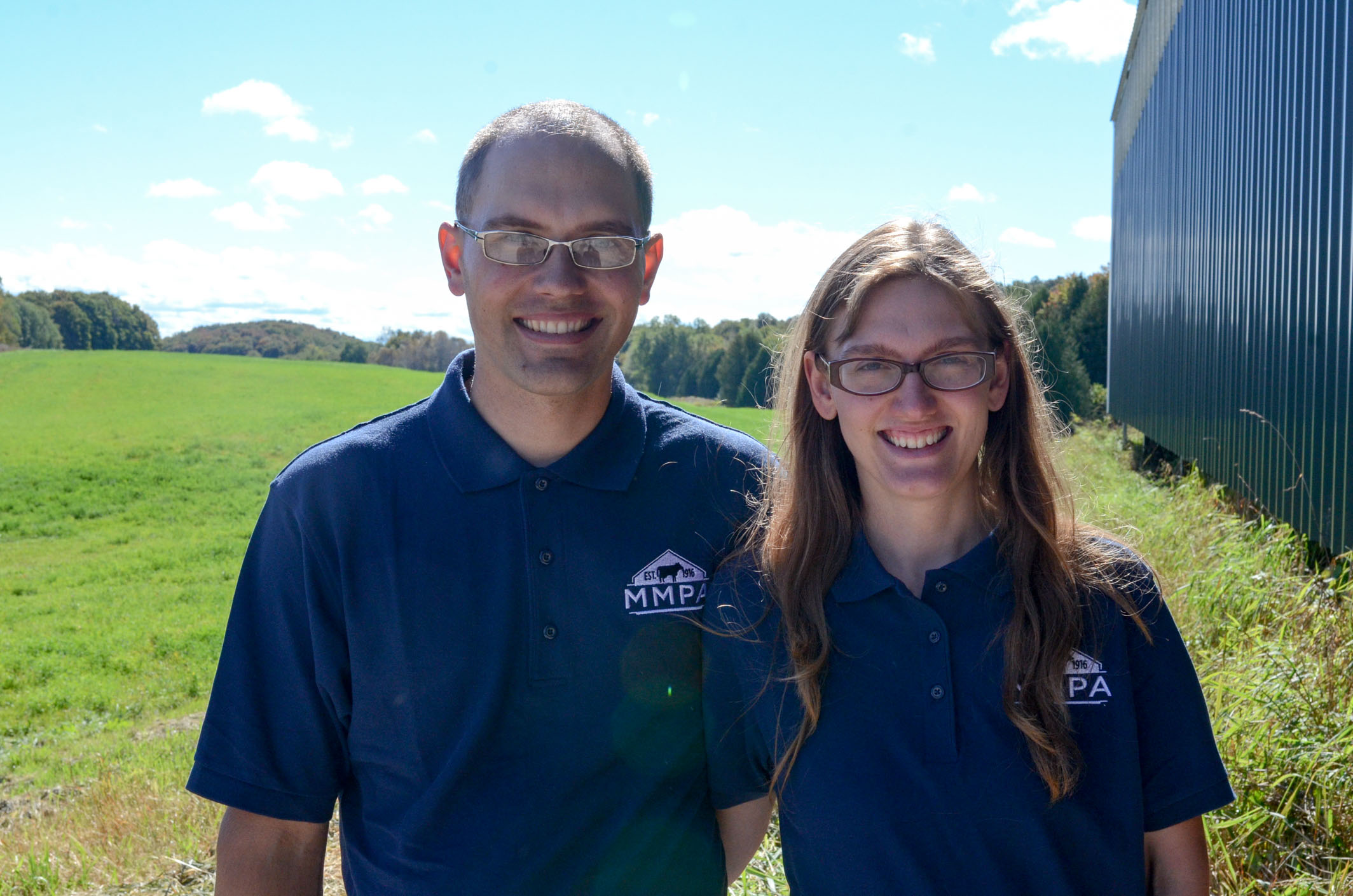
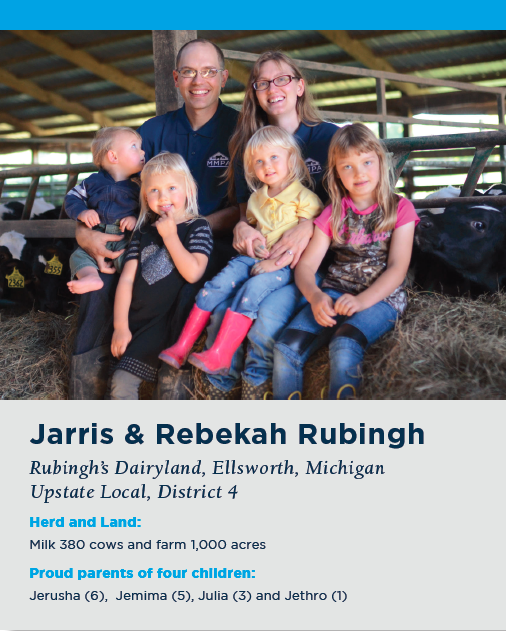
Jarris and Rebekah Rubingh, MMPA 2017 OYDC Runners-Up

Flip through the pages of the book and you’ll see photos of silos and tractors, dip cups and ear tags, all showing scenes of Rubingh’s Dairyland and the Rubingh family. The 350-cow dairy is managed in part by Rebekah’s husband, Jarris, the fifth generation on the farm. Recently Rebekah and Jarris were recognized by MMPA as the 2017 Outstanding Young Dairy Cooperators (OYDC) Runners-Up for their on-farm accomplishments and leadership.

A budding photographer, Rebekah says she started the ABC book to put many of her photos of the farm to use. So, she put together a Christmas book for personal enjoyment. “I took it to the farm to show dad. Dad said, ‘this is good, you need to get this published,’” she recalled. Funding from the MMPA Upstate Local allowed her to publish the book and it is now sold in bookstores, available in libraries and shared in classrooms.

“Jarris gave me ideas for the letters like q and z,” she explained. Thanks to Jarris, Q became “quality” and Z became “Zip,” the name of one of their bull calves.

Though a published book about dairy under her belt may suggest otherwise, when Rebekah first met Jarris, she wasn’t exactly a seasoned dairy farmer. “Completely lost,” as she put it. Jarris, on the other hand, has lived and breathed dairy all his life. Their marriage in 2009 brought her up to the family’s dairy farm in Ellsworth, Michigan.

The couple manages two locations down the road from the main farm, raising young stock and overseeing cropping. Jarris returned to the farm after graduating with a degree in agriculture business from Dordt College in Iowa. In completing his senior research project, he observed other farms’ milking routines and brought back ideas to his farm to standardize procedures.

Overall, the Rubingh’s focus is on continually improving their farm and the product they produce: milk. “My product must be good enough for me and my family before I can sell it to anyone else,” Jarris asserted.

In 2016, the farm was one of only 38 MMPA farms to earn a gold quality award. To achieve a gold award, farmers must maintain low bacteria counts for the entire year, including keeping somatic cell count lower than 100,000 for the entire MMPA fiscal year. In the last five years, Rubingh’s Dairyland achieved two silvers and two bronzes before attaining the top award.

“Our milk quality is the result of a team approach,” Jarris said. “From nutrition to genetics to high quality feed to milking procedures, a lot of factors go into achieving high quality.”

The genetics side is where Jarris makes his mark. He and his brother Daren work to improve genetics of the herd of registered Holsteins by performing genomic testing. The testing provides predictions about the capabilities of the bull’s children, including health, production yield, calving and type traits.

“We have primarily used genomic proven bulls in the last 5-10 years. Today we have 23 cows in the top 1 percent in the nation as far as genetics go. Plus, 50 percent of our herd is in the top 20 percent of the nation genetically,” he relayed.

The farm’s breeding program centers around maximizing butterfat and protein components in their herd’s milk. The milk their high performing cows produce averages 4.1 percent butterfat and 3.2 percent protein, with an average production of 76 pounds of milk per day. “Not many herds are that high,” says Jarris.

Rebekah enjoys naming these high performing cows upon birth to stretch her creativity. She readily named off a few of her favorites. There’s Twist, Oreo and Chocolate. Plus, Othello, Desdemona, Hercules and even Runaway for the calf always looking to escape.

Looking ahead, Jarris and Rebekah have a goal of taking over the farm in the next ten years and be profitable enough that any member of the family can be involved if they chose to be. For now, they enjoy their role as dairy farmers. “The best part of being a dairy farmer is working outside and being close to my family every day,” Jarris admits.

Rebekah, a graduate from Cornerstone University with a degree in elementary education, enjoys the farm for the opportunity to continually learn and use her skills to promote the dairy industry. She works hard alongside Jarris on the farm while also homeschooling the sixth generation and dreaming up plans for book number two.

The couple is involved in Michigan Farm Bureau, with Jarris as the current president of Antrim County and Rebekah participating in discussion meets and the promotion and education committee. In 2014, Rebekah was named the Michigan Farm Bureau Agriculture Promoter of the Year. Rebekah is also an MMPA dairy communicator.

Rebekah, with the help of Jarris, penned the ABCs of dairy farming all the way to the XYZ. But for the farm and life of our 2017 OYDC Runners-up, the future is still unwritten.

“X is for extra special care. Y is for yellow cornstalks. Z is for Zip.”

–Allison Stuby Miller

This article originally appeared in the November issue of the Michigan Milk Messenger. 

Selection for the 2018 Outstanding Young Dairy Cooperator program begins this winter during local meetings. If you are interested in participating in the program, contact your local.

Learn more

Co-op month

Hoard’s Dairyman made a prediction in 1916 and 101 years later that prediction is still coming true.

After attending the very first MMPA cooperative collaboration of nearly 400 of Michigan’s dairy producers, Hoard’s Dairyman reported, “If the temper of the milk producers present at this meeting is evidence of the feeling existing generally among their neighbors, we believe the new organization will grow in strength and its members (will) stand shoulder to shoulder in the cooperative endeavor.”

Today, MMPA is steamrolling forward with the primary goal of marketing members milk to the greatest advantage possible. Standing shoulder to shoulder in 2017, MMPA celebrates October as Cooperative Month and strives to be the quintessential reflection of the 2017 theme: Co-ops Commit.

While the cooperative birthing process produced a vibrant association filled with passionate members willing to work hard for the good of everyone, it was hardly pain free. The creation of MMPA brought criticism, distrust and doubt as skeptics called for new leadership of the cooperative and wanted the bylaws amended to a more simplified form. In the 1930’s, meetings were held by farmer groups around the state of Michigan and MMPA was the punching bag for the frustration of low milk prices and high feed costs.

But the leadership stood committed.

MMPA President Hull encouraged the members to stand committed with him, as they faced lower milk prices and higher input costs and this was just the beginning of the Great Depression.  Morale was low in every industry but as a committed leader of the co-op system he gave the producers a pep talk as they concluded a delegate meeting in October of 1931:

“I have tried to lay before you the absolute truth of the situation as it prevails at the present time. These are dreadful times, but we are going to come out of them. Let us be wise and prayerful and try to bring agriculture out of these times in the best way we can and in doing that we will have done our duty as men, and that is all that angels can do.”

The cooperative commitment that MMPA has shown over the past 100 years has led to a full slate of benefits to the membership. MMPA does not have to answer to outside shareholders but can focus on meeting their member’s needs. The MMPA co-op is also a reflection of a democracy in action.  They are uniquely controlled by a board of directors, elected from the ranks of the membership and they hire and direct the management and are ultimately responsible to the members. With this kind of structure, commitment to the membership is paramount and is a natural by-product of a solid cooperative.

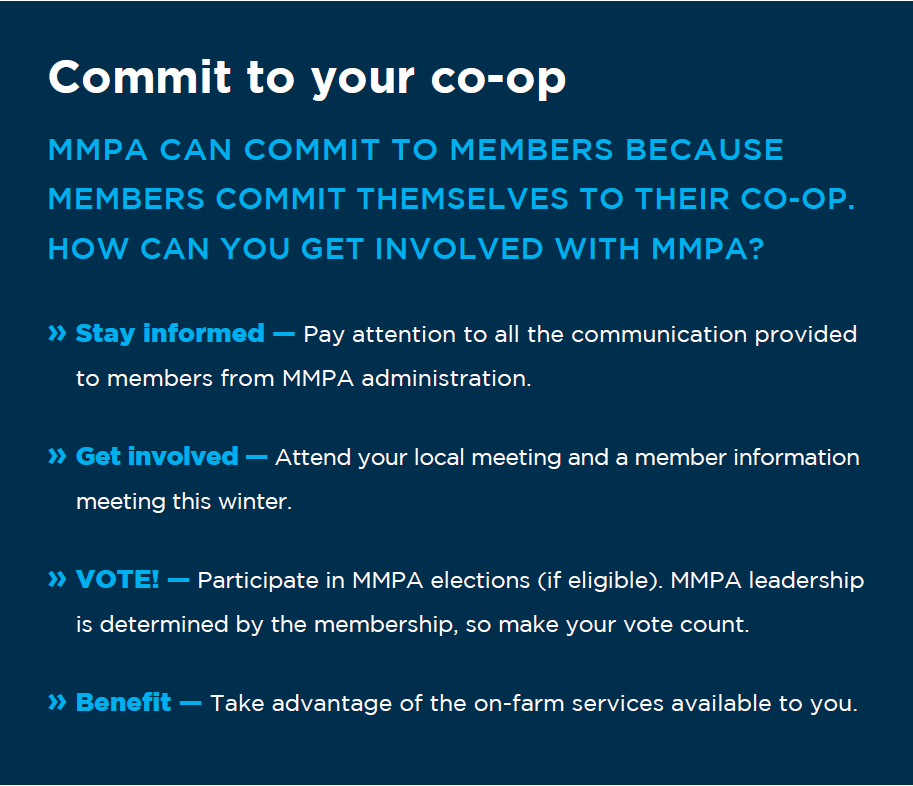
commit to your co-op

MMPA has taken it further than just marketing milk. They have expanded their vision to offer their membership several programs to meet their business goals. From a FDA certified laboratory to energy audits to herd health assistance to equipment evaluation to training, the member services team is providing on-farm support with a goal of putting members first.

On farm management is crucial for a successful dairy, but MMPA allows for personal growth among their members as well. Pride in ownership, responsibility in leadership, accountability in stewardship are all characteristics that are honed as a result of being a member of a co-op like MMPA.

The success of MMPA through the years has been driven by an informed and engaged membership. MMPA provides leadership opportunities for members—starting with youth development programs all the way up to the MMPA board of directors. Programs include leadership positions at the local, district and state levels, the 4-H Milk Marketing Tour, scholarships, Outstanding Young Dairy Cooperator program and the Dairy Communicator program. Further, MMPA advocates on behalf of members to legislators and runs the Michigan Milk Political Action Committee.

From the responsibility of being on the board of directors to promoting milk at the local public school to donating thousands of gallons of milk to a nutritionally deficient and impoverish city, members are called to grow, manage and give as they receive a reliable milk market for their high-quality product. A century of commitment produces a century of success.

What does a co-op commitment look like? MMPA: One hundred years and still going strong.

–Melissa Hart

This article was originally published in the October issue of the Michigan Milk Messenger

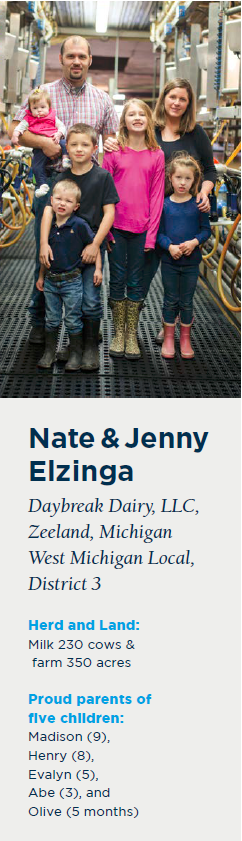
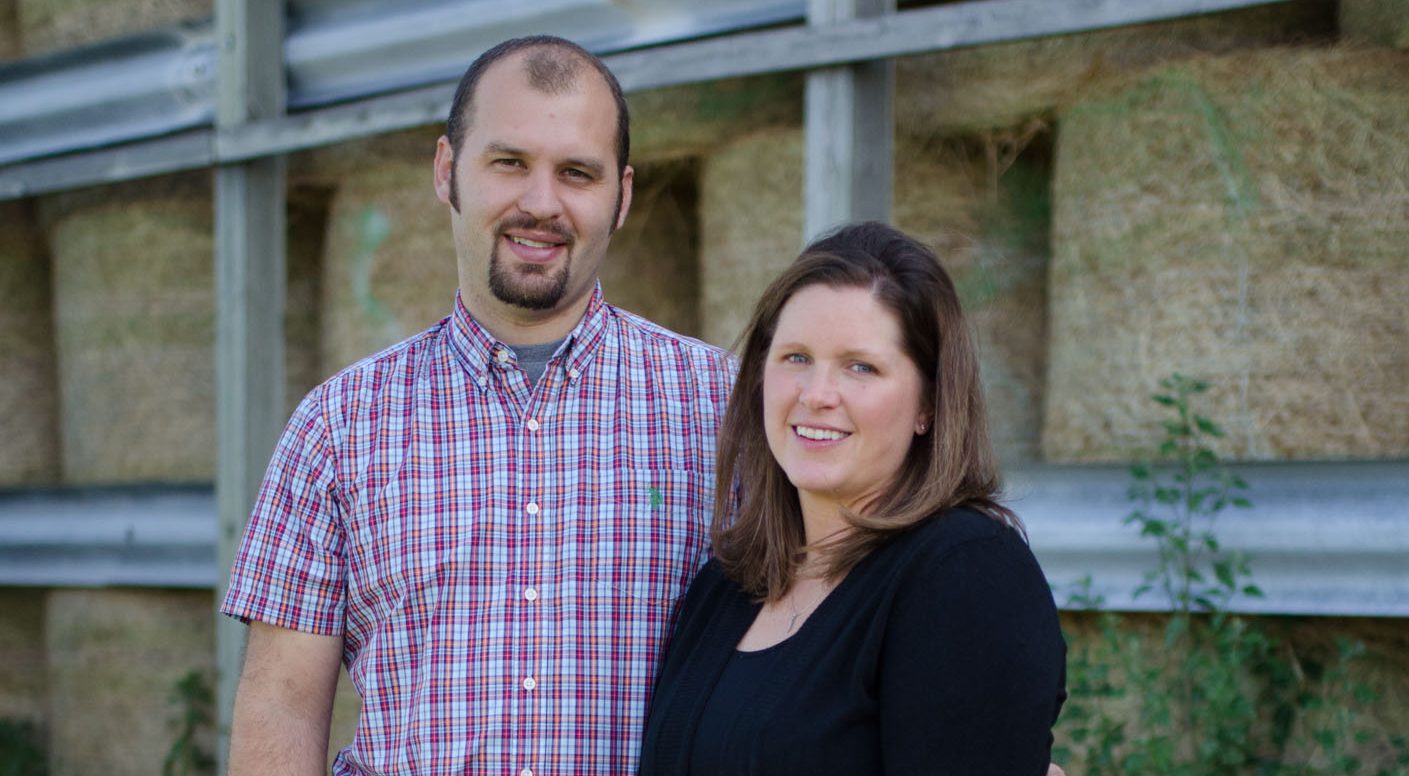
Nate and Jenny Elzinga are committed. That may seem like an obvious statement to describe a married couple, but this pair is committed not just to each other but to working together to power their 240-cow dairy farm forward with technology. Through their partnership, the husband-and-wife team is best caring for their farm, which involves day-in and day-out hard work, and tracking data to make the best decisions for the cows on Daybreak Dairy.

This year, the Elzingas are taking it a step forward—and a step or two off their farm—to lend their skills to the dairy industry. Nate and Jenny were named the 2017 Outstanding Young Dairy Cooperators, becoming the 57th participant of a select group of MMPA members designated to represent their co-op on a nationwide scale.

But before co-op recognition, before leading a progressive dairy and before rearing five children, 16-year-olds Nate and Jenny first crossed paths at the Berlin fair. She was showing a beef steer that day and he was roaming the fair grounds. “I got my toe crushed by my steer and so I was sitting there, trying not to cry and he walked by,” Jenny recalls. An awkward hello led to the day spent together at the fair with their friends—who did more talking than they did—and an eventual date spent fishing in the dark.

While Nate grew up on this farm, his father had purchased it in 1976, Jenny wasn’t as familiar with the dairy life. Her grandparents had owned a dairy farm, but long sold the cows, and when a few years later the young couple got engaged, Jenny’s grandmother asked the soon-to-be farm wife: “Are you sure you know what you’re doing?” One look at Jenny and it’s clear—despite that tongue-in-cheek question—she is well suited for the role.

Today, the couple work in tandem with each other and Nate’s family on their farm. A graduate of the Michigan State University dairy management program, Nate manages employees, nutrition, breeding and overall animal care. Jenny oversees raising the farm’s calves in a calf barn that features an automatic calf feeding machine. Yet Jenny admits their roles can be interchangeable with one stepping in for the other’s responsibilities when needed.

“We work well together,” Jenny, who completed a veterinary technology program at Baker College, describes. “We just click with each other, so it seems to work well. I don’t mind getting my hands dirty.”

“We support each other very well. It’s easy for one of us to have a bad day, so we need to support each other and go back and forth,” Nate adds.

When discussing the operations of his farm, Nate frequently shifts to uncover data on his computer, looking up information from both a high level and close look at every aspect of the farm and the progress of each cow. One monitor has a live feed of video from various locations on the farm, yet the other two show a more encompassing view of the farm through an integrated software system.

The system links various area of the operation and displays information on his computer. Data is collected in the dairy’s double eight herringbone parlor during milkings and related to other metrics from around the farm, such as the activity-monitoring pedometers fitted to each cow. The Elzingas use these technologies to best manage herd health, nutrition, breeding and milk production.

“Everything is connected on a dairy farm. I like the cows and I like the technology. I’m able to match those two things up,” Nate explains.

Technology – love or hate it, as some producers do – can advance a dairy’s production, efficiency and management. While adoption of new software programs and monitoring systems can be costly to producers, Nate sees the advantage on his farm.

“Technology helps you manage to a higher level. If you use as intended, it helps you do more with fewer people. I’m still busier than ever, just getting more work done,” he says.

As an example of this modernization, Jenny points to a change in their practices for managing and detecting ketosis, a metabolic disease that sometimes affects early lactation cows. In the parlor, daily components are tested with each milking and if the butterfat and protein ratio is above a certain threshold, the system generates a list of cows with a high possibility of having ketosis. This eliminates the need to take a urine sample on each cow and thereby saves time.

Ketosis monitoring is just one useful maneuver the Elzingas trust. When it comes to monitoring production and performance, they have the data to back everything up. The software system tracks milk out times and can identify any disruptions in regular performance as soon as it happens. “If there is a deviation, it sticks out like a sore thumb,” Nate describes.

Nate manages the farm’s five full time and three part time employees by maintaining positive relationships with his staff. To improve employee morale and decrease turnover, they increased wages, added paid vacation and a housing allowance. The farm clearly outlines policies and expectations for employees in a handbook, while both staff and family have attended MMPA training programs for calf care and milking procedure.

OYDC Elzinga
Nate and Jenny Elzinga of Zeeland, Michigan

Overall, the Elzingas goal is to, “bring our modern dairy to the next level through animal comfort, nutrition, genetics and by following the best cropping and manure practices.” Through their hard work, Daybreak Dairy has been recognized for quality heifer care by Hoard’s Dairyman, while earning production awards from DHI and the Holstein Association, and quality awards from MMPA. They have built a solid reputation in the community. “We’ve made a name for our cows,” Jenny says.

Growth and continuous improvement is a goal too. “I want to make things better for our employees and for us, the only way to do that and not reduce what we’re doing here is to scale up,” Nate explains. “I want to move genetics forward and move production forward.”

Beyond the farm, the Elzingas are involved with their local community and agriculture industry. In addition to involvement at their church, they host farm tours, are active on social media and Jenny is an MMPA Dairy Communicator. In 2011, Daybreak Dairy hosted a Breakfast on the Farm. Nate lends his experience to the Muskegon Technology Center as a member of their advisory committee and by encouraging careers in dairy.

“Being involved and making connections provides opportunities, even if you don’t always know what those are at the time,” Nate acknowledges. “Eventually it turns into something.”

The Elzinga’s role as OYDC may be a new endeavor for the couple, but it’s one they’re nevertheless ready to take on—together.

–Allison Stuby Miller

This article originally appeared in the October issue of the Michigan Milk Messenger. 
Selection for the 2018 Outstanding Young Dairy Cooperator program begins this winter during local meetings. If you are interested in participating in the program, contact your local. 

Learn more

Riverbank Run 2017

Fuel Up to Play 60

Influence and communication are the keys to the dairy promotional work of United Dairy Industry of Michigan (UDIM). As they work on behalf of dairy farm families of Michigan their goal is to connect with consumers to share dairy nutrition information and connect them with Michigan’s dairy farm families.

UDIM has a full arsenal of promotional tools to use as they communicate with consumers on several platforms.

As youth leave the sultry days of summer behind they will dive back into school and UDIM will help schools across the state dive into good dairy nutrition and activity with the Fuel Up to Play 60 (FUTP 60). FUTP 60 encourages kids to eat healthy, including dairy, and be active for 60 minutes each day.

“In October, over 400 FUTP 60 students will join us at Ford Field for a rally to learn more about dairy, eating healthy, being physically active and being leaders in the schools and communities,” Sharon Toth, UDIM CEO commented. “A recent survey of program advisors shared that more than half of kids are consuming more dairy and being more active because of the program.”

Riverbank Run 2017

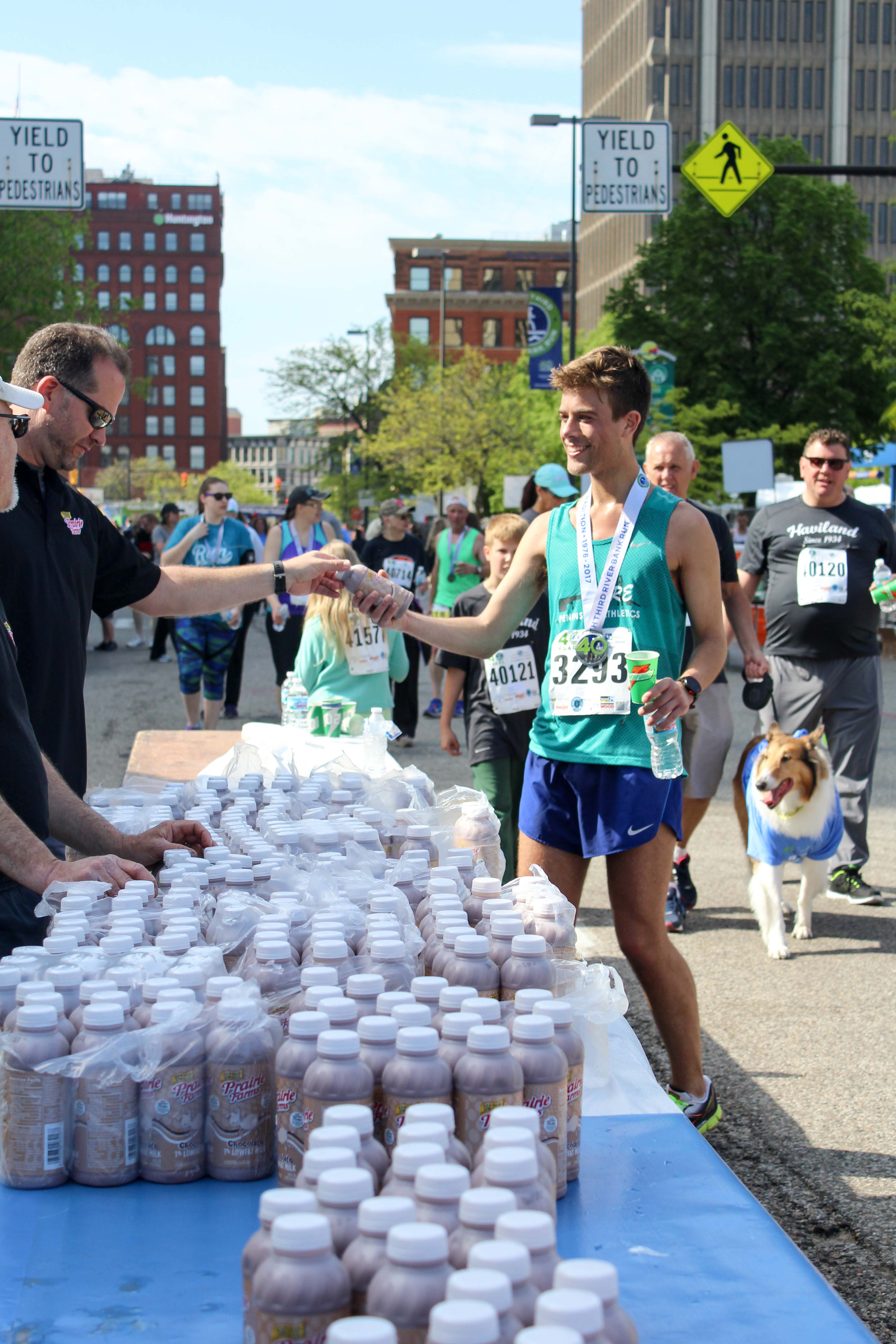
High school athletes will benefit from the goodness of chocolate milk again this year as UDIM awarded nearly 100 fall teams with a grant to purchase chocolate milk for after practice and games to fuel their athletes. Toth said, “We continue to work with fourteen universities to provide chocolate milk to their athletes. These schools then provide chocolate milk messages to those who attend their games.” UDIM will also provide chocolate milk and dairy nutrition information to athletes at the marathons in Detroit, Grand Rapids, the Crim, and will provide chocolate milk the Capitol City Run in Lansing this fall.

UDIM is committed to promoting milk in schools, but they are equally as concerned with providing milk to families in need. Toth explained, “This year UDIM matched $100,000 in milk drives.  UDIM works with food banking system and retailers to educate consumers about the need for dairy’s powerful nutrition by families in need.”

Raising money for milk was part of Gleaners Community Food Bank of Detroit Radio-A-Thon earlier this year.  In June, Gleaners held a first ever Milk and Cereal Drive to help feed kids during the summer. Busch’s Food Stores hold a week-long milk donation program in the spring and in the fall and Kroger’s milk donation program was held through the month of August. “We’re providing radio ads to help support and promote these efforts,” Toth commented.
Influence is a large part of what UDIM does and not only have they pulled in people to help influence the younger generation to drink more milk, they have also reached out into key areas of the influencers.

“Our spokespeople continue to share dairy messages with their followers, as they have a large following online and off.” Toth continued, “Athletes Allison Schmidt, Leah O’Connor, Andre Drummond and Lindsay Tarpley are all milk spokespeople who share the good news of dairy in their diet as athletes.”

Rich Fronning is the latest athlete to join UDIM’s sphere of influence. As a world renowned Cross Fit athlete, Fronning has a tremendous platform to promote the goodness of dairy. “Those who participate in Cross Fit are inundated with alternative beverages and supplements. Rich is a big supporter and promotor of milk and promoting it among those he trains and works with and this is huge,” commented Toth.

Farm tours are an effective way of communicating the dairy story. Last year dietetic students from Eastern Michigan University headed west down U.S. 12 to stop at Pleasant View Dairy in Jonesville, Michigan. This tour had such a great impact on the students, a dairy farm tour will now be included in their curriculum moving forward. Jennifer Lewis, owner of the farm, commented the tour was a huge success and a real eye opener for the students.

Bringing influencers on farm tours is a long-term strategy for dairy promotion. The tours bring decision makers like Michigan Department of Education staff, School Food Service Directors, and future dieticians to meet with dairy farmers and see dairy farming first-hand helps them to better understand the recommendations they make when they are asked about dairy in our diets, according to Toth.

“In 2016, we hosted 350 influencers on farm tours. These are the folks who are determining what kids eat in schools, they are future dietitians who will help patients, future veterinarians who may be the face of dairy even if they study small animals, and those who work in schools,” Toth explained. “When these folks see firsthand the amount of time, dedication and care that dairy farmers give their cows and ultimately the milk we drink, they are amazed.”

The Great Dairy Adventure, Breakfast on the Farm, Jump with Jill, radio promotions, specifically designed school curriculum, the Milk Means More tagline shared across the social media platforms of Facebook Twitter, Instagram, YouTube and Pinterest are also included in the UDIM promotional arsenal.

“We have a very dedicated staff who work in many areas to promote Michigan’s dairy industry, among consumers in all areas of our state,” commented Jolene Griffin, UDIM Director of Industry Relations.

“We know that Michigan’s consumers have a very favorable image of Michigan’s dairy farmers. They trust what they do and they are confident in the products they provide and our goal is to not only maintain that trust but to expand upon it so at the end of the day everyone knows: where their food comes from, know the families who provide it and has a connection to Michigan’s dairy farmers,” Griffin concluded.

The United Dairy Industry of Michigan is funded by Michigan dairy producers through part of the 15 cents per hundredweight deduction from producers’ milk checks. The Dairy Promotion Referendum, voted on every five years, allows 10 of those 15 cents to stay in Michigan.

–Melissa Hart

This article originally appeared in the September issue  of the Michigan Milk Messenger

Twelve MMPA members built their knowledge of their co-op’s management, thanks to the 2017 MMPA Outstanding Young Dairy Cooperator (OYDC) conference. The members, the 2017 class of Top 10 OYDCs, converged in Novi, Michigan for a two-day conference on August 17-18 held annually as part of MMPA’s leadership development initiatives.

The conference included a tour of the milk testing laboratory and presentations from MMPA’s president, Ken Nobis, and general manager, Joe Diglio.  The OYDCs met and interacted with their cooperative’s employees while gaining a better understanding of the day-to-day operations of MMPA.

Hosting this year’s conference was the 2016 OYDC Darrin and Barbara Siemen. The Siemens guided the next class of  OYDCs through the process. Three judges – MMPA Board Member Gertie van den Goor, MMPA member and former OYDC Gordon Dick and Michigan State University Extension Educator Marianne Buza—joined the OYDCs throughout the process.

The OYDC program is a leadership development program managed by MMPA since 1950. Many who participate in the program go on to become MMPA leaders by serving on the Advisory or Resolutions committees, board of directors or local or district boards. For some members, the OYDC Conference is their first opportunity to learn about the inner workings of the co-op and how member pay prices are determined.

“The OYDC program opens doors for us to take on leadership because we can learn more about the operations our co-op completes and also meet other leaders, staff and members from around the state,” said Garret Bartholomew from Scotts, Michigan.

The winning OYDC, Nate and Jenny Elzinga, and runners up, Jarris and Rebekah Rubingh, were selected after the conference after the judges considered applications, interviews and tours of the top four finalists’ farms.

The OYDCs here at the conference were each designated by their locals and then selected by the nominating committee from the pool of all nominated cooperators. During local meeting season this winter, MMPA will begin the process of determining the 2018 Top 10 OYDCs with each local asked to nominate a young individual or couple.

MMPA members under 41 years of age: If you are interested in participating, please contact your local. For more information on the OYDC program, please contact the MMPA Member Relations Department at 248-474-6672.


2017 Top 10 Outstanding Young Dairy Cooperators

Not pictured: Mike & Laura Finkbeiner, Adam & Charlie Freis, and Scott & Melinda Parr

More about the YC Program

This article originally appeared in the September issue of the Michigan Milk Messenger

On an average day, one out of every seven American adults will make a trip to the grocery store, as reported by the Time Use Institute. Those Americans will spend about 43 minutes stocking up on butter and bread, perusing apples and avocados and pushing their shopping carts down polished alleys of frozen food.

And to those of us in the dairy industry, we ardently hope for those shopping carts to roll to the dairy case and for that American shopper to retrieve a gallon of milk—plus some yogurt, sour cream and cheese while they’re at it.

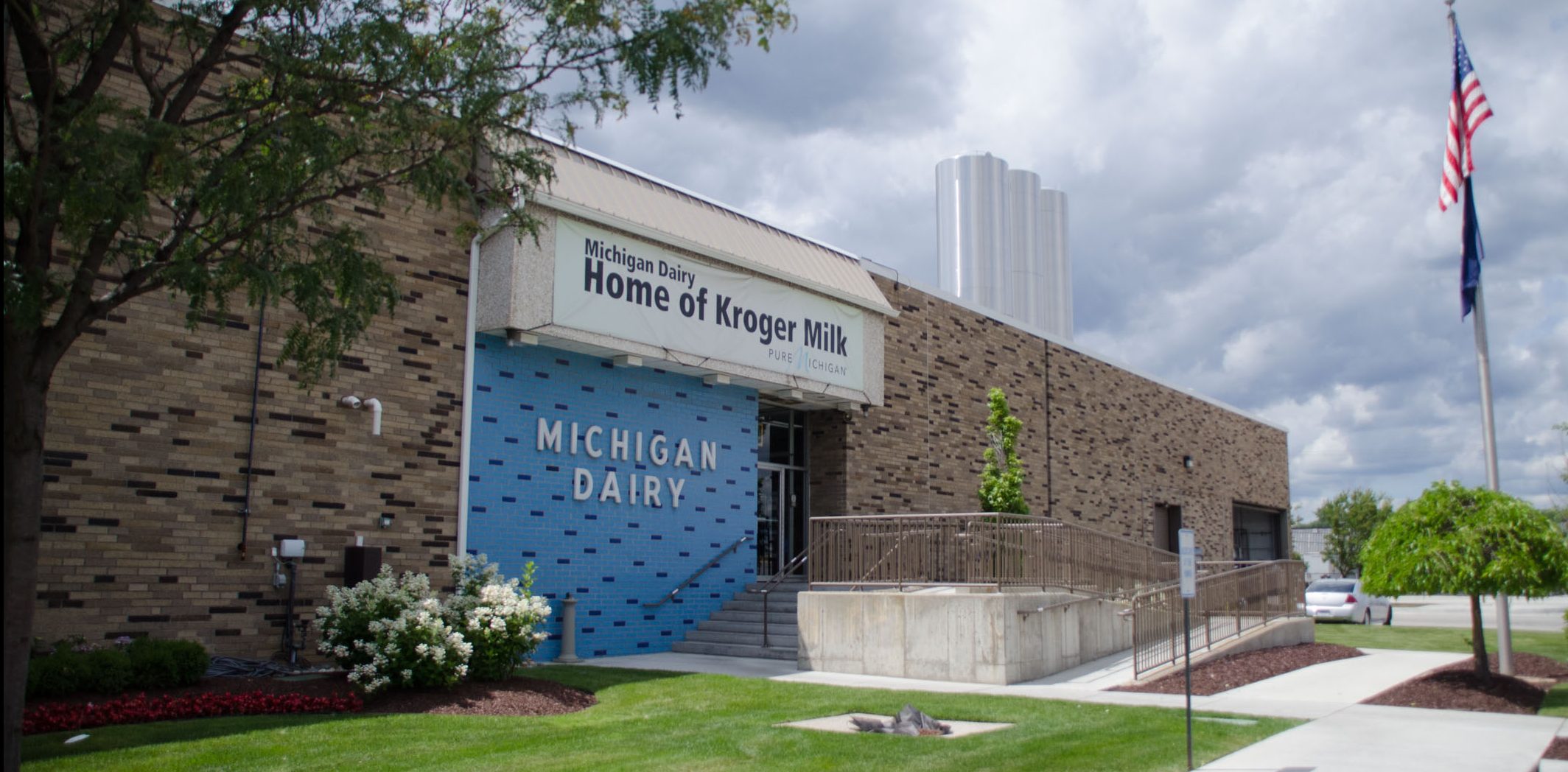
The United States’ largest operator of traditional grocery stores is Kroger, welcoming a large portion of those grocery store shoppers each day. When you’re in the state of Michigan, that gallon of milk is bottled at the Michigan Dairy and best of all, it starts with ‘Pure Michigan’ milk. The Michigan Dairy, operated by the Kroger Co. of Michigan, is now celebrating 50 years bringing fresh, wholesome milk to their customers.

“Michigan Dairy in Livonia, Michigan, opened in August 1967 as The Kroger Dairy producing fluid milk, culture and ice cream. In the early 1980s the name changed to Michigan Dairy to accommodate custom sales,” said Regina Kopera, site leader of the Michigan Dairy.

For a short time, a custom account contributed to over 50 percent of the product being produced at the plant. When that business was acquired by another company, that volume was replaced with Kroger products and the plant is currently focused on fluid milk, cottage cheese and sour cream, according to Kopera.

“We bottle an average of 100,000 gallons of milk a day. It takes around 13,750 cows to supply Michigan Dairy daily,” Kopera continued.

And where might you find those 13,750 cows? On none other than MMPA member farms.

It started with a three-year, 100 percent supply contract when the plant opened. And today, 50 years later, the Michigan Dairy’s receiving bays still welcome MMPA-contracted haulers and process MMPA member milk for 152 Kroger stores in Michigan and Ohio.

Jack Barnes, the general manager of MMPA in 1967, described the full supply agreement between MMPA and Kroger in a column in the Michigan Milk Messenger that year. The construction of the plant came at a time when many local receiving stations were closing in favor of milk being brought directly to the plant for processing.

“We think this agreement is very important to MMPA and to all dairymen,” wrote Barnes. He noted arrangements like this one were part of MMPA’s strategy at the time and provide “long range stability to MMPA’s program.”

The agreement continues to provide value to MMPA members today, but only now, MMPA and Kroger work together on more initiatives than just bottling and processing milk from member farms.

Michigan Dairy in Livonia
The Michigan Dairy first welcomed MMPA member milk on its first day of production in August of 1967.

MMPA honored The Kroger Co. of Michigan with the inaugural Valued Partner Award at MMPA’s 101st Annual State Delegate Meeting on March 23. The two organizations have sustained a partnership that extends into a variety of initiatives from food security to youth development to dairy promotion.

In his speech recognizing The Kroger Co. of Michigan with the award, MMPA President Ken Nobis referenced MMPA’s core values—quality, integrity, progressive, leadership and community—as indicative of MMPA’s relationship with Kroger that extends beyond just a supply agreement.

“Through these values, MMPA remains focused on the needs of our members and our community,” Nobis explained. “They also have steered us to partner with organizations and customers who share our values. One such customer who we have partnered with over the years is The Kroger Co. of Michigan.”

According to The Kroger Co. of Michigan, they continually give back to their communities in the areas of hunger relief, better health, sustainability, good neighbor activities and diversity. “We are committed to helping individuals and organizations within the communities we serve, which is why we surveyed our customers and associates to determine what key areas would allow us to make the greatest impact.”

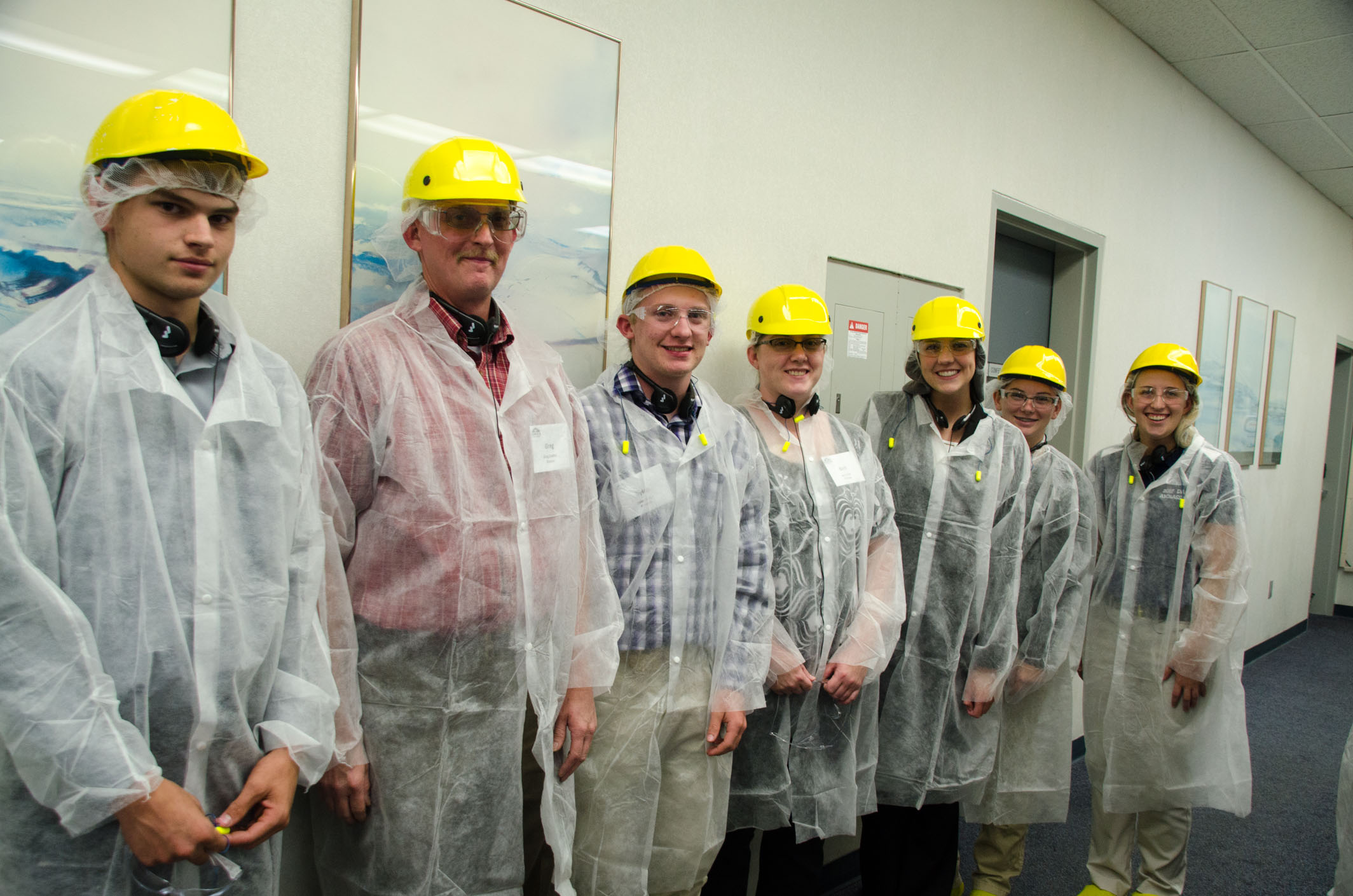
In celebration of the 50th anniversary of the Michigan Dairy, Kroger hosted an open house for the community on August 12. Over 1,000 attendees had the opportunity to tour the plant, participate in games and activities while learning more about dairy.

Horning Farms, the MMPA member farm that has supplied the Michigan Dairy for the longest period of time, brought a cow and a calf to show. Meanwhile, three Michigan Dairy Ambassadors–Lindsey Sharrard, Steven Wilkinson and Mason Horning—engaged in conversations about dairy with the plant visitors.

More and more consumers hope to spend their money with a company committed to its values and giving back to local communities. Reaching each shopper every day is increasingly challenging, but The Kroger Co. of Michigan’s initiatives with local dairy farmers and other crucial communities may just be the key.

Four ways MMPA partners with Kroger »

–Allison Stuby Miller

This article originally appeared in the September issue of the Michigan Milk Messenger

The Michigan Dairy, operated by the Kroger Co. of Michigan, is now celebrating 50 years bringing fresh, wholesome milk to their customers. MMPA honored The Kroger Co. of Michigan with the inaugural Valued Partner Award at MMPA’s 101st Annual State Delegate Meeting on March 23. The two organizations have sustained a partnership that extends into a variety of initiatives from food security to youth development to dairy promotion. Here’s four ways the two organizations have worked together over the years.

1) Churning out 42,250 gallons of milk for people in need

The Kroger Co. of Michigan and MMPA have worked together to bring 42,250 gallons of milk to food insecure families in three separate donations. In 2016, the two organizations partnered on a milk donation initiative to support Flint, Michigan residents following the Flint Water Crisis. Dairy is one of the foods encouraged for families to mitigate lead absorption and so MMPA and Kroger worked together to bring over 24,000 gallons of 2 percent milk to families in Flint in 2016.

Flint milk donation in Jan 2016
Milk was distributed in Flint following the water crisis thanks to a partnership between Kroger and MMPA.

In conjunction with the Valued Partner award, MMPA announced the donation of 150 gallons of milk per day for one year to recognize the 50th anniversary of Kroger’s Michigan Dairy plant. Fifty of those gallons—equivalent to 18,250 gallons of milk—were made possible by processing at the Michigan Dairy. The donation was initiated over the summer to reach families at a time when schools are out for the summer and there is a greater need for milk to support childhood nutrition.


2) Sharing the stories of MMPA dairy farmers

Over the last several years, The Kroger Co. of Michigan has shown an interest in promoting agriculture and the farm to table connection to consumers. This has included television advertisements and social media promotion spotlighting MMPA farms. Further, “Pure Michigan” posters with MMPA farms are on display in Kroger stores to show consumers where the milk in their dairy cases originates.

“Through the years, Kroger has stood by our side as an organization that understands our position in the agricultural industry. At a time when consumers want to know more about where their food comes from, Kroger is on the front lines, helping communicate the honest, good work of dairy farmers,” said MMPA president Ken Nobis during the award presentation.

Kroger video shoot at Horning Farms
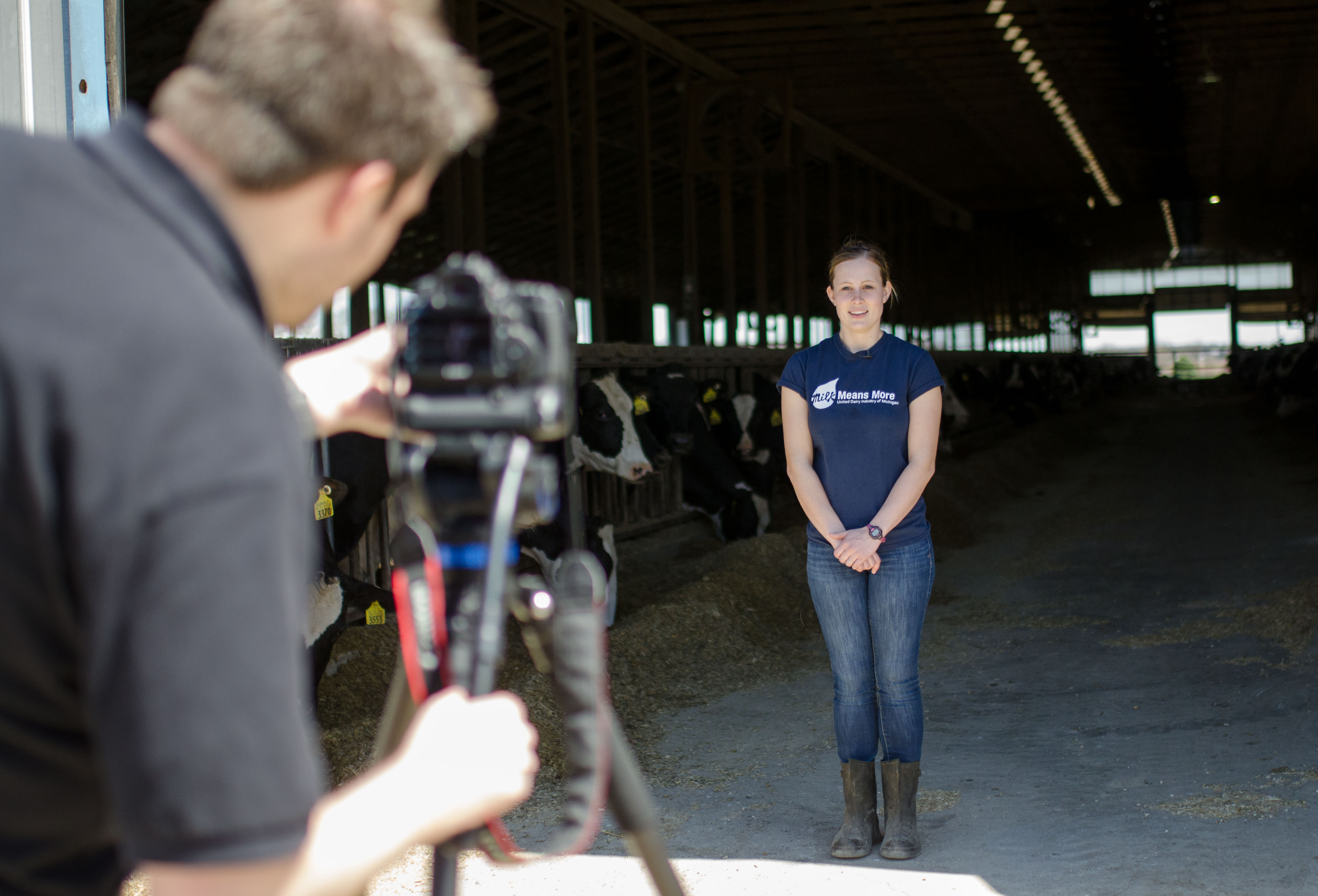
Katelyn Packard was filmed for a Kroger promotional video leading up to Michigan Dairy’s 50th anniversary.

Most recently Kroger produced a video featuring Horning Farms to show support of local farmers. The advertisement was aired on television in the metro Detroit area and viewed over 179,000 times on Facebook.


3) Supporting youth initiatives

The MMPA and Kroger partnership extends to youth development programs. Every June 4-H’ers make the trek to Metro Detroit for the MMPA 4-H Milk Marketing Tour. MMPA staff teach the students about the milk marketing supply chain and careers in our industry. A key to the success of the program is the afternoon tour of the Michigan Dairy plant.

4-Hers at Michigan Dairy
Youth on the MMPA 4-H Milk Marketing Tour annually visit the Michigan Dairy to see milk bottling.

Kroger additionally supports other MMPA youth development program such as scholarships. Most recently, at the Michigan Livestock Expo in July, MMPA and The Kroger Co. of Michigan made a combined bid for the Supreme Champion Dairy Cow package. The fund supports dairy youth programs through educational grants and scholarships.


4) Recognizing farmer’s commitment to animal care and sustainability

As part of The Kroger Co.’s sustainability initiative, the company recognizes the steps farmers have taken in the areas of animal care and sustainability, while backing the Farmers Assuring Responsible Management (F.A.R.M.) Program.

“Kroger has long been a supporter of the F.A.R.M. Program—endorsing the core elements of the Program while encouraging its continued evolution so that we continue to not only meet—but exceed—consumer expectations. Kroger’s insights and leadership in sustainability and social responsibility have and will continue to be held in the highest regard by the F.A.R.M. Program and entire dairy community,” states Emily Meredith, NMPF Chief of Staff in The Kroger Co.’s sustainability report.

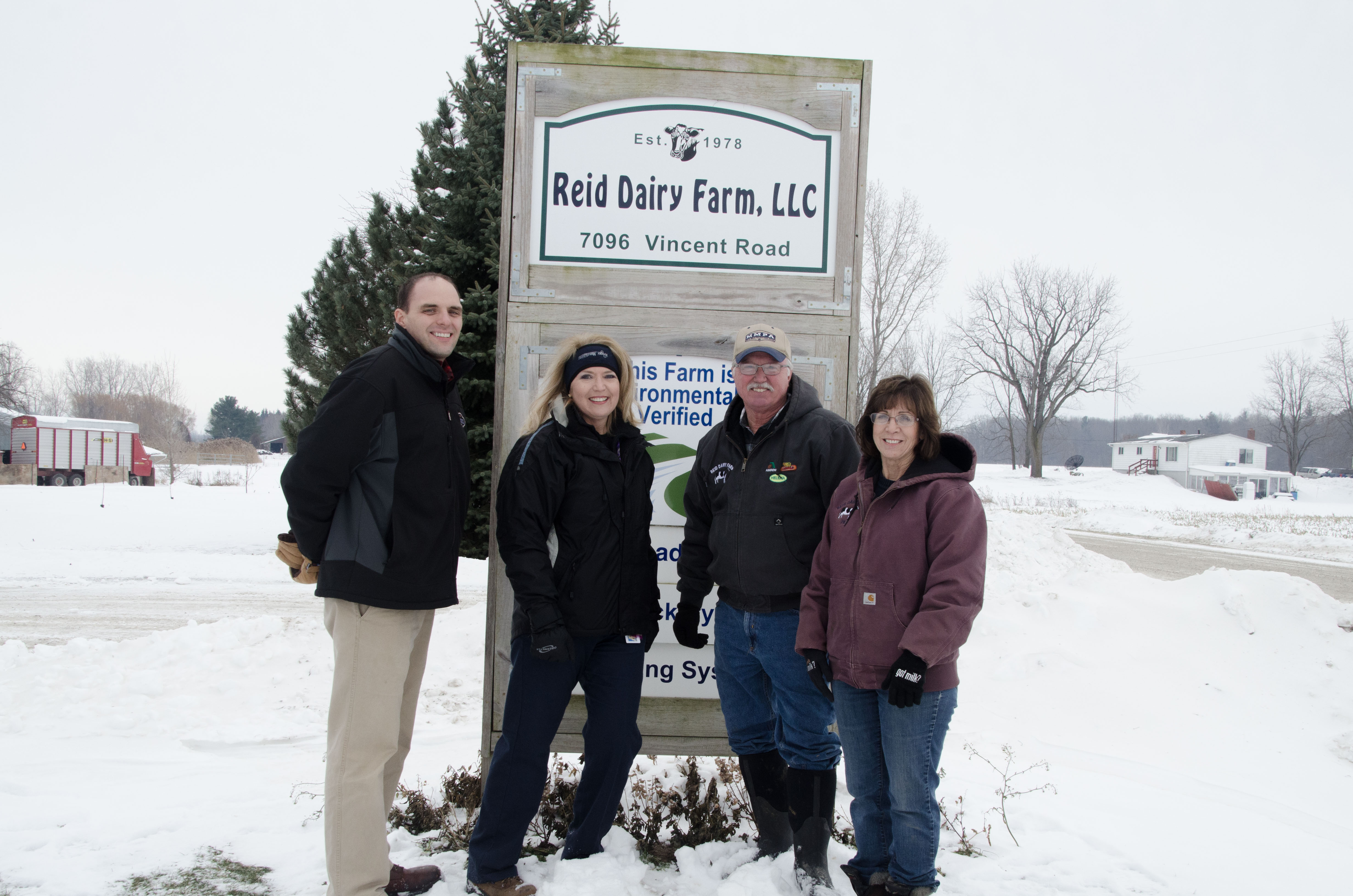
Kroger executives at Reid Dairy Farm
Kyle Powell and Regina Kopera of Kroger toured an MMPA farm with Jim and Pam Reid.

Further, management staff at Kroger has worked with MMPA to better understand the work of our farms. Kroger staff have visited Reid Dairy Farm and plan to tour more farms in the future to see firsthand how members sustainably produce quality milk and care for their animals.

More about Kroger and the Michigan Dairy’s 50th anniversary »

–Allison Stuby Miller

This article originally appeared in the September issue of the Michigan Milk Messenger

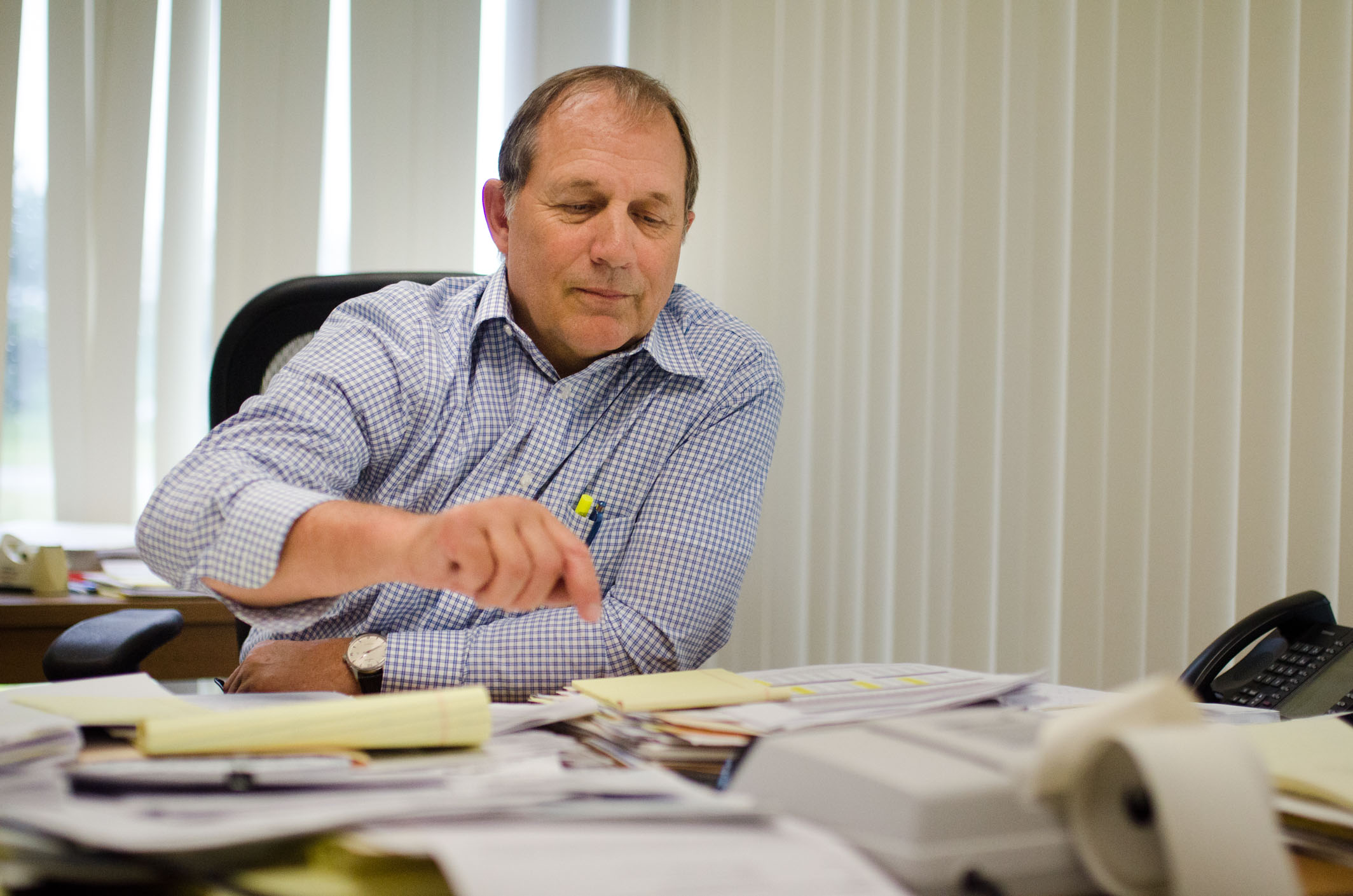
It’s not uncommon to catch Carl Rasch, hands resting on his hips, midway through a discussion on the current state of  dairy markets. He can just as easily say, with his unmistakable low and gravelly voice, the prices of each class of milk today as he can recall the ups and downs of the industry throughout his 40 years at the helm of MMPA’s milk sales department.

Rasch has worked with customers large and small. He’s seen the dairy industry evolve from a local concentration to a global scope. He’s present at member meetings as the expert on all things milk marketing. And he got his start on none other than an MMPA member dairy farm.

Rasch, MMPA’s director of milk sales since 1977, was recently selected as this year’s recipient of the Michigan Dairy Industry Service Award at the 69th Annual Michigan Dairy Industry Conference (MDIC). Rasch was nominated by his coworkers for his dedication to the industry and strong leadership over the last four decades.

Rasch began at MMPA under then General Manager Jack Barnes, who Rasch first met as a student at Michigan State University when Barnes was guest speaker in a cooperative marketing class. But before joining MMPA, Rasch began his professional career as field auditor for the U.S. Department of Agriculture. Barnes approached Rasch’s present employer before reaching out to talk about an opening at MMPA. Not long after, Rasch was named MMPA’s director of milk sales.

“I wasn’t a stranger to Michigan Milk. I knew what Michigan Milk was about,” he recalled.

Indeed, he did. In his role at USDA, Rasch often visited the MMPA office, then located at Seven Mile and Telegraph Road in Detroit. Yet even growing up, Rasch was fully involved in the dairy industry at the farm level. He was raised on an MMPA member farm that at one time achieved the 35-year member recognition.

“Having been born and raised on a dairy farm, I feel fortunate to have been able to continue to stay connected to agriculture and members who are family, neighbors and friends,” Rasch said after receiving the industry service award. “It’s been a privilege to work for an organization like MMPA who is recognized as a leader in the industry.”

Throughout his tenure at MMPA, Rasch has been able to build relationships with customers in and outside of Michigan, capitalizing on opportunities to move milk to a variety of outlets.  While working on business development and strategic planning for MMPA, Rasch is responsible for negotiating contracts with processing plant customers and milk supplying members.

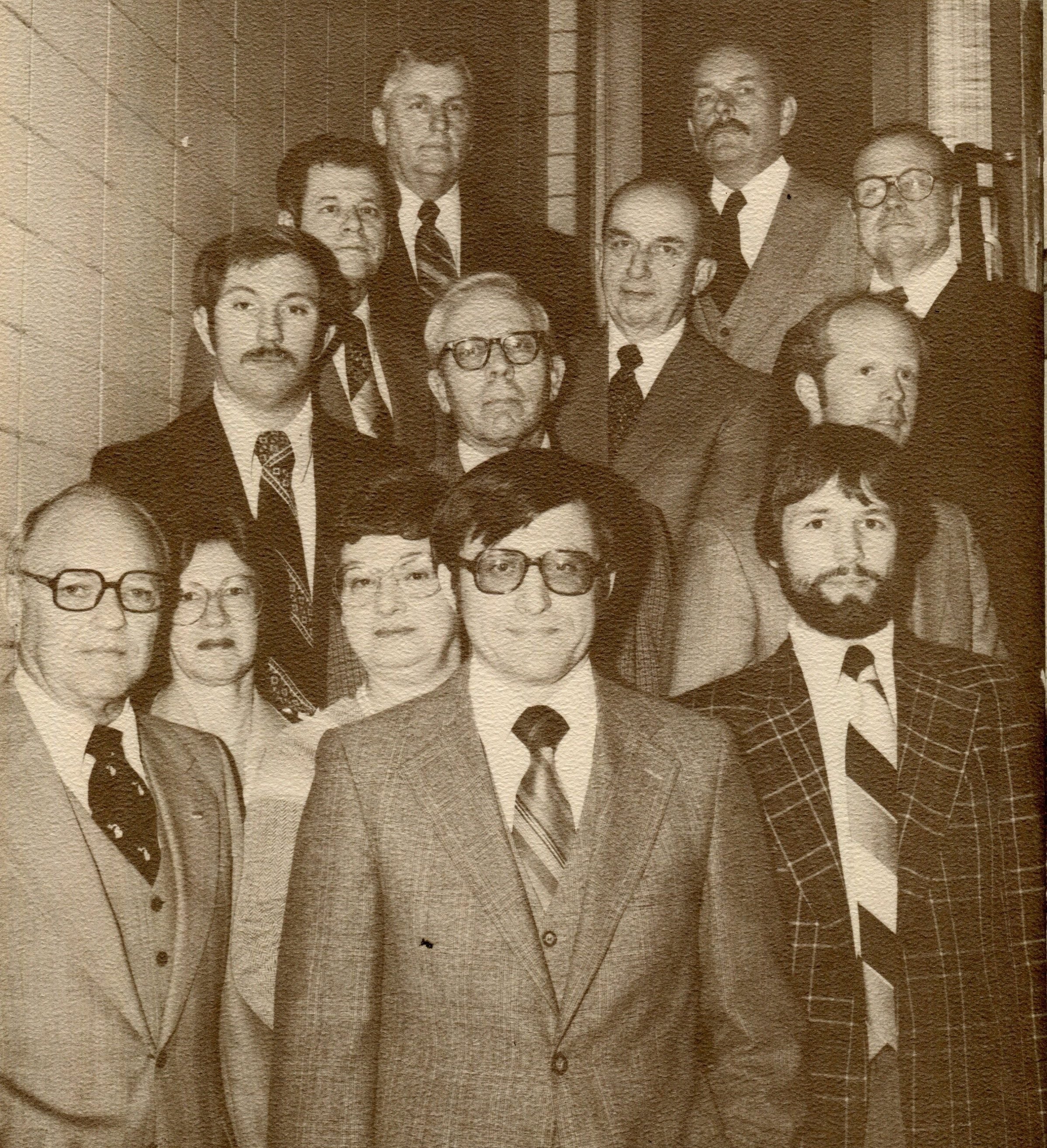
Carl Rasch (first row, right) began at MMPA under former General Manger Jack Barnes (front row, left) and would eventually serve under five general managers, including then Director of Finance, John Dilland (front row, center)

Touted as MMPA’s resident expert in the area of Federal Orders as well as the Super Pool, Rasch was credited with “writing the book on milk marketing” by John Dilland, former general manager of MMPA. His influence has benefitted both MMPA and the national dairy industry, as Rasch has worked on taskforces with the National Milk Producers Federation concerning Federal Order reform.

“I don’t know of anyone who more input and impact on our milk sales premiums or pool premiums than Carl,” wrote Dilland. “Carl could be blunt and direct and was bold enough to ask for what the market should be willing to pay. All of us owe him a huge thank you for a job well done and for the huge contribution he has made to MMPA’s bottom line and producer premiums.”

In the time Rasch has been involved in the dairy industry, many changes have shaped the way we do business today, especially concerning the international scale of the present dairy industry. While the nature of his job has changed, Rasch has remained a steadfast fixture for the last four decades of marketing MMPA member milk to the greatest advantage possible.

Rasch says over his tenure in the dairy industry, some of largest changes he has seen have been on the farms themselves. From increased technology to improvements in nutrition and breeding, he has observed farmers becoming more efficient in what they do, with the rate of change accelerating every year.

“The industry has become more and more progressive. The way we produce milk is a whole lot different than the way my father and grandfather used to,” commented Rasch. “One thing that hasn’t changed is farmers at least have always been passionate about what they do. The people I was dealing with when I came to work for Michigan Milk have a lot of the same traits that our members have today.”

In addition to his leadership at MMPA, Rasch has served on the board of directors for the United Dairy Industry of Michigan and as the secretary of the Great Lakes Southern Milk Marketing Agency. Rasch demonstrates investment in youth through involvement in scholarship programs and MMPA’s annual 4-H Milk Marketing Tour. Rasch serves on the Michigan Dairy Memorial and Scholarship Foundation Board, which provides scholarships to MSU students studying dairy-related programs.

“His willingness to educate, train and mentor many of us in the industry has been instrumental and beneficial to the past, current and future leaders of dairy,” said Joe Diglio, current MMPA general manager and long-time colleague of Rasch.

From industry involvement to leadership at MMPA, Rasch’s hard work through the years has been recognized by his peers in the industry through recent honors in addition to the Michigan Dairy Industry Service Award. At the MMPA’s annual meeting in March, the MMPA board of directors recognized Rasch as an honoree of the Michigan Dairy Memorial and Scholarship Foundation with a $1,000 contribution to the scholarship foundation in his name.

“Carl’s passion and commitment to the dairy industry is well known by all of us,” Diglio stated. “I can’t think of a more deserving honoree of the Michigan Dairy Industry Service Award.”

Rasch resides in a restored farm house on acreage near rural Morrice, Michigan, with his wife, Roxanne. They have five children: Jessica, Anthony, Michael, Carol Ann and Katie. He has plans to retire from MMPA in the near future but has no plans to relocate anywhere but Michigan.

–Allison Stuby Miller

This article originally appeared in the August 2017 issue of the Michigan Milk Messenger.