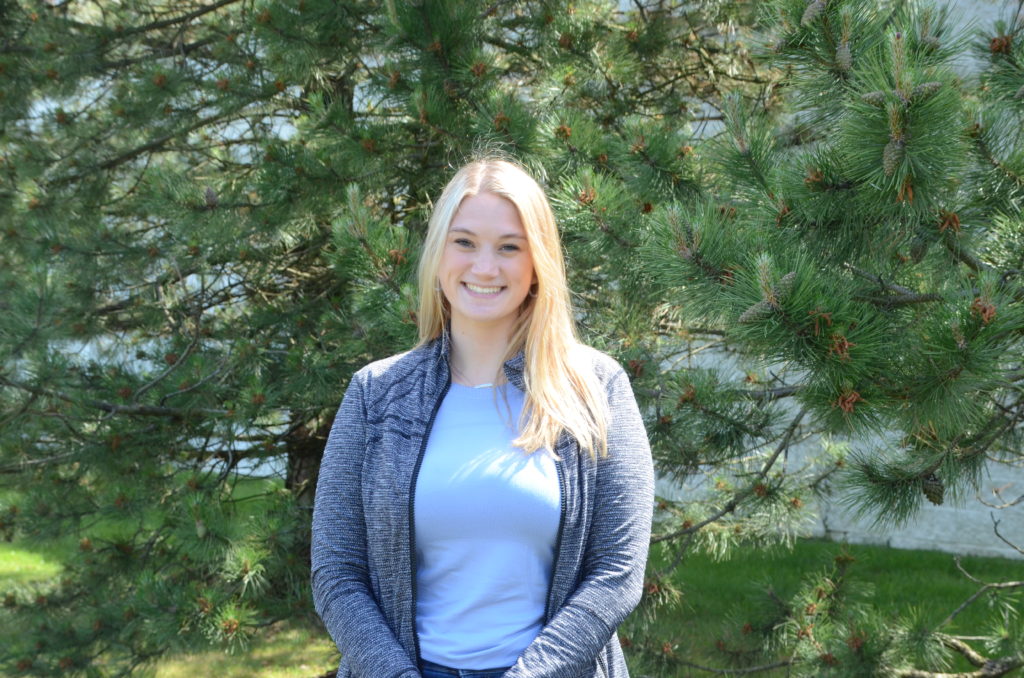
Internship: Human Resources College: Western Michigan University Year in School: Senior Major: Human Resources Management Dream Job: Human Resources Director
What previous experiences do you have that have helped prepare you for your internship?
At school I am in multiple clubs and organizations, I’m the Vice President of Communications for the Society of Excellence for Human Resource. Along with in my sorority Chi Omega, I have held positions as the Risk Manager and currently the Career and Personnel Development Director.
How does this MMPA internship experience fit into your future career goals?
This internship is something that will help me grow in multiple ways. I hope to someday be a human resource director and right now I am getting the hands-on experience I need. Being able to see how a real HR team operates and being able to help them in anyway I can will be very beneficial for me in my future HR career. I am also very lucky to have Kelly teaching me something new every day!
Michael Iacobelli
Northville, MI
Internship: Supply Chain & Sales College: Michigan State University Year in School: Senior Major: Supply Chain Management Dream Job: Procurement or Logistics Manager at StockX
What are you most excited about doing during your time as an MMPA intern?
As an MMPA intern, I am most excited to gain my first experience in the field of supply chain and learn about the milk industry, an area completely foreign to me. This internship aligns with my future goals and will build a foundation that will become stronger as my career continues.
What do you like most about working in the dairy industry?
The thing I like most about working in the dairy industry is that it provides new challenges and outlooks. These challenges arise from rudimentary understanding of the industry and I look forward to overcoming them and broadening my views.
Alex Arnst
Bannister, MI
Internship: Finance/Accounting College: Northwood University Year in School: Junior Major: Business Finance Dream Job: Detroit Pistons Owner
What are you most excited about doing during your time as an MMPA intern?
I am most excited about gaining valuable experience that will transfer well to future careers in many industries. Specifically, I am working to expand my skills in financial programs and also beginning to understand the details about how cooperatives operate. I am also excited about the connections that I have developed so far and the extremely knowledgeable team that I get to shadow and learn from each day.
How does this MMPA internship experience fit into your future career goals?
This position allows me to perform tasks in many different areas of finance and accounting. It has already provided me with an insight into what it could be like on a daily basis of working in one of these fields. No matter where I end up in the future, I will be able to use this experience to grow and further develop my skills.
Hailey Sharrard
Peck, MI
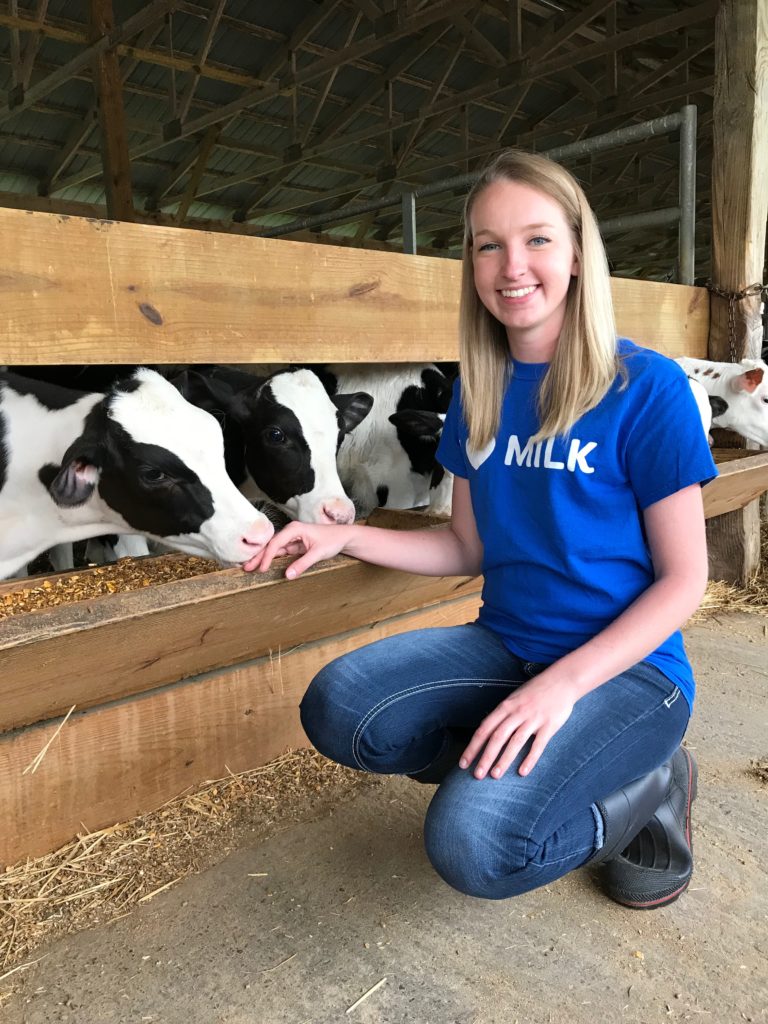
Internship: MSU Food Systems Fellowship College: Michigan State University College of Veterinary Medicine Year in School: 2nd Year Major: Veterinary Medicine Undergraduate Major: Animal Science Dream Job: Dairy-focused large animal practitioner in Michigan’s thumb
What previous experiences do you have that have helped prepare you for your internship?
My family farm has been a long-time MMPA member. Being involved on the dairy growing up helped me to understand the dairy industry (both the struggles and the positives) as well as a little bit about what MMPA was all about. Throughout my time as an undergraduate in animal science at MSU, as well as my first year of vet school, my eyes were opened to the fact that there are a lot of different ways to milk a cow and that there are many different ways to approach opportunities on a farm to achieve the same goals.
What do you like most about working in the dairy industry?
I love the sense of family and community that comes with being involved in the dairy industry. Everybody knows each other, and even in tough times, there is always a hand nearby to offer help. It’s not just a job we have to do, it’s a way of life, and one that I’m proud to be a part of.
Michigan Sugar Company and MMPA are proud to announce their involvement with the start-up of Cream & Sugar Ice Cream Company, a new, locally-sourced ice cream company located at 122 Uptown Drive in Bay City, Michigan.
The development of Cream & Sugar stemmed from a collaboration of ideas between Shaheen Development, Michigan Sugar Company and MMPA. The Cream & Sugar Ice Cream Company will be owned and operated by HORIZONS Conference Center. All the ice cream will be made using all-natural Pioneer Sugar and dairy products produced by MMPA members.
Scheduled to open this summer, Cream & Sugar’s 16 hand dipped gourmet flavors will be produced on site in a peanut-free environment and sold in three forms – cones, cups and ice cream sandwiches that feature a scoop placed on or between one or two fresh-baked cookies.
“We are looking forward to serving our gourmet, freshly churned ice cream to the Great Lakes Bay Region. Working with Michigan Sugar Company & MMPA has been a team effort from the beginning and we will continue to bring the best ingredients and unique flavors to Uptown Bay City,” said Krista Scott, Operations Manager, Cream & Sugar Ice Cream Company.
“Cream & Sugar Ice Cream Company provides an invaluable platform for two cooperatives, Michigan Sugar and MMPA, to share their ‘Made in Michigan’ stories,” said Mark Flegenheimer, President and CEO of Michigan Sugar Company. “As we look at new ways to advertise and market Michigan Sugar Company, this endeavor checks all the boxes – our product is at the forefront of the entire operation, our storyline about being ‘Locally Grown. Locally Owned.’ is woven into the DNA of the business, and it creates a strategic partnership with two other world-class operations.”
“MMPA continues to seek innovative relationships that create value for our members and our communities,” MMPA CEO Joe Diglio said. “Cooperation with a fellow ag cooperative, Michigan Sugar Company, and the union of two great ingredients, cream and sugar, complement each other with every scoop of locally-made ice cream.”
All parties have been involved in the planning process for Cream & Sugar Ice Cream Company, providing input on its look, feel and offerings. The new store joins the lineup of restaurant and retail stores already located within the Galleria at Uptown Place and will feature a variety of indoor and outdoor seating options with picturesque views of the Saginaw River and convenient access to the Riverwalk and Downtown Bay City.
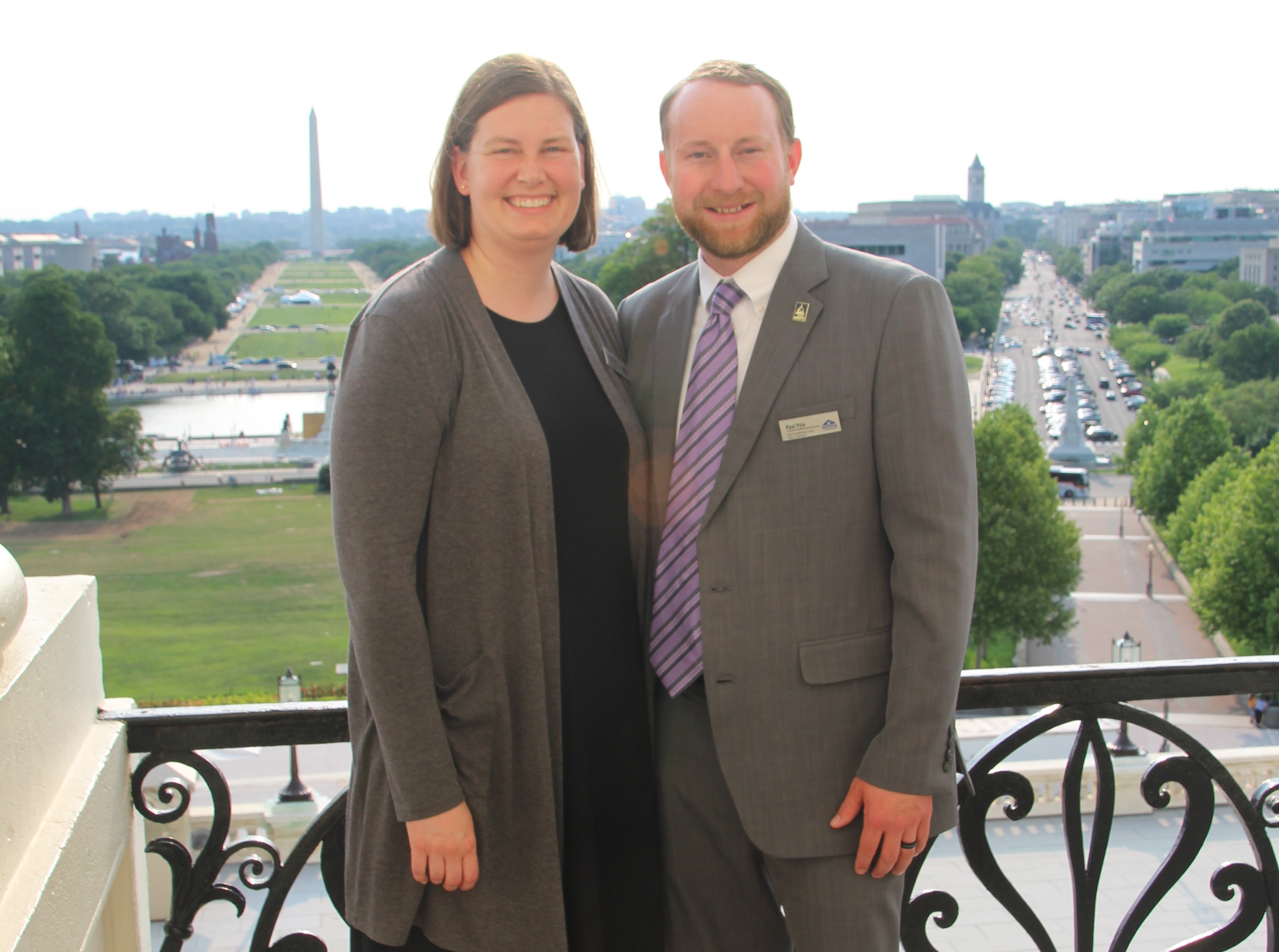
At the beginning of June, we had the privilege of going to Washington, DC, for the National Milk Producers Federation (NMPF) Young Cooperators (YCs) Legislative Fly-In. This was an exciting opportunity for us to connect with other YCs from around the country and also learn about NMPF’s lobbying efforts on Capitol Hill.
On Monday afternoon, we met with the NMPF YC Council to plan the Annual YC Convention this coming November. We discussed various topics of interest to young farmers and speakers who could present on those topics. We followed that with an update on the work NMPF has been doing over the past few months.
Monday evening, all of the YCs participated in a Bus Tour of the National Monuments. We saw so many different sights and heard the history behind them all too. It was a great time of building relationships with others and getting to see our nation’s Capitol.
Tuesday morning we had a briefing on how to lobby on Capitol Hill. In the afternoon, we attending meetings with our senators’ staff and our representative. We discussed issues of international trade, ag labor, school nutrition, and the Dairy Pride Act. Everyone we met with was interested in hearing our perspective and willing to gather information on how to support our industry.
Our last meeting of the day was with Congressman Bill Huizenga. Congressman Huizenga is from our same town of Zeeland, and we have known him and his family for many years. We were excited that we were able to meet personally with him. Through our meeting, he asked if we were flexible with our timing, and since we were, he offered for us to attend an event with him and then go with him to tour the Capitol building and attend the voting procedures in the House of Representatives that night. We had an amazing time learning more about what his daily life looks like as a Congressman and seeing the inner workings of The House of Representative that not too many people see. We enjoyed deep conversation regarding voting with values and keeping God’s ways as the rock of our character and identity.
On Wednesday we attended a Political Action Committee (PAC) Breakfast and heard from Congressman Jim Costa, who grew up on a dairy farm in California. Then we sat in on the final session of the NMPF Board Meeting and heard additional information and discussion about ongoing topics in the industry.
Throughout the other days we were in DC, we visited several sights with other YCs. We continue to celebrate the relationships we are able to build with dairy farmers in different locations, climates, and operations than we experience. It was an exciting few days in DC and we are grateful for the opportunity to represent MMPA once again.
–Paul and Nancy Pyle, 2018 MMPA Outstanding Young Dairy Cooperators
This article was originally published in the July/August issue of the Milk Messenger. Subscribe »
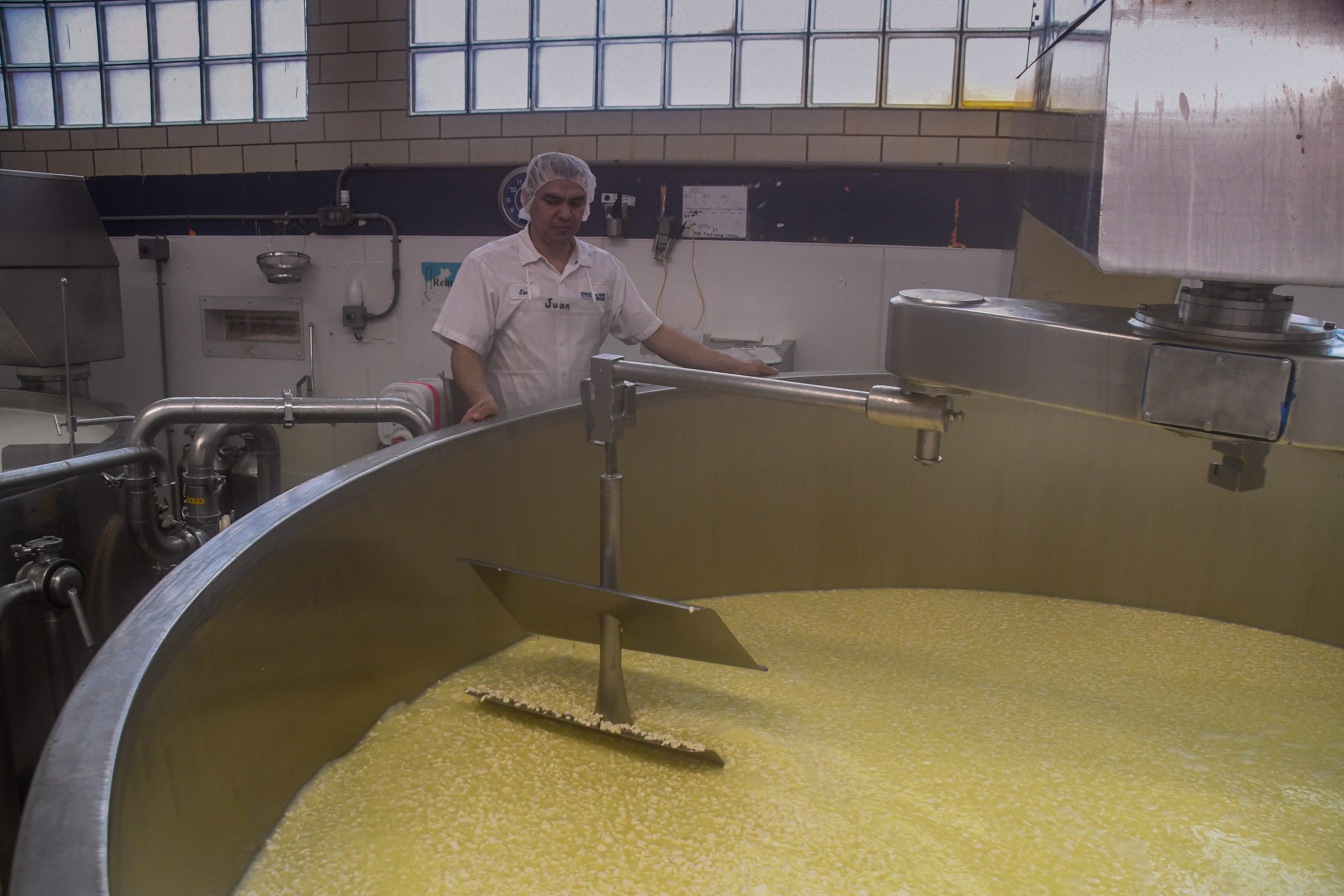
We breeze through curing cellars lined with cheeses waiting to graduate to retail dairy cases. We move past the cheese vats—both open air and contained—while snaking through a plant that churns out some seriously good cheese. In one room, the Edam, with its “mellow salty, nutty flavor,” momentarily plunges into a pool of red wax before popping back above the surface.
The Edam is just one of many cheeses crafted within these walls. There’s Gouda and Fontina and a unique Mantoro. Plus Brie and Camembert. Buttery and creamy or sweet and salty, the award-winning stars of Old Europe Cheese, Inc. are made in Benton Harbor, Michigan and sold under the Reny Picot brand. MMPA partners with Old Europe Cheese, supplying the milk and cream to make these European-style cheeses.
International name, local craftmanship
The Reny Picot brand originated in northern Spain and is managed by Old Europe Cheese’s parent company, Industrias Lácteas Asturianas (ILAS). The multinational dairy company is extended into all dairy categories and owns facilities in five different countries.
Albano Navarro recently took the helm of the Benton Harbor location, with dual responsibilities over the ILAS facility in Poland. “The company will soon be 60 years old and has been owned by one family since the very beginning,” he said.
As ILAS expanded and Americans developed an appetite for European-style, ILAS opened Old Europe Cheese as their U.S. subsidiary in 1987.
The location, “nestled between the pristine waters of Lake Michigan and the rolling hills of the Michigan wine country,” was carefully selected. A former MMPA plant, the facility had the “rudimentary infrastructure” in place before it was converted to a cheese plant. François Capt, recently retired general manager, emigrated from France as a fourth generation cheese maker and set to work bringing European-style cheese making to southwest Michigan.
Old Europe Cheese imported special open cheese making vats from France, which “allowed for the tried and true method of hand cutting the cheese curd.” Meanwhile, experts from across the pond constructed brining systems and curing cellars, plus the best cutting and packaging equipment “to ensure the perfect wrap on the perfect cheeses.”
According to Old Europe Cheese, a unique feature of their cheese comes from their propriety cheese cultures. “The cheese makers at Old Europe Cheese harvest exclusive starter cultures from carefully nurtured vats right at the plant.”
Old Europe Cheese sees their cheesemaking process as an “art form” and take pride in the craftmanship in each piece of Michigan-made cheese.
Quality makes the cheese
Michael Balane, national sales director, makes it his mission to bring Old Europe’s gourmet cheese to stores both down the road and across the country. The Reny Picot cheese made in Benton Harbor can be found in small markets as well as larger grocery store chains like Kroger, Meijer and Busch’s Fresh Food Market.
Balane credits their award winning cheese to starting with quality milk from MMPA farms. “You can’t make a great bottle of wine with bad grapes nor can you make a good piece of cheese with bad milk,” he said.
Navarro’s experience in dairy across the globe adds a new appreciation for MMPA farms’ ability to produce milk to meet their needs. “It is really amazing the quality of the milk we are receiving. It is so fresh,” Navarro added.
Plant Manager Scott Ness says the awards lining their conference room are a testament to their quality. From the World Championship Cheese Contest to the American Cheese Society, their cheeses are commonly stacked up against cheesemakers from across the U.S. and the world.
“We are fortunate in that when we place something into a contest, we win some kind of award,” Ness said. “At these contests, it’s not one or two cheesemakers anymore, it’s thousands of cheesemakers in categories, so that speaks highly of the quality of the milk and our cheese.”
“We have won a lot of awards, but we’re always improving,” Balane added. “You can’t stop or just like on a highway, you’ll get run over.”
More to come
The facility is keeping up with ever changing food safety standards and consumer-driven desires. The plant is Safe Quality Foods (SQF) certified at the highest level. SQF is a globally trusted, recognized and accepted food safety and quality program. Sustainability is another focus area and they continue to look at their footprint and explore new ways to reduce waste.
Since the plant was originally converted to cheese production, Old Europe Cheese has undergone several expansions and keeps their product offerings up to date with current demands. A recent addition was a bakery option so they can produce baked brie, packaged and ready for consumers to serve.
European-style cheeses continue to gain popularity in the United States, so the company sees continued growth ahead. “One of the exciting things is the American cheese palette is becoming more sophisticated,” Balane said. “A lot of our growth is the consumers have gotten smarter and more attune to it.”
With new leadership, the company is optimistic about the future and envisioning new plans to further combine Old Europe Cheese’s legacy with new technology and consumer demands.
Stepping out of Old Europe Cheese, it’s easy to appreciate the commitment and craftmanship behind each piece of cheese. Room after room, cellar after cellar, they care about making “the best cheese from the best milk.”
–Allison Stuby Miller
This article was originally published in the July/August issue of the Milk Messenger. Subscribe »
Ramona Okkema boarded a plane at eighteen years old and forever altered the course of her life. A New England dairy farmer’s daughter, she went on a 4-H international exchange trip to the Netherlands. Her trek brought her to seven farms across the small northern European country.
There was the greenhouse where she trimmed and sorted roses. There was the farm owned by a Baron in a castle where she could feel the history behind the stone walls. And there was the moat-guarded dairy farm where she met her future husband, Tjerk.
“Tjerk couldn’t speak 10 words of English and I couldn’t speak 10 words of Friesian,” she laughed. Yet the young couple navigated through the language and culture gap to eventually marry and start a family on the 350-year-old dairy farm in Friesland, a province in the Netherlands.
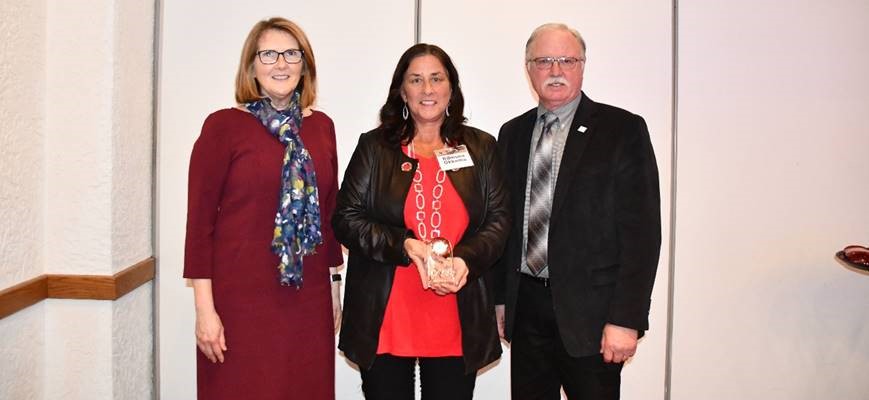
Almost four decades later, Okkema is on her third dairy farm and a vocal proponent of the nourishing liquid that brought her across the world and back again: milk. So much so, in fact, that the United Dairy Industry of Michigan (UDIM) noticed her efforts and honored Okkema with the 2019 Excellence in Dairy Promotion award at the Great Lakes Regional Dairy Conference in Frankenmuth, Michigan.
Dirk, her son and MMPA member representative, says Okkema has been involved in dairy promotion for many years. “Her work has been spread all around the community and the state of Michigan,” he said.
An MMPA Dairy Communicator, Okkema has organized promotions at local events and volunteered for Montcalm County Little Red Barn and Great Dairy Adventure.
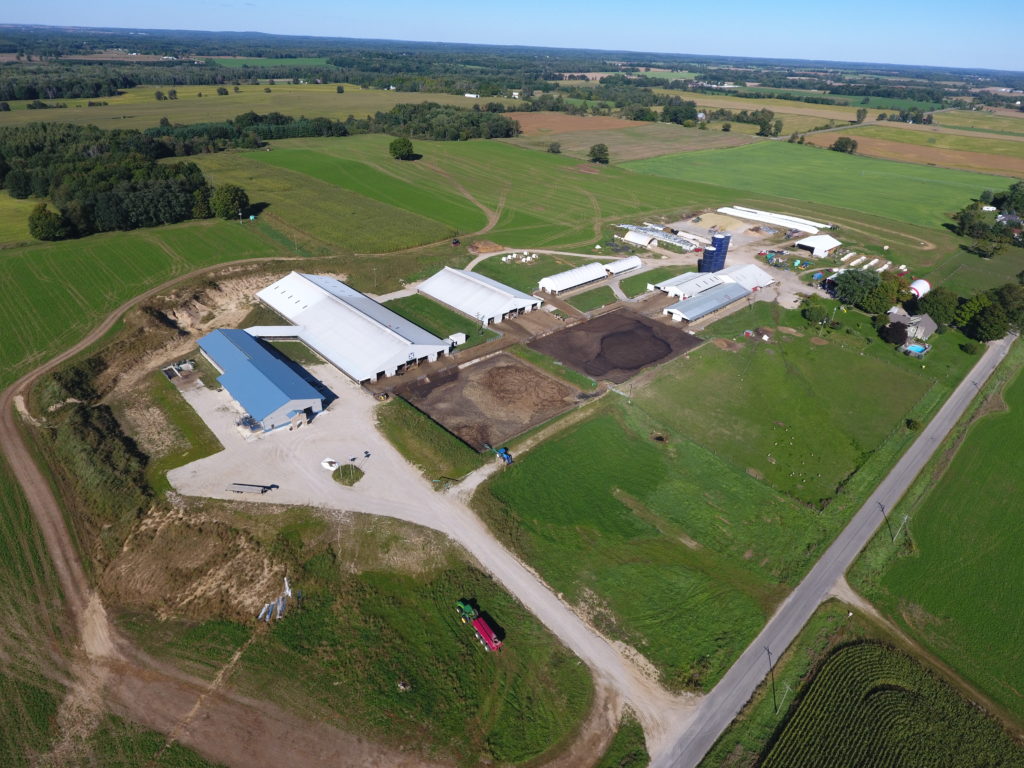
De Grins Oer Dairy means “over the border” dairy in Friesian. (Photo by Dirk Okkema)
Though she’s a proud dairy farmer and promoter today, Okkema didn’t think she would return to dairy farming. Growing up on a dairy farm in New Hampshire, she had other plans for her future.
“I wanted to learn how to fly airplanes. That was my dream,” she said, firmly denying ever planning to be a dairy farmer when she was younger.
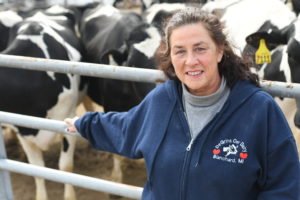
While she does have a pilot’s license and a degree in horticulture from the University of New Hampshire, she is now co-owner of De Grins Oer Dairy in Blanchard, Michigan. They milk 675 cows and have 1,400 total head.
The Okkemas moved to Michigan in 1999 to start De Grins Oer Dairy, which means “over the border” dairy in Friesian. Though Okkema is an American, they didn’t have any familiar ties to Michigan. But between ads in a local farm magazine, new connections made by happenstance, and a well-to-do uncle nudging the family to return to this side of the Atlantic Ocean, the choice became clear.
“’Michigan’ was just in this neon blinking status,” she recalled.
Okkema’s three children—Dirk, Evelyn and Cora—were born in the seven and half years she lived in the Netherlands. All are still active on the farm or in the dairy industry and have dual citizenship.
A sense of community tethers Okkema to the dairy industry. Before they left the Netherlands, the town came together to offer well wishes on the family’s new adventure. “A couple of weeks before we left the Netherlands, my husband came running into the farmhouse and said, ‘You got to get dressed. They’re here to pick us up! They’re here to pick us up!’” she recalled.
Okkema says village hired a Friesian horse and buggy to take them up and down every street in their village to say goodbye. “It was absolutely amazing,” she said, noting the community support from their former home.
Back in the U.S., Okkema strives to be part of their current community and share her dairy story. Okkema says she feels a drive to promote the product her farm produces because of a culmination of her life experiences.
“There was a connection growing up on dairy farm in New England then marrying a dairy farmer in the Netherlands and then moving here,” she explained. “I’ve seen the work my father and my husband and my family do. Yet the general public doesn’t really understand the benefits of dairy. I decided it was time to share.”
Okkema received her first lesson in the consumer knowledge gap as a young girl. She was the only one of the 453 people in her graduating class in who lived on a dairy farm. In an area where she says today the property hardly sells for less than $1 million per acre, there were a lot of “misconceptions” about dairy farming among her peers.
“I think the way I’m wired, that enamored in me to set the record straight of just how good and special and unique it is to live the life of dairy family,” she explained.
Today, she’s using her life’s journey as a motivator for her dairy promotion work in Michigan.
“Ramona’s dedication to promoting dairy goes above and beyond,” said Sharon Toth, CEO of UDIM “She is an inspiration to everyone in the dairy community.”
Ramona Okkema (center) was awarded the Excellence in Dairy Promotion award at the Great Lakes Regional Dairy Conference in FEbruary 2019 by UDIM CEO Sharon Toth (left) and UDIM president Jim Reid (right).
For example, Okkema helps at the Montabella School Carnival, where students learned about farm animals such as lambs, calves, chickens, ducks and rabbits. She also brought Maxine — a simulated cow for the children to milk — to help them learn more about what cows eat and the nutrition benefits of milk.
“Maxine is such a hit,” she said. “It’s worked so much so that there is a ‘Maxine 2’ owned by Mecosta County Farm Bureau. She has been cloned.”
Okkema has also used resources available through UDIM including the Nature’s Sport Drink Grant for the Montabella High School football team and a “Jump with Jill” event at the Montabella Elementary School. The Okkema family and farm employees work together on a float for the local parade with a theme focused on educating the public about dairy farming.
Then in 2014, her family hosted Breakfast on the Farm in 2014 for 2,000 people. “I enjoyed being right there with people and answering questions one on one,” Okkema said.
Okkema recommends individuals hoping to amp up their dairy promotion should look within their community to events already happening. “If you want expound people’s awareness of dairy then find an area where a lot of dairy products could be utilized,” she said.
After earning the honor of the Excellence in Dairy Promotion award, Okkema feels more of a responsibility to continue promoting dairy.
“It is just truly, truly important that people understand it’s not just a place where air has the certain aroma to it and you can hear cows mooing,” she said. “Dairy is the greatest gift that nature could give mankind.”
–Allison Stuby Miller
This article was originally published in the June issue of the Michigan Milk Messenger. Subscribe »
Tucked away just outside of what is known locally as ‘Michigan’s Little Bavaria,’ is a hidden gem where consistency and quality are king of the dairy farm. Three generations of Daenzers, each with their own strengths, seamlessly work together to provide excellent care of their dairy herd in Frankenmuth, Michigan.
Meadow Muth Farm LLC, owned and operated by the Daenzer family since 1909, earned the MMPA Top Quality
Award at the 103rd Annual State Delegate Meeting. Meadow Muth Farm maintained an average somatic cell count (SCC) of 53,667 cells per milliliter, pre-incubation (PI) bacteria count of 1,333 cells per milliliter and raw bacteria count of 1,083 cells per milliliter in the 2018 fiscal year. The farm milks 360 cows and farms 900 acres of corn soybeans, alfalfa, sugar beets and wheat.
“I was very excited to win the MMPA Top Quality Award. We are so proud of what we do here at the farm,” Leslie Daenzer said.
“When Leslie sent me a text about winning the award, I was shocked,” Jacob Daenzer said. “I couldn’t believe it at first!”
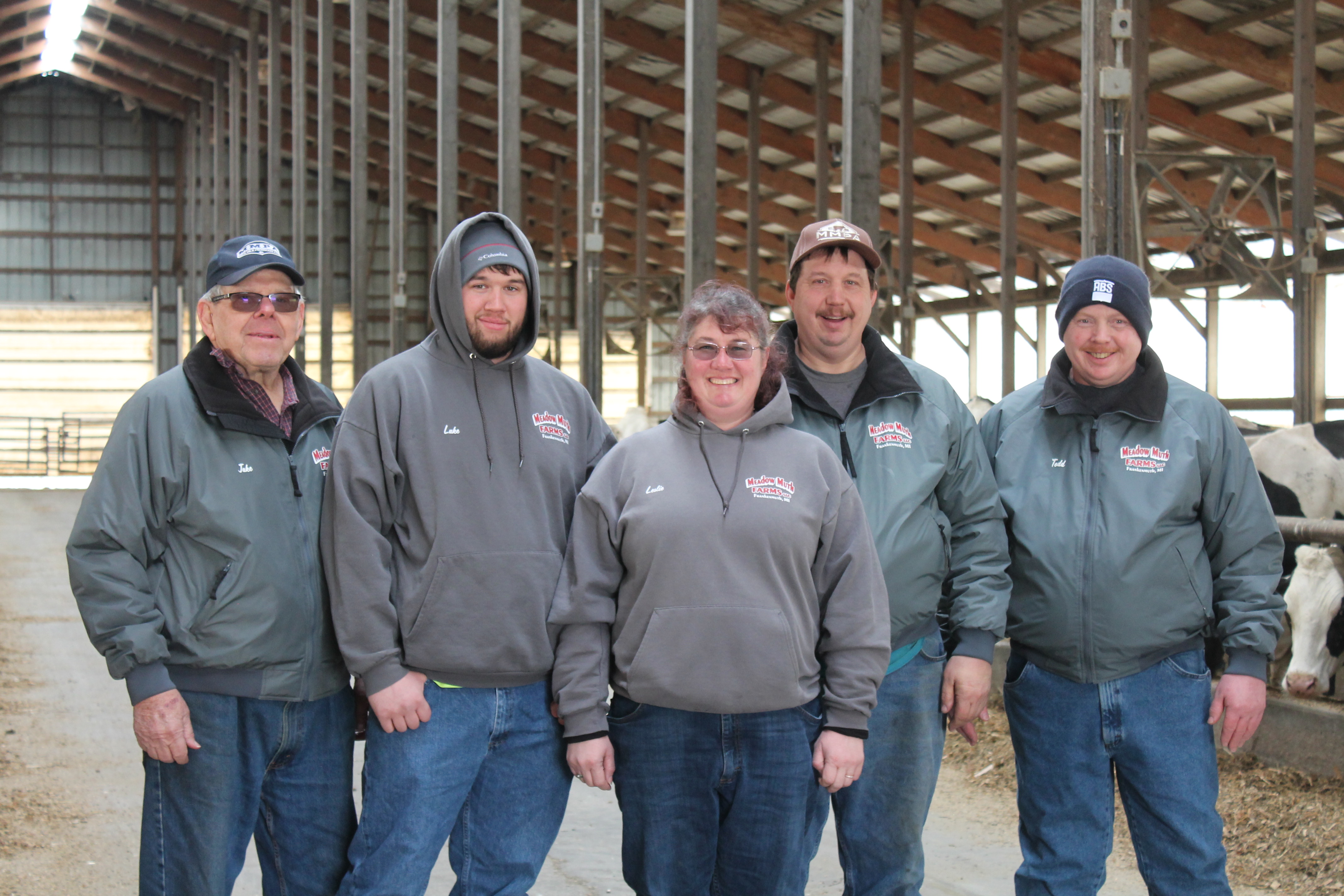
Jacob, his sons Doug and Todd, along with Doug’s wife, Leslie, and son, Luke, are the heart of Meadow Muth Farm. Jacob who is semi-retired, spends most of his time handling the manure management and their Michigan Agriculture Environmental Assurance Program (MAEAP) certification. Much of Doug’s efforts are in the fieldwork side of the farm and working with the animal nutritionist in balancing rations. As the farm herdsman, Todd focuses his time on herd health, the breeding program, and calving. Leslie is responsible for the calves, the parlor maintenance, bookwork, payroll and the employees. Luke works with Doug in the fields, milks cows and helps in the other various areas around the farm as needed.
“Consistency, consistency, consistency is our motto on the farm,” said Leslie.
“I have always been impressed by the consistency and dedication to maintaining high quality milk at Meadow Muth Farm and the Daenzer family’s pride in caring for their animals,” Emily Peacock, MMPA member representative said. “The love for their farm, their cows and their community is truly an honor to be a witness to. As their member representative, I have seen the hard work they have put in to making sure animal care and milk quality is always a priority.”
The Daenzer family was honored with the MMPA Top Quality award. From left: Jacob, Luke, Leslie, Doug and Todd.
CONSISTENCY IN THE PARLOR
“High quality milk starts in the parlor. We have a strict milking routine. It is similar to the MMPA recommended procedure taught at Milker Training Schools,” Todd said. “I check up on the milkers regularly to make sure the milking routine is consistent and remind employees of why we use the procedure when necessary. Consistency in the procedure not only gives the cows the same quality care every milking but helps prevent infections from poor udder prep.”
The cows at Meadow Muth are milked three times a day in a double 12 parallel parlor by two people. In groups of three, milkers gently dry wiping any loose debris from the udders as the cows enter the parlor.
On the second visit, milkers pre-dip each teat with a quarter percent iodine dip, massage the dip into the skin to properly clean and fore strip each quarter to inspect the milk. Next, they wipe the teats with a microfiber towel twice to ensure the cow’s udder is clean and dry. On the last visit to the cows, special attention to unit alignment is given as the milking units get put on the cows so the udder will be milked out evenly and efficiently.
After the milking units release from the udders with the help of the automatic take-offs, which are set to sense when the cow is done, the milkers post dip each teat before the cows are being released to go back to the freestall barn.
The equipment dealer performs routine parlor maintenance four times a year to ensure the milking equipment is in good working order. The dealer also checks the equipment automatic cleaning process to ensure the correct chemical solutions are used to remove any bacteria from the milking equipment.
“The routine maintenance and careful observations of our parlor protocols are important to keep everything running smoothly so we can spend more time focused on the cows rather than on equipment repairs or chasing quality problems,” Leslie explained.
CONSISTENCY IN ANIMAL CARE
The curtained side walls of the freestall barn keep the howling wind and brutal winter weather out while in the breezy summer months, are open. This allows the cows to enjoy the nice weather in the comfort of their favorite spots in the barn yet out of the direct heat. As the cows were returning from the milking parlor, many of the Holsteins hustled for the fresh feed which is carefully mixed according to their dietary needs.
Others headed straight to their favorite stall to lay down in the comfortable sand bedding. Todd, who is charged with overseeing the cow care, shared how cow comfort and animal health has always been a priority.
“Over the years, I have noticed that good genetics, being vigilant of any changes with the fresh cows and having a preventative mindset in regard to herd health makes the most impact on milk quality,” Todd said. “We typically aren’t shy about culling cows, even for somatic cell, because a healthy herd is one of the keys to our success.”
Continuing on, Todd explained that he tries to be very hands on with the cows including working closely with the veterinarian to administer vaccines, monitoring production numbers gathered at each milking, walking through the
freestall barns to visually check the animals, and closely monitoring the dry and fresh cows.
The well-maintained barn has non-slip grooved floors in the clean alleyways so the cows won’t fall, groomed freestalls await the cows when they are ready to relax, and fresh air circulates throughout the length of the barn. When walking into the freestall barn where all of the milk cows are housed, the effort by the Daenzers and their employees is apparent.
“We are fortunate to have such a great team of employees who help us meet our quality goals and care for our animals like we do. The teamwork and consistency really makes everything work here at Meadow Muth,” Leslie said.
–Krista Schrock
This article was originally published in the May issue of the Michigan Milk Messenger. Subscribe »
MMPA must “embrace” today’s challenges and view the cooperative’s future as an opportunity, said MMPA CEO Joe Diglio at the 103rd Annual State Delegate Meeting on March 14.
Speaking to approximately 400 members and guests, Diglio drew attention to the idea of, “emerge,” the meeting’s theme. “Emerge. It is a simple word but when thinking about it, it is powerful,” he said.
“In a volatile and unstable environment, it is easy to sit back and wait for things to settle down and then take action,” Diglio continued. “It takes courage and unity to move forward with your vision during uncertain times.”
One year prior at the annual meeting, Diglio described how the cooperative is transforming for the realities of today and the unknown possibilities of tomorrow. While the dairy industry is still grappling with low milk prices and a rapidly changing marketing environment, Diglio said MMPA’s efforts to evolve and find new opportunities is pulling the cooperative forward.
“Companies that emerge from a challenging environment usually can identified key attributes that make them successful. The same holds true for MMPA,” he said. For Diglio, it comes down to technology, teamwork and relationships.
Over the past couple years, MMPA has been in the process of updating the technology touching every aspect of the supply chain. Core business functions are implementing an Enterprise Resource Planning (ERP) system to better serve members and customers.
“This system streamlines our business processes onto one platform so we can fully leverage our portfolio to help deliver more end-to-end solutions to our customers,” Diglio said.
Diglio also touted the technology and innovation involved in the expansion at Constantine. The investment added an ultra-filtration system to produce a new valued added product. Though Diglio says ultra-filtrated milk isn’t a new technology, MMPA’s innovative system provides customizable solutions to meet customers’ needs.
“Innovation is not a moment in time but a journey. And when you prepare for a journey it is best to surround yourself with great talents,” he said. “It has been a priority to get the right people and culture in place to help drive innovation and to successfully adapt to the changing environment. No one person can do this alone, it takes a team effort.”
Diglio called attention to the many people working on behalf of members at MMPA, including the member services and supply chain departments. From a broader perspective, Diglio says our goals must be aligned with all decision makers, especially the board of directors. Board members, all dairy farmers themselves, are “advisors, decision makers, problem solvers and advocates.”
With a “focused and united” team as a base, MMPA is engaging with customers to further drive innovation and return value to member-owners. “Developing a better understanding of the consumer wants and needs helps support growth initiatives that can create strong partnerships,” Diglio said.
MMPA is strengthening its relationships with customers, fellow cooperatives and other institutions on collaborative and mutually beneficial partnerships.
“Relationships are key when it comes to building towards the future,” he continued. “That doesn’t happen without strong belief of an organization, commitment on following through and backing from those who understand the need and support the vision.”
Diglio reiterated MMPA’s vision, with collaboration, strategic alignment with customers at the forefront. Recently completed projects like the Constantine expansion and other business development opportunities shed a positive light on the future.
“Where we are today is progress,” Diglio said. “However, I don’t want you to think we have completed our vision. While we have plenty of momentum behind us there, is much more in front of us.”
–Allison Stuby Miller
This article was originally published in the May issue of the Michigan Milk Messenger. Subscribe »
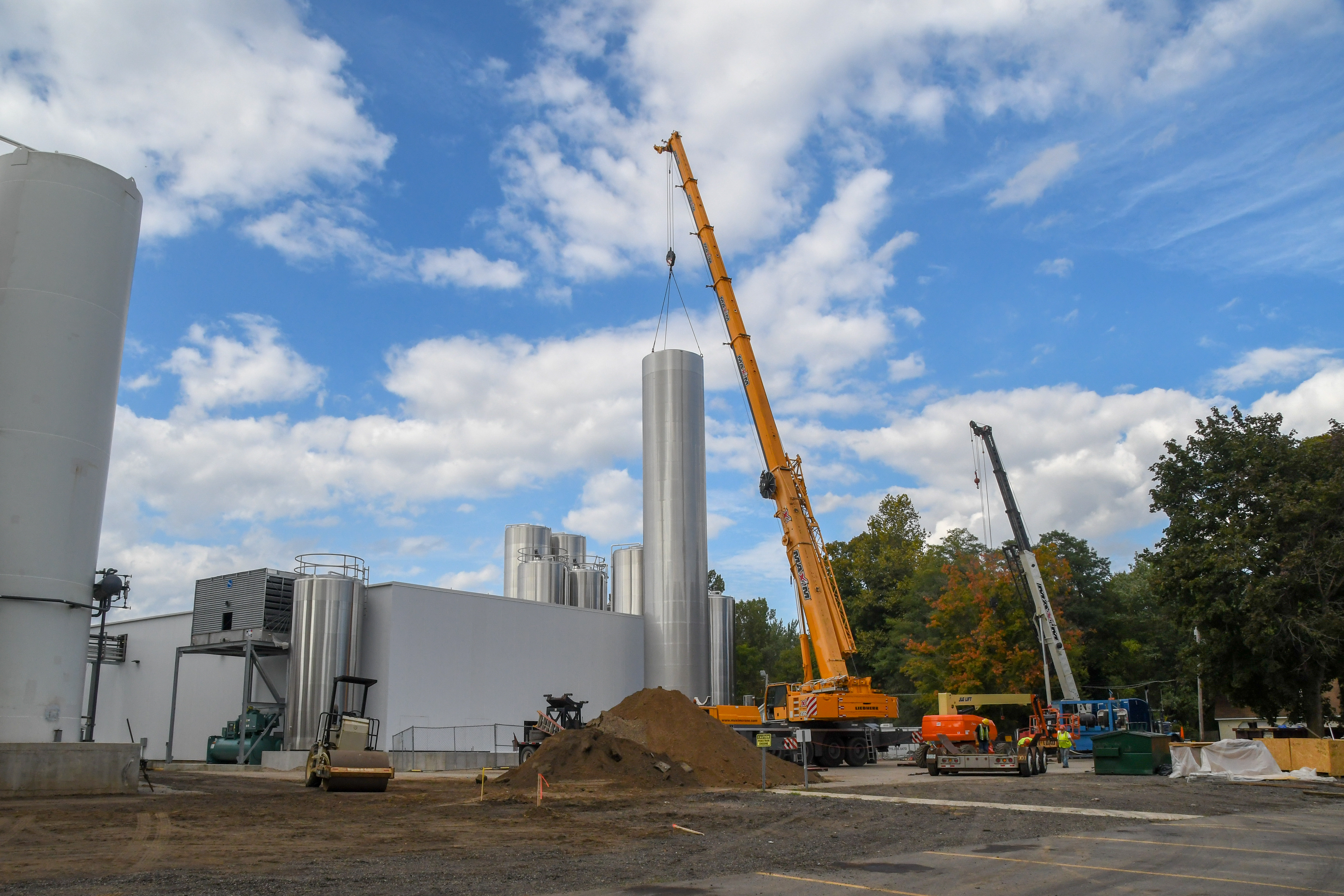
In Constantine, Michigan, the corner of Station Street and East 2nd Street sits in a new shadow. Gleaming in the sun and reaching up to 78 feet tall, 17 water and milk silos tower over the village corner. Rewind a few months, stand on that same corner and you’ll find an entirely different view.
The transformation began in June 2018. First, a crew installed footers to support the foundation of a 7,500 square foot addition to the existing milk processing plant. Then custom built machinery was fit into place. Those silos paraded through the village, a crane tilted them 90 degrees to mount into place. Soon after, skim milk started flowing through the new system. And at last, the first load of ultra-filtered milk departed.
All in six months’ time.
The MMPA dairy plant – located six miles north of the Michigan-Indiana border – underwent a 1.3 million pounds of milk per day expansion. Completed in November 2018, the project comes at a time when more milk processing capabilities are needed in the Great Lakes region.
“Our ability to execute a project like our Constantine expansion in the timely manner we did demonstrates our commitment and determination to proceed with our strategy,” Joe Diglio, MMPA chief executive officer, said.
MMPA’s strategy includes asset maximization, business development and strategic alignment with customers.
The MMPA board of directors—made up of 13 elected dairy farmer members—approved the project in April 2018. They were confident in the innovative vision of MMPA staff and took on the risk of moving away from MMPA’s traditional product mix, according to the team involved.
The board continually reviews expansion opportunities at every meeting to determine what opportunities are best for MMPA members.The ultra-filtered project fit into MMPA’s strategy and met the co-op’s timing, capital and return on investment goals, according to the team. The board realized the need for immediate investments along with other long term solutions to accommodate the region’s milk supply.
“They were like, ‘Can you get it done tomorrow?’” Dave Davis, Constantine plant manager recalled from conversations with the board.
Even with great leadership, construction of a project of this scale can take a long time. MMPA completed construction in six months. For Davis, meeting the aggressive deadline was possible due to “great teamwork” among staff. In addition, over 20 construction and equipment vendors were involved, all locked into meeting the project’s accelerated timing. “At one point, we had 110 people onsite,” he said.
The new value added product, ultra-filtered milk, builds upon Constantine’s existing portfolio of mainly commodity dairy products like butter and powder. Ultra-filtered milk is a fluid dairy product created by concentrating protein and removing minerals and lactose. The process also removes water naturally found in milk during concentration, called cow water.
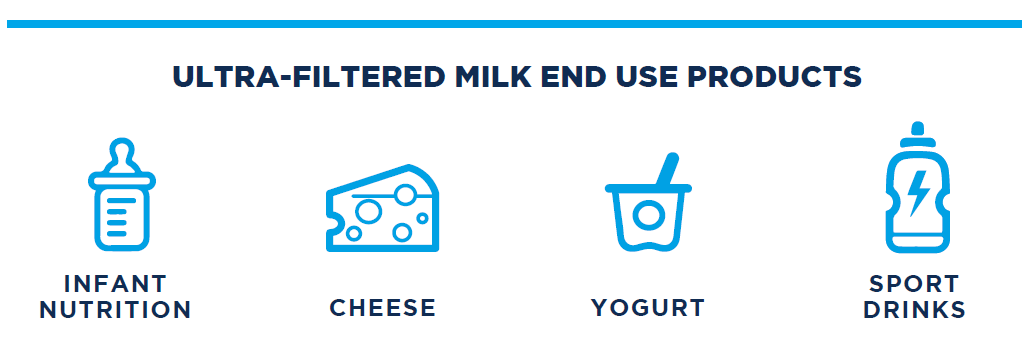
When the plant receives member milk, it is first separated into skim milk and cream, then pasteurized. Some of the cream is churned into MMPA’s award-winning butter. As for the skim milk, it can be evaporated, dried or concentrated into ultra-filtered milk. From there, ultra-filtered milk can be used in infant nutrition, cheese standardization, yogurt and dairy nutrition drinks.
The new addition to MMPA’s product line adds value for members not just for the product itself, but by displacing skim milk previously destined for condensed skim. The value to members is “two-fold,” Jim Feeney, senior director of sales says. “It’s not just adding new products, it’s displacing one of our lowest margin products.”
While designing and constructing the new addition to Constantine, the team paid close attention to sustainability and efficiency. The system has a low water and carbon footprint, according to Aaron Beak, MMPA director of business development and hedging. “We installed more energy efficient equipment, improved biosecurity and focused on all the bells and whistles,” he said.
“The ultra-filtration plant can generate up to 85,000 gallons of pasteurized equivalate water per day. We use the clean water to clean and operate the ultra-filtration system,” Davis added.
Ultra-filtered technology runs milk through a series of membranes to get a particular result based on the customer’s needs, according to Beak. MMPA’s system allows for customization, which makes it unique.
“Our system is make-to-order,” Beak said. Some customers know what they want, while in other cases MMPA develops a product to fit their needs.
Customer relationships are “critical” for this system and its strategic location in southern Michigan, Feeney adds. “We will continue to work with historical customers as well as new opportunities,” he said. “There are products that don’t exist today we want to work with customers to develop.”
The ultra-filtered milk system fits market demands as consumers search for higher-protein, lower-carb, lower-lactose products. Consumers pay close attention to food labels these days, and ultra-filtrated milk allows for a shorter ingredient list on retail products while meeting those needs, according to the team.
“The timing [for the expansion] was as soon as possible because the market was ripe for opportunity,” Feeney said.
Looking ahead, the team says there is room for more growth in both technology and sales opportunities. With the board’s support and a motivated staff, the expansion is one way MMPA is adapting to a continually evolving dairy industry.
“Transitions can take place slowly or rapidly,” Diglio said. “It really depends on how prepared you are to embrace a changing environment.”
–Allison Stuby Miller
This article was originally published in the March 2019 issue of the Michigan Milk Messenger. Subscribe »
To sell more dairy products beyond our borders is the essence of why the U.S. Dairy Export Council (USDEC) was developed twenty-three years ago and recently four U.S. dairy producers doubled-down on that mission. Marilyn Hershey of Pennsylvania, Brad Scott of California, Lowell Meuller of Nebraska and MMPA member, Cheri Chapin of Remus, Michigan, recently left their farming operations and travelled to Japan and Hong Kong to share the U.S. dairy export vision.
“While the USDEC Governance Mission to Tokyo and Hong Kong was exhausting, it was also exhilarating. We went to listen and learn, but we also taught and shared; it was a very reciprocal trip,” stated Chapin, who milks 700 cows with her family in Mecosta County.
Chapin emphasized the great need for dairy beyond our borders, “There’s a lot of world out there that needs U.S. Dairy. More than half of the world’s population lives in a circle within Asia that encompasses China, India, Indonesia, Bangladesh, Japan, and 14 other countries,” she said. “The people who live there need more dairy than their own countries can produce. I think the U.S. can step in and fulfill that need.”
Cheese consumption in the Japan compared to that of U.S. is strikingly lower. Chapin explained that Tokyo is a city of 37.5 million, 23 times bigger than Chicago, while Hong Kong is home to 7.2 million people. But looking at individual consumption, even as the world’s largest importer of cheese, Japan is behind the U.S. with a per capita consumption of 5.5 pounds. In the U.S. per capita consumption is more than 36 pounds of cheese.
“That means there’s a lot of room for growth! Hong Kong’s imports of cheese were up sixteen percent last year compared to 2016, which is great, but we can do better,” Chapin explained.
The week-long trip had a mission theme of “People, Partnerships and Programs.” They participated in meetings, receptions and taste testing opportunities, “We met some amazing people, including USDEC staff working on our behalf all over Asia. We also met with Dr. Yukio Hattori, the original Iron Chef, at his school, the Hattori Nutrition College, where a “Cheese Course” is being developed. The U.S. Consul General, Kurt W. Tong, hosted a cheese and wine reception on our behalf, inviting local tradespeople to sample our superior U.S. cheeses. We shared our stories with everyone we met with, and they appreciated and were very interested in our families and farming practices.”
Chapin shared her personal story with an emphasis on family, “I shared that we are a centennial farm, and that farming is not a job, it’s a lifestyle.”
Chapin noted the people of Japan and Hong Kong have shown an increased desire for artisanal and American style cheeses, it’s just a matter of getting the U.S. cheese and other dairy products in there. One initiative targets the fitness industry through a whey protein subscription program.
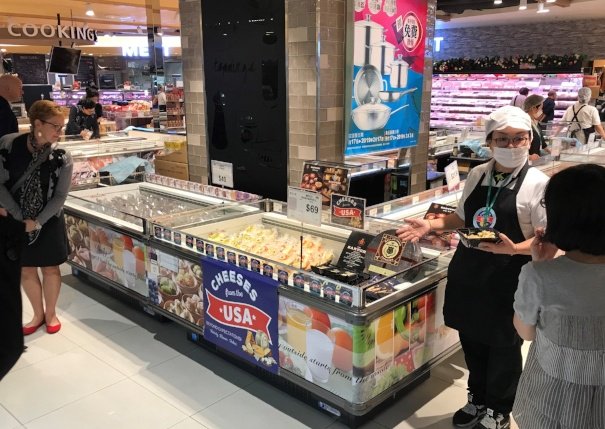
MMPA Member Cheri Chapin checks out a U.S. cheese display at Aeon supermarket in Hong Kong. Photo credit: USDEC.
Marilyn Hershey of Pennsylvania said this mission comes down to one word: relationships.
“If we can secure and build stronger relationships in both Tokyo and Hong Kong then we will have accomplished what we set out to do. We need to work at our global relationships. We need to show people in other countries that the United States is serious about being their consistent supplier.” Hershey added, “The fact that we are bringing four dairy farmers to these markets shows people that it is more than just talk.”
While on the trip, the four dairy producers were able to witness the hard work performed by USDEC. Chapin explained, “We saw our USDEC personnel in Japan and Hong Kong working diligently and passionately on our behalf. They are forming much-needed relationships and partnerships through programming. They are determined to bring about “The Next 5%” in exports, and regain our number one Global Cheese Exporter status”
Hershey noted that, more than one out of seven milk tankers leaving American farms end up in products and ingredients sold in other countries, and she believes the best is yet to come.
Chapin is excited at the bright future of increasing dairy exports, “We’ve already seen an increase in our dairy exports, especially cheese exports, in 2018, and I think we are making great headway for the future.”
–Melissa Hart
This article was originally published in the January 2019 issue of the Michigan Milk Messenger. Subscribe »
Few career and lifestyles are like dairy farming. The passion, dedication and hard work of dairy farmers is well known. But what happens after the milk leaves the farm? That is where the MMPA supply chain department steps in.
From getting raw milk from the dairy farmers to delivering milk products to customers, the MMPA supply chain department is involved with every step along the way ensuring the cooperative and dairy farmers receive the most value from the milk they help market.
MMPA’s supply chain department of 13 dedicated team members make up a vital part of the cooperative milk marketing team. With over 85 years of combined experience, the department is internally cohesive while working with other business areas of the cooperative. The supply chain department manages the flow and execution of raw milk and manufactured milk product sales for the cooperative members.
“When presented with the impossible, others may not see solutions, but it is our job to make it possible,” added Brent Weller, production planner.
The Logistics of Moving Milk
As part of the supply chain, high quality milk and milk product transportation is an important part of ensuring success in the marketplace. With staggered work schedules, a three-man dispatching team, Matt Sweet, Adam Reed and Bruce Brennan staff the dispatch center to ensure they are available to address any load
delivery challenges that may come up.
“If there are trucks on the road, we are available to handle delivery emergencies,” said Reed. Originally working in supply chain for a fuel and oil company several years back, Reed returned to dispatching at MMPA in 2016. Bruce who carries the nickname ‘the veteran young guy,’ brought over 40 years in truck logistics as a driver and manager before hired onto the team 18 months ago. Unlike Reed and Brennan, Sweet didn’t have a supply chain background prior to joining the MMPA supply chain dispatch division six years ago. Now as the logistics lead, he utilizes the out of the box thinking and flexibility he gained from his former jobs to the dispatch team.
The dispatchers tackle scheduling load deliveries starting with the local loads to regular customers followed by out of state deliveries. They are on the phone and emailing with processing plants, milk haulers and the sales department to create the most economical and efficient schedule while meeting all customer requests
such as the amount of milk needed and milk quality criteria.
The dispatchers take in consideration State D.O.T regulations, processors receiving schedules and milk transportation variables like tanker size and distance from milk pickup to the end destination. MMPA plants are used for balancing purposes, meaning that outside customer orders and spot sales or special orders that are inconsistent are fulfilled first.
John Fritzler, who was brought onto the supply chain team over two years ago, uses his strengths in managing a constantly changing work environment
and vision for future opportunities to enhance the team.
“What sets us apart from our competitors is our milk quality and our customer service. I always try to have a ‘what if’ plan in my back pocket in case something comes up causing us to adjust our plans of fulfilling customer orders. The most important piece for logistics is communication. If we aren’t constantly communicating with the entire department, our plans will probably impact someone else’s solution,” shared Fritzler.
Fritzler continued, “Although my team and I focus on the start of milk marketing chain with handling the raw milk from the farms, the destination of the loads will influence production at our plants, our customer’s orders and ultimately the economics of the co-op.”
Forecasting Product Demands
Making the decisions of what is on the production schedule at the MMPA plants, managing product inventory to have available for orders and which batch of inventory meets customer’s criteria when shipping it out is all part of the production planning division. Brent Weller, whose father was an MMPA member, has been working with production planning at MMPA for eight years after serving in the U.S. Navy. Now Weller heads up the production planning division of the supply chain department.
Working with Weller in production planning is Debbie Kniffen, fluid sales specialist; Kay Green, customer service representative; and Bill McCarthy, inventory analyst. Meagen Hadley, who also works in customer service, is the fourth member of her family to work for MMPA, starting with her great-aunt who worked at the original MMPA Detroit office. Meagen coordinates with the sales department and production planning team to make strategic production decisions for butter and milk powder made at the MMPA manufacturing plants.
The group works with the sales team to understand the customer commitments made and layering in sales projections into the decision of which products will be scheduled to be made in the MMPA plants.
“We don’t make product in our plants just to make product. We focus on making the best product that will sell and give us the best financial benefit,” said Weller.
When making strategic decisions, factors such as when preventative maintenance is scheduled at the manufacturing facilities, what sale commitments have already been made with customers and member farm milk production trends are taken into consideration. Since fluid products carry only a 72-hour shelf life once
processed, they take priority when planning production schedules. Both Kniffen and Hadley spend much of their time coordinating with customers and the MMPA plants to ensure the orders committed by the sales department are produced on schedule, meet customer’s criteria and are delivered on time.
Kniffen said, “After 31 years, I still take pride in that MMPA milk is highly sought after because of our quality. I like finding dairy products in the grocery store made by a company that I know bought milk from us. It is important to provide great service when working with members and customers so we can get the most value for their milk.”
McCarthy focuses his time on the Middlebury Cheese Company orders and inventory production. He cross checks what is made at the plant with what purchase orders need fulfilled, managing the inventory storage of the cheeses produced and coordinating with the on-site retail store on their needs.
Accuracy and Verification
After raw milk weight manifests arrive at the office, the weights division headed up by Wanda Perez, the raw milk manager, separates manifests by milk delivery destination. Trish Toth and Kim Burlison scan the manifests using ABBY, a scanning software solution implemented in 2017 to reduce manual data entry and increase accuracy, this system feeds the data into the new DSI payroll system.
The DSI payroll system is the new solution that MMPA implemented in 2018. It tracks weights and components, as well as handling the customer class utilization and pooling information required by the Federal Milk Marketing Orders. It communicates the scanned data to other departments within MMPA such
as the lab system so quality sample information can automatically be paired with weights and be available to members sooner.
“This system replaced a legacy system that no longer was benefiting members and now saves us time to focus on verifying weights before invoicing customers and paying our members.” said Tierney.
After the weights team verifies all the weight information collected from members and customers are correct they focus on invoicing customers. Their attention to detail is important in making sure all the parts throughout the process are correct and accurate.
With many moving parts in the milk marketing mission, it truly takes teamwork, communication and foresight. The supply chain team works seamlessly using many forms of communication to make sure if any challenges arise, it is addressed quickly.
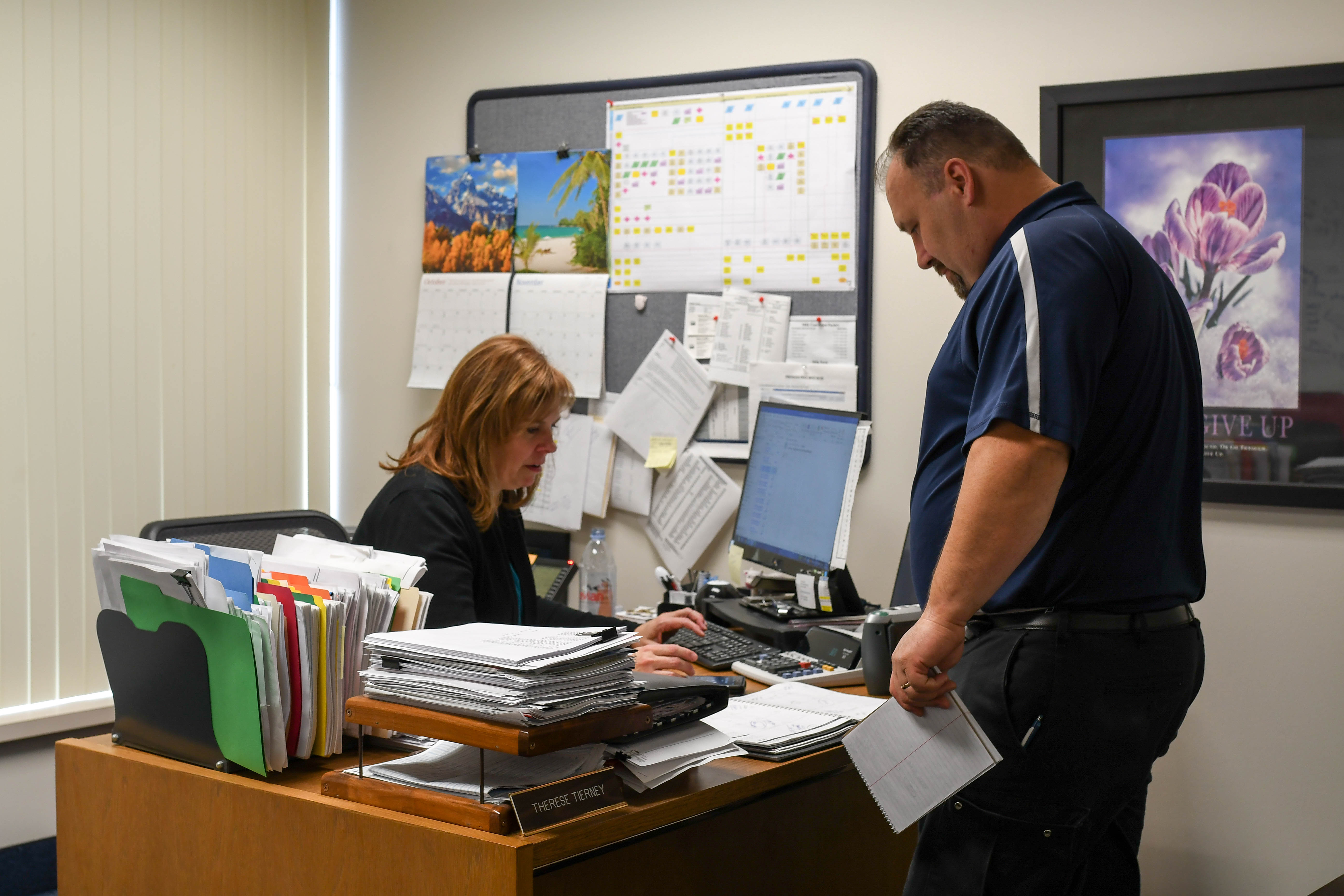
THERESE TIERNEY, SUPPLY CHAIN DIRECTOR, AND JOHN FRITZLER, LOGISTICS MANAGER
“We are consistently talking back and forth to the plants, our accounting department, the sales team, the customers and each other to make sure decisions and plans are made as seamlessly as possible,” said Tierney. “There isn’t anyone we don’t communicate with to get the job done. Our department is always working; this department is a 24 hour, 365 days a year job.”
“Supply chain understands and embraces the cooperative business. The whole team is very committed to the co-op. We understand the members work long hours and rely on this department to be efficient and retain the most value out of their milk and we are honored to part of this business,” concluded Weller.
From the starting point at the dairy farm to the finish line of selling the milk, MMPA’s supply chain prides itself on getting the most value out of the milk for
the farmers. Foresight of what products to make in MMPA’s plants, navigating tough sales markets, and the diligence for accuracy define the hardworking supply
chain department.
–Krista Schrock
This article was originally published in the December issue of the Michigan Milk Messenger. Subscribe »
He was born to milk cows, dreaming of being a dairy farmer since visiting his great-uncle’s farm in Wisconsin at age five. She was the all-star relief pitcher he needed to be his partner in business and in the game of life. With their recent marriage, they blended their families and grew stronger as a team. And if joining forces as parents of six kids wasn’t enough change for the newlyweds, they added 70 more cows to their dairy herd in the last year.
Jeremy and Deanna Beebe own and operate Double B Dairy Farm and raise six children—Eric, Garrett, Danielle, Alessandra, Delaney and Desaray. Jeremy, the local high school assistant varsity baseball coach, is hard core about the game he loves but his true love and passion is for his family and cows.
The couple was picked as the 2018 Outstanding Young Dairy Cooperator (OYDC) runners-up in September. Jeremy has looked forward to participating since he had found out about the program. Meeting MMPA employees at the Novi office, learning more about the cooperative and socializing with other young dairy farmers were highlights for the couple as they participated in the process so far.
Top of the Lineup
Double B Dairy Farm, located in Whittemore, Michigan, is home to 230 cows milked in a ‘Beebe Original’ parlor, as Jeremy calls it. He retrofitted the parlor, one side is a seven stall parallel, the other a five-stall herringbone. Jeremy built the unique set up to make use of limited space while maximizing the number of cows that can fit comfortably in the parlor. They milk all the cows twice a day and the fresh cows four times a day with the help of three full time and four part time employees.
The Beebes farm 550 acres of corn and hay. To focus more on the cows, the tilling and planting field work is often outsourced to Jeremy’s father and brother who have a cash crop farming operation close by. Like in baseball, “Team Beebe” relies on finding the right person or ‘coach’ for the task or ‘position’ and using their talents. Jeremy also works closely with a breeding service company to plan and execute the farm’s reproduction program.
“They are the experts and it also makes sure that the breeding program is very consistent,” said Jeremy.
“Consistency is a huge thing around here,” he added. “The way the cows are milked, animal care, feeding—everything really. Cows love and come to expect it, so that’s what we do.”
For Double B Dairy Farm, milk quality is always first, followed closely by cow comfort. The couple emphasized that milk quality for their operation starts in the milking parlor. They use PC Dart, a dairy herd management computer program for the recordkeeping and data management. The quality reports received by MMPA are also shared regularly with employees and discussed at the monthly staff meetings or in baseball terms, ‘the monthly team huddle.’ During the monthly huddles, the team covers farm standard operating procedures (SOPs) reminders, training and scheduling.
“We let our employees schedule themselves for the most part. It seems to work well for us and we don’t have as many issues with shift changes that way,” said Deanna.
Loading the Bases
Starting with only 30 cows in 2001, Jeremey acknowledges the key to their growth is utilizing outside resources such as MSU Extension and their herd veterinarian services. ‘Pinch hitters’ – baseball slang for a player who bats in place of a teammate, typically at a critical point in the game – are called in when something unexpected happens to not waste a potential opportunity. Jeremy’s pinch hitters come in the form of these experts and advice from fellow dairy farmers help with the farm challenges.
“Ten years ago, [dairy farmers] thought we were squeezing out every bit of efficiency we could, but somehow we are finding other ways to make it with what we already have. Things in the dairy industry are always changing and we need to keep trying to be more sustainable,” said Jeremy.
One example of the ways the farm is maximizing efficiencies is pairing up with a neighboring farm to put away silage for the year. Each neighbor provides a key piece of equipment and they work together to chop and pack the feed for each herd.
Another creative way the couple is making what they have go further is rewarding their employees in an untraditional way. Acknowledging the hard work and dedication of his key players (employees) is important to Jeremy. He offers an employee cattle ownership option for his team. Employees can purchase a calf and the farm covers half of the expenses to raise and care for the animal. After the calf has its first baby, Jeremy rents the cow from the owner. He shared that the employees who have taken advantage of the opportunity have taken more ownership of their responsibilities on the farm because of it.
Knocking it out of the Park
Jeremy and Deanna knew very early in their relationship that what they had was something special. Deanna doesn’t come from a farming background and has worked as a medical assistant in family medicine for the last 17 years. Her lack of experience around a farm did not stop her from falling for the dairy farmer and varsity baseball assistant coach. She now helps with the calves and helps in whatever area is needed most. When Jeremy isn’t at the farm, he spends his time cheering on the kids at their sporting events. The kids are very involved with school activities so there is plenty of cheering to go around.
“Our life here is very busy, but Jeremy works so hard. It is never ending but he is proud of what he does and is a great teammate in our hectic world,” explained Deanna. “I’d love to someday be on the farm full time and help out more. He has turned me into a farm girl.”
The couple, both with three kids from previous relationships ranging from five years old to 18 years old, were married in 2016 after dating for about two years. Team Beebe had many tractor dates and went to many ballgames throughout their whirlwind romance.
“When Dad proposed, we were all at the river and it was so fun. Then he popped the question and it was so romantic. Everyone was so excited when Deanna said yes!” shared ten-year-old Alessandra.
Even when the score is tied, bases are loaded, and it is the ninth ending, true baseball fans like the Beebes are optimistic for the win. Jeremy and Deanna work together as a confident pair of coaches both as owners of their farm and as parents to their children to ensure success. They work tirelessly to make sure the cows are always content and comfortable and to achieve their lofty milk quality goals.
While milk prices are low, and margins are tight, there is little doubt that the owners of Double B Dairy Farm are dedicated to providing world class quality milk and top-notch animal care to their dairy herd.
Jeremy concluded, “I’m determined to be a survivor and that is what makes a difference to me.”
–Krista Schrock
This article was originally published in the November issue of the Michigan Milk Messenger. Subscribe »
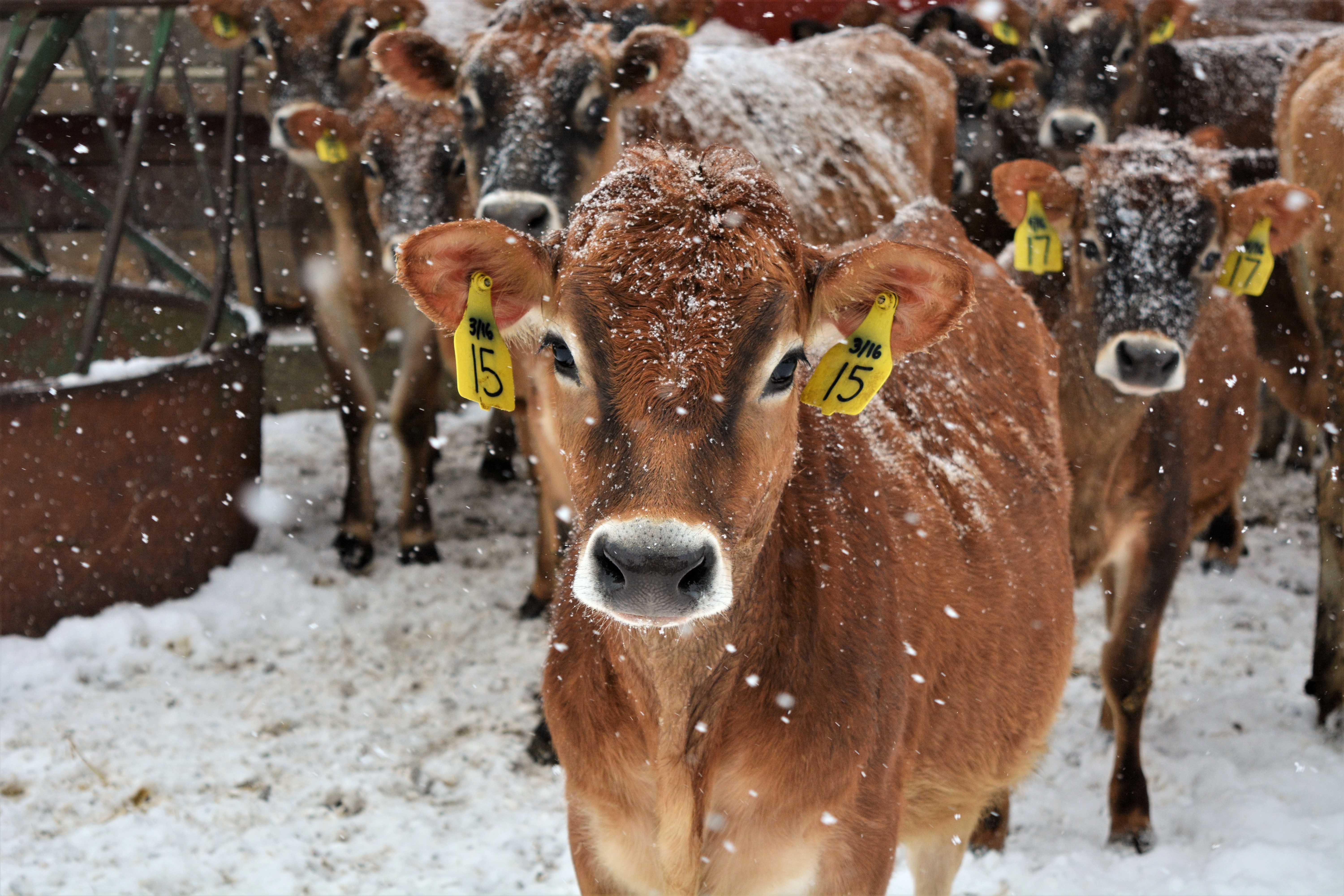
As an inspiring photography, high school senior Katherine Weber of Vassar, Michigan, snapped the winning photo in the 2018 MMPA photo contest. Weber says she took the photo because she thought the soft snowflakes slowly drifting down and landing on the heifer’s faces was beautiful. The heifers huddled together to during the January snow in Tuscola County.
“When I found out I had won, I was extremely excited,” said Weber. “I ran over to the milkhouse to tell my brother who didn’t believe me at first.”
Taken of several curious Jerseys, Weber loved the way heifer “15” stood out front and center in the photo. She enjoys capturing the essence of the family dairy, Weber Family Dairy, and the contentment of the animals. Weber submitted another photo, “Summer Jerseys,” that was considered a finalist in the competition.
After receiving over 85 photo entries, a panel of judges selected the top three winners for the 2018 MMPA Photo Contest. Photos were judged on overall image quality and composition, creativity, and the image’s ability to evoke imagination and to tell a story.
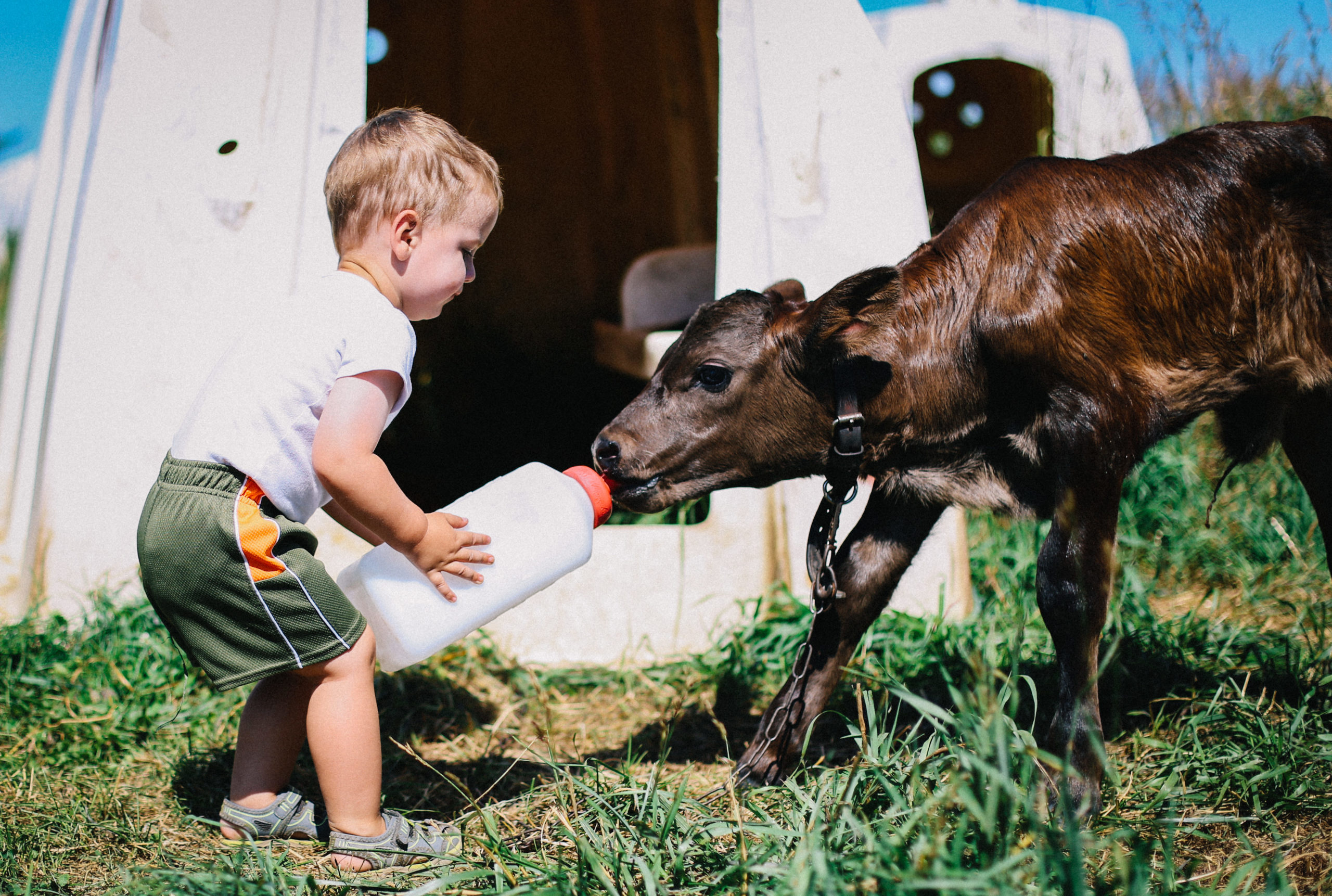
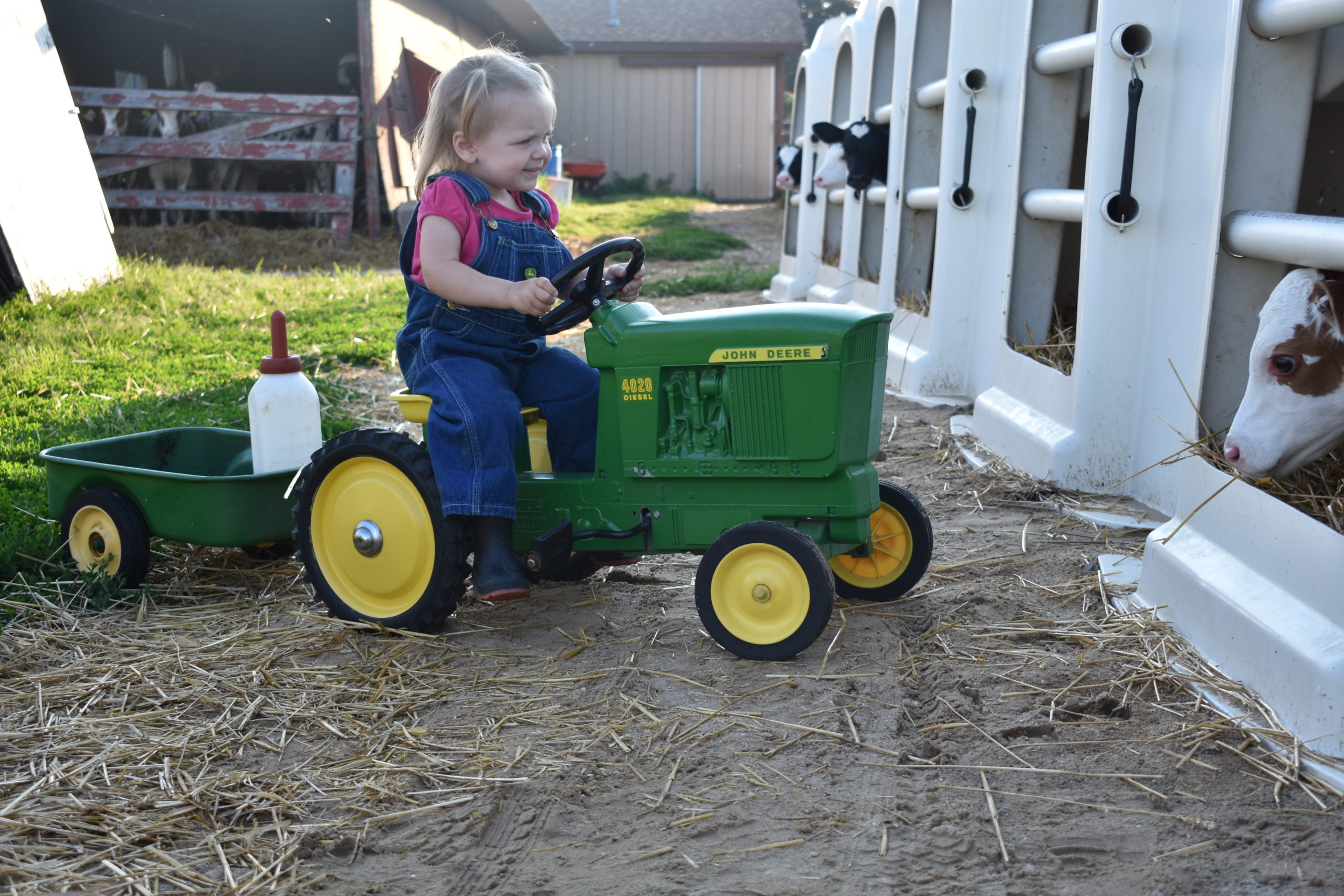
Displayed prominently on the cover of this month’s issue of the Michigan Milk Messenger, is the winning photo, titled “January Jerseys,” taken by Katherine Weber of Vassar, Michigan. Earning second place was Kathleen Reed of North Branch, Michigan with her photo, “Babies Feeding Babies,” and rounding out the top three images was “Bringing Bottles to Baby Calves,” captured by Amelia Osantoski from Port Austin, Michigan in third place.
With the contest being such a success, be sure to keep taking pictures and watch for the details about the 2019 Photo Contest.
1st place: January Jerseys, by Katherine Weber of Vassar, Michigan
2nd place: Babies Feeding Babies, by Kathleen Reed of North Branch, Michigan
3rd place: Bringing Bottles to Baby Calves by Amelia Ostanoski of Port Austin, Michigan
More photo entries
Photo by Kylie Klaasen of Coopersville, Michigan
Photo by by Aaron Gasper from Belding, Michigan
Photo by by Michelle Dellar of Harrisville, Michigan
Photo by by Elizabeth Rupprecht of Vassar, Michigan
Photo by Rebekah Rubingh of Ellsworth, Michigan
Photo by Jeremy Werth of Alpena, Michigan
Photo by by Ashley Messing Kennedy of Bad Axe, Michigan


 Haley Horiski
 Michael Iacobelli
 Alex Arnst
 Hailey Sharrard










 Knocking it out of the Park