Throughout 2016, MMPA has reflected on the beginning days, turbulent years and successes of the cooperative’s first century. First founded on May 23, 1916 at Michigan State University’s predecessor, Michigan Agricultural College, MMPA is one century strong as a farmer owned cooperative.

Celebrations in 2016 included publishing a history book, video series and the 12 features in the cooperative’s publication, the Michigan Milk Messenger. The features, written by Melissa Hart, are listed below.


100 Years of Integrity, Dedication and Commitment

January 2016

One hundred years.  A century. Transforming from one millennium to the next. This time span can encompass several generations and engulf iconic changes in a civilization. From 1916 to 2016 that’s exactly what happened.  Generations passed, a new century was turned and changes in the landscape of the dairy industry went from slow and steady […]


From Farm to Table in 100 Years

February 2016

Milk trucks are a fixture on the dirt roads and highways across the nation carrying a valuable, yet perishable product for farmers and consumers alike. Milk haulers are the link from the cow that produces that white, power packed nutritional punch to the consumer who enjoys it. Milk quality is unsurpassable in today’s market but […]


And They Continued to Show Up…for 100 Years

March 2016

It was 1919 and the third largest industry in the United States was dairy and the newly formed Michigan Milk Producers Association was getting ready for their third annual meeting to be held in East Lansing at the Michigan Agricultural College. The announcement of the meeting began with this: “Our vision of the battle […]


The Evolving Role of the Diva on the Dirt Road

April 2016

Women have been influential from the beginning of time.  Eve influenced Adam to take a bite of the forbidden fruit and the world as they knew it was turned upside down. Just as the diversification of women’s roles have evolved through history, the farm wife has woven her way into every level of leadership in the […]


Adversity Builds Character: The Fair Share Days

May 2016

“I hate it when a farmer says, ‘I’m just a farmer.’ This farmer doesn’t realize what he does for America, what he does for the economy and what he does for his family.  Farmers are very important. Where would we be without them?”– Former Senator Bob Dole. Just a group of farmers in Livingston County […]


From “Butter Bees” to “Milk Life!”

June 2016

Before “Got Milk?” Before “Three-A-Day.”  Before “Milk Life!” Before bumper stickers touting milk drinkers are better lovers and before influential athletes and Hollywood stars donned milk mustaches. Before June was declared Dairy month, milk promotion in Michigan was birthed out of a nutritional need and more profit potential through the Dairy Council in the […]


The Birth of the MMPA 4-H Milk Marketing Tour

July 2016

In 1935, a select group of young men were chosen for the first time, to wake up early, hitch a ride on a milk route and follow the milk as it went from the farm to the consumer learning how milk was marketed. Coordinated between Michigan 4-H and MMPA, this was the birth of the […]


100 Years in Three Words

August 2016

Walt Wosje and Elwood Kirkpatrick lead the way to cheese making with a partnership with Leprino Foods. Several leaders, past and present, were asked to offer three characteristics that describe MMPA and here’s what they said: “Integrity, stability and honesty.”- Deanna Stamp, retired board director. “Trust, transparency, dedication.” – Ken Nobis, board president. “Progressive, financially […]


Building Cooperative Longevity

September 2016

Centennial farms are scattered around the state and are prominently marked with green signs indicating the same family has been on that farm for at least 100 years. Greenstone Farm Credit Services is marking their 100th anniversary this year as they were established on July 17, 2016, when President Wilson signed the Federal Farm Loan […]


OYDC: Producing Leadership for Generations

October 2016

The 1964 Outstanding Young Dairy Couple, Harold and Lillian Gremel, with their three children Walter, Cathy and Marie. In 1950, MMPA realized the importance of shining the spotlight on a farm family who was progressive in their management practices, above average in their leadership skills and were pillars of their community. And so began the […]


The Road Less Traveled Forged by Great Leaders

November 2016

Maintaining a business for 100 years requires remarkable leadership and belief in the company. MMPA managed to have both, stacking decades on top of decades of business through leadership that pioneered the dairy industry from one century to another. MMPA began leading the dairy industry by simply existing. Forming the cooperative was the first step […]


Six Farmers, Six Leaders, 100 Years

December 2016

They traded in their t-shirts for a suit and tie. They took off their favorite hat revealing their white foreheads and hard work and used their brains for making marketing decisions. They slipped off their boots, put on their wingtips and headed to Lansing and Washington D.C. on behalf of their peers, sacrificing family time, […]


Michigan Milk Producers Association (MMPA), a long-time supporter and partner of Michigan State University Extension, received the Key Partner Award from Michigan State University Extension for its longtime support and for its work helping the people of Flint during the water emergency. The Key Partner Award, presented at MSU Extension’s annual conference in October, is given individuals or organizations who have made significant contributions to creating, improving, supporting or promoting MSU Extension programs.

MMPA formed May 23, 1916 when 400 dairy farmers gathered in Agriculture Hall (now the Justin S. Morrill Hall of Agriculture) at Michigan Agricultural College (renamed Michigan State University in 1964) with the goal of working to establish a stable, reliable price and a market for fluid milk. One hundred years later, the cooperative maintains this goal, as demonstrated by their mission statement: “To market MMPA members’ milk to the greatest advantage possible,” but the organization also does much more for the member-owners. Education, outreach and local support are important parts of how MMPA serves not only cooperative members, but all residents of Michigan.

With these common goals to support both the agricultural and general communities, MMPA and MSU Extension have maintained a strong partnership over the past century. While it is impossible to describe the many instances when MMPA and MSU Extension have partnered during this time, three key areas stand out: education for dairy producers, milk donations to assist families impacted by the Flint water crisis and support for Michigan 4-H youth programming.

Education: For the Michigan Dairy Industry

Throughout all the changes in the dairy industry over the past 100 years, both MMPA and MSU Extension have been there to provide trainings, host meetings, and help dairy farmers adapt.

“MMPA shows itself to be a key partner through sponsorship, partnering on education, and collaborating on growing the Michigan Dairy Industry,” said Stan Moore, MSU Extension senior dairy educator in Antrim County. “MMPA has stepped up when a critical educational need arises, such as sponsoring MSU Extension programming efforts around the 2014 Farm Bill. They also provide content support for educational efforts reaching those not involved in agriculture, such as detailing how milk is processed for consumption.”

These educational efforts are also extended to the general population to provide research-based answers to questions that arise regarding agricultural practices.

“MMPA has been a long-term supporter of MSU from teaching to research to Extension,” said Chris Wolf, an MSU professor in the Department of Agriculture, Food, and Resource Economics. “MMPA provides many scholarships to MSU undergraduate students. They also cooperate on applied research programming from crops to nutrition to reproduction to business management.”

Outreach: For Michigan Communities

MMPA supports all communities throughout the state, but there is no better example of their work and commitment than their response to the Flint water crisis.

In January, MMPA, along with the Kroger Co. of Michigan and in conjunction with the Pediatric Public Health Initiative, donated 12,000 gallons of milk to the Food Bank of Eastern Michigan for distribution to families impacted by the crisis. Nutrition can be used to fight the effects of lead, with foods rich in iron, vitamin C, and calcium, such as milk, mitigating the effects of lead absorption.

“This milk donation, on behalf of MMPA’s nearly 2,000 dairy farm families, is simply the right thing to do to help Flint families in a tragic situation,” MMPA President Ken Nobis said.

“We were blown away by the generosity of Michigan’s dairy farmers and Kroger,” MSU Extension Director Jeff Dwyer said. “All it took was a mention of how calcium plays a key role in blocking lead absorption, and they were immediately on board with not only donating milk to Flint families but looking for long-term, sustainable solutions to raising the level of nutritious options available there.”

An additional 24,000 gallons of milk have been donated by MMPA to help the residents of Flint this year. Earlier this year, MMPA also announced a donation of 100 gallons of milk every day for one year to the Food Bank Council of Michigan in honor of MMPA’s 100th anniversary.

Support: For the Michigan Dairy Leaders of Tomorrow

For more than 80 years, MMPA has actively supported and educated the next generation of youth in agricultural science through programs, donations, volunteers at youth events, and through Michigan 4-H programs. One example of their dedication to youth development is the 4-H/MMPA Milk Marketing Tour hosted annually at MMPA headquarters in Novi.

“Looking back at my experience attending MMPA tour, I remember learning a lot about the dairy industry related to milk pricing, grade of milk and understanding more of the backside of what happens to the milk after it leaves the farm,” Michelle Neff, MSUExtension Educator in Clare County said of her experience attending the 1996 tour. “I would encourage any youth interested in learning more about the dairy industry to take advantage of this great program.”

During this tour, up to 30 Michigan youth are invited to tour headquarters, learn about how a cooperative operates and what happens to milk once it leaves the farm. The tour introduces youth to new career opportunities they may not have been familiar with or even knew existed.

“The 4-H Tour was an eye-opening experience,” said 2015 participant Nic Grifka of Sanilac County. “I learned about the processes used in the dairy industry to produce and change milk into a variety of products. The education from this tour helped me better understand the dairy industry and advanced my goal of one day taking over the family farm.”

In recognition of MMPA’s long-standing support for Michigan 4-H, the cooperative received two additional honors this year, the Michigan Association of Extension 4-H Youth Staff (MAE4-HYS) Partnership Award in April and the 4-H Citation Award from the Michigan 4-H Foundation in September.

MSU Extension is proud to have partnered with MMPA to educate, support, and help the citizens of Michigan for the past one hundred years and is looking forward to one hundred more years of collaboration.

Michigan high school and college students interested in pursuing a career in the dairy industry have until Jan. 6 to apply for the 2017 Michigan Dairy Ambassador Scholarship and Leadership Program. Continuing with updates instituted last year, the program offers dairy communications training to interested applicants.

All applicants meeting baseline criteria will be invited to attend a day-long training on Feb. 3, the second day of the Great Lakes Regional Dairy Conference (GLRDC). Attendees will be considered 2017 Michigan Dairy Ambassadors and will be equipped with the messaging and practice to effectively communicate with consumers in-person and online.

A panel of industry judges will evaluate each ambassador based on his/her application, introduction and participation throughout the training to select one junior and one senior dairy ambassador representative. Representatives will be the primary faces and voices of Michigan’s dairy industry at a variety of educational, industrial and promotional events held across the state during the year.

As in the past, two scholarships will be awarded to the representatives, one to a junior winner and another to a senior winner. The senior division is reserved for college students up to age 22, with the winner receiving a $1,500 scholarship. The junior division is limited to high school students in grades nine to 12, and the winner receives $1,000 that can be applied toward higher education or the purchase of a dairy animal within the upcoming year.

Applicants are not required to have a dairy farm background, but they must plan to pursue a career related to the dairy industry. The scholarship program is funded through a benefit auction held at the annual Great Lakes Regional Dairy Conference (GLRDC).

Currently, Charlene McAlvey of Owosso, is serving as the 2016 senior Michigan dairy ambassador representative. Kristen Burkhardt of Fowlerville is the junior Michigan dairy ambassador representative.

For more information about applying, visit glrdc.msu.edu or contact Megghan Honke Seidel at 517-884-7081, ext. 229. Applications must be submitted electronically to honkemeg@nullanr.msu.edu and will be accepted until Jan. 6. Any questions about the Michigan Dairy Ambassador Program please contact Jessica Welch at 248-474-6672, ext. 303 or jwelch@nullmimilk.com.

This year’s GLRDC will take place in Frankenmuth, Michigan, February 2-4, 2017.

Download Ambassador Application

This article is a press release issued by MSU Extension and was published in the November 2016 issue of the Michigan Milk Messenger. 

img385
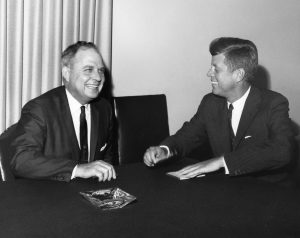
MMPA President Glenn Lake met with U.S. President John F. Kennedy.

They traded in their t-shirts for a suit and tie. They took off their favorite hat revealing their white foreheads and hard work and used their brains for making marketing decisions. They slipped off their boots, put on their wingtips and headed to Lansing and Washington D.C. on behalf of their peers, sacrificing family time, a few pounds of milk and the peace of mind knowing all was well in the barn at home.

They were the epitome of leadership letting their fellow dairymen know they had their backs. Their broad shoulders took the bulk of criticism while they took care of their cows and kids at home.

They were the courageous leaders who have carried the membership of the state’s largest dairy cooperative from year one to year 100. Six men would hold the position in a century. They were the Presidents of MMPA.

In the beginning, a dairy farmer from Lansing was the cooperative’s chosen one to lead in the infant years of the MMPA. Nathan P. Hull served from the beginning to 1936 and developed the concepts of milk marketing that became the standards across the country. He took the cooperative from a questionable creation deep into the decade of the Great Depression. He also served as one of the early presidents of the National Milk Producers Federation (NMPF).
Hull handed the reins over to a farmer from Fair Haven, Fred Meyer in 1936. He served through 1944 and did double duty as President and General Manager of MMPA in 1941 and 1942. The path wasn’t easy for Meyer as he guided the cooperative through World War II and the problems with the United Mine Workers. He effectively brought MMPA into the next era of dairy marketing where strength in the marketplace was vital.

maystead-meyer-lake
From left, Ivan K. Maystead, Fred Meyer and Glenn Lake, three great MMPA presidents.

The little town of Osseo in a southern border county was where the next President called home. Ivan K. Maystead served from 1944 to 1955. Well educated through Hillsdale College and Michigan State College, Maystead guided the cooperative into a larger advertising program breaking into radio and TV advertising and thus enjoyed a fifteen percent increase in Class I bottle milk sales. Under his leadership, MMPA bought the Elsie Creamery, the Fairview Dairy, saw the completion of the Ortonville Station and brought the Holland and Marquette markets under the MMPA umbrella.

Described as one of the most charismatic MMPA Presidents was Glenn Lake of North Branch. He led from 1955 until 1981. In his 26-year tenure, Lake became the leading nationwide voice for dairy farmers as the President of the NMPF. Right out of the gate, Lake and General Manager Jack Barnes were instrumental in establishing the first over-order “Super-Pool” in 1956. According to former General Manager John Dilland, the success of the Michigan Super Pool also led to the establishment of the Great Lakes Milk Marketing Federation which eventually included cooperative participation from the Great Lakes to Florida by forming the Great Lakes-Southern Milk Inc., organization for price coordination allowed under the Capper-Volstead Act.

Lake influenced political leaders on ag policy as he had the ear of John F. Kennedy and made himself available to meet with him when then President-Elect Kennedy requested a meeting. His influence continued with six U.S. Presidents as he brought the dairyman’s personal point of view to each president.
When Lake retired, a dairy producer from Kinde moved into the office, Elwood Kirkpatrick. John Dilland described Kirkpatrick as a masterful president who was low-key and patient. According to Dilland, he allowed full discussion at the board meetings but was always able to bring the board to a consensus before a decision was made. His calm demeanor helped when discussions got contentious as he never got rattled.

Kirkpatrick followed his predecessors as the president of the NMPF and president of Dairy Management, Inc. He was also the very first president of the U.S. Dairy Export Council recognizing the importance of exports for the success of the U.S. dairy industry.

This year at the 100th annual meeting of MMPA, a dairy producer from St. Johns presided over the meeting. Ken Nobis, the most recent of six men to take over the leadership of the cooperative, has been in office since 2007.

Nobis has led through plant expansions, watched multigenerational farms disperse and maneuvered through the heightened public focus on animal welfare. Realizing relationships are key, Nobis has personified that leadership quality.

His generous leadership has been fleshed out in his cooperative spirit when working with our political leaders at the state and national level. And when the Flint water crisis hit, under a Nobis presidency, MMPA stepped up to the plate to donate milk.

Hull, Meyer, Maystead, Lake, Kirkpatrick and Nobis: Six farmers, six fathers, six husbands. And six leaders who took a new concept called a cooperative and successfully cultivated the integrity needed to sustain through 100 years of “marketing the members milk to the greatest possible advantage.”

–Melissa Hart

This article originally appeared in the December 2016 issue of the Michigan Milk Messenger. 

NMPF 2016 meeting room.

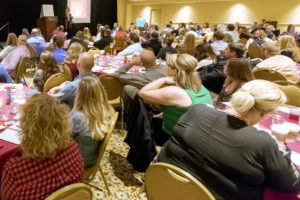
The 2016 joint annual meeting of the National Milk Producers Federation (NMPF), National Dairy Promotion and Research Board (NDB) and the United Dairy Industry Association (UDIA) was held Oct. 30 to Nov. 2, in Nashville, Tennessee. Nearly 800 dairy producers, member cooperatives, Young Cooperators (YCs), industry representatives, staff, and others from all over the country arrived in “Music City” for a few days of speeches, reports, banquets, general sessions, town hall meetings, and award ceremonies.

In addition to two days of the general session the conference involved delegate meetings for boards of NDB, NMPF and UDIA and a conference for Young Cooperators. Learn more about the NMPF Young Cooperator Conference from 2016 OYDC Darrin and Barbara Siemen.

1. MPP – Margin Protection Program outlook:

NMPF has worked and will continue to work closely with Congress and the USDA on implementation of the MPP-Dairy program. The overall message shared at the joint annual meeting was, “The Margin Protection Program is the right program for the dairy industry’s future, yet it is clear that MPP must be improved to be a viable safety net program for farmers.” The Farm Bill has been slated by Congress to be re- addressed in the next session. NMPF has considered ‘lessons learned’ so far and have begun the progress of working with legislators to improve MPP.

Jim Mulhern, NMPF President & CEO, said, “NMPF is committed to determining the necessary adjustments– such as restoring the margin feed cost adjuster to the level NMPF originally intended (to assist dairy farmers nationwide) – and having Congress pass them at the earliest opportunity.”

2. NMPF Weighs in on the Trade – Trans-Pacific Partnership

“NMPF believes that the Trans-Pacific Partnership, if properly implemented and enforced, will be provide key benefits to U.S. dairy farmers,” said Jaime Casteaneda, Senior Vice President, Strategic Initiatives & Trade Policy. He added it is important to make proactive efforts to maintain market access globally.

“We will push to advance trade deals that represent a net positive for America’s dairy farmers, as the Trans- Pacific Partnership does. And we will work in close collaboration with the U.S. Dairy Export Council to expand the access we have in other markets,” Mulhern said.

3. The Big Fat Surprise: Why Butter, Meat & Cheese Belong in a Healthy Diet

Investigative journalist Nina Teicholz was a fan favorite as she revealed the truth: “that everything we thought we knew about dietary fats is wrong. She documents how the past sixty years of low-fat nutrition advice has amounted to a vast uncontrolled experiment on the entire population, with disastrous consequences for our health.”

The crowd cheered and applauded as Nina sorted through the facts and “groundbreaking claim that more, not less, dietary fat – including saturated fat – is what leads to better health, wellness, and fitness. Science shows that we have been needlessly avoiding meat, cheese, whole milk and eggs for decades and that we can, guilt-free, welcome these ‘whole fats’ back into our lives.”

–Jessica Welch

This article originally appeared in the December 2016 issue of the Michigan Milk Messenger. 

Visiting Nashville for the first time ever proved to be memorable beyond our wildest dreams! Darrin and I were fortunate to be selected MMPA’s OYDC for this year, which led us to Nashville, Tennessee for the joint NDB/NMPF/UDIA annual meeting at the end of October.

We attended the meeting with last year’s OYCDs, Shawn and Beth VanDrie, and this year’s runner-up David Tolan (we missed you Gretchen!) We learned so much during the NMPF Young Cooperator conference, and made new friendships with YC’s from around the country. As a bonus, and completely unrelated from the conference, we landed tickets to the CMA awards! Wow! That was amazing!

dsc_2979
2016 OYDC Runner-up Dave Tolan, 2015 OYDC Shawn and Beth VanDrie, and 2016 OYDC Barbara and Darrin Siemen gathered in Nashville for the NMPF YC conference.

The conference began with a fun welcome event – bowling. We went to a nearby bowling alley and enjoyed refreshments and hors d’oeuvres while hitting the lanes. The next day, was jam-packed with speakers. We heard from Dr. Christopher Wolf, professor of agricultural economics from Michigan State University (go green!) He discussed ways to measure and manage risks on the farm. He provided the group with tools and strategies for examining trends and evaluating financial performance.

My favorite session featured Elaine Froese, a farm family business coach. Even though Darrin and I have already transitioned the farm from his parents to us, the information she provided the group was so superior to anything I have ever heard yet on this subject. Her presentation is interactive and fun, while being informative and tackling real issues. I highly recommend any family in a transition period to attend one of her sessions if possible, or at the very least, purchase her books for guidance on this sensitive subject.

After a delicious lunch and some mingling time, from the next speaker was Tom Wall, The Dairy Coach. He spoke to the Young Cooperators about turning employee obstacles into opportunities. He’s worked with dairies across the nation for over 16 years, helping them create systems for training and coaching employees.

Don Schindler and Jamie Vandermolen from DMI showed us how to create videos from our farm to share on social media. We practiced with Facebook Live and an app called VideoShow. We know how important it is for consumers to get the right information from the right people, and video is an excellent way to communicate our message.

Finally to wrap up this busy first day, we heard from Larry Kaagan, the President of Kaagan Research. His company conducts polling, trend analysis, and strategy consulting to assist us folks in the “ag world” with understanding what everyone else thinks about terms like “sustainable agriculture.” It’s easy to forget that everyone else doesn’t know what we know, or think like we think.

We ended the day with dinner, mingling, and a mechanical bull at a restaurant in downtown Nashville. All the day’s info was swimming in my head, so I took the bus back to the Opryland Resort to call it a night. Darrin stayed behind with some other YCs. The next morning I learned all about how a fried bologna sandwich led to a nice guy offering him tickets to the CMA awards!

The rest of the conference was so fun and informative too. We met so many people; board members, national staff, and other cooperative representatives. We mingled in the Dairy Bar, where we tasted new dairy products and relaxed between sessions. Another notable speaker was Nina Teicholz, author of The Big Fat Surprise, and she described her decade crusade to discover the truth about dairy fat and its health benefits.

We heard from so many individuals, it’s quite difficult to sum all of them into one article. However, we know without a shadow of a doubt that the future of dairy is in good hands. We have such strong convictions, as did everyone else at the conference, about protecting our industry, that we hope we can take this knowledge and build upon it, and use it, for many years to come.

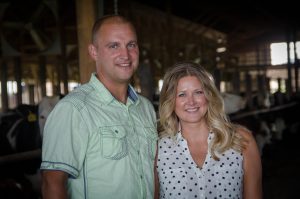
Barbara Siemen and her husband, Darrin, were named the 2016 MMPA Outstanding Young Dairy Cooperators. They own Prime Land Farm in Harbor Beach, Michigan and Barbara runs The Chick Wire podcast and blog. This article originally appeared in the December 2016 issue of the Michigan Milk Messenger. 

Maintaining a business for 100 years requires remarkable leadership and belief in the company. MMPA managed to have both, stacking decades on top of decades of business through leadership that pioneered the dairy industry from one century to another.MMPA began leading the dairy industry by simply existing. Forming the cooperative was the first step in their greatness but so many steps followed like being the first to structure the milk price on the basis for how it was used.

MMPA was the first in the United States to successfully establish a superpool program. The Great Lakes Milk Marketing Federation was established and included five milk marketing cooperatives covering Ohio, Pennsylvania, Indiana and Michigan. General Manager Jack Barnes said the milk marketing world was shocked as MMPA led the way in area pricing across several markets.

While MMPA chose the road less traveled to forge their success, they did it with leaders of longevity and who served a purpose in each of their tenures.

John Near was the first state wide Secretary-General Manager who served from 1921-1927. He was at the helm at a great time of growth, managing at the new Detroit office in the Owen Building in downtown Detroit. Because the Detroit area was a huge market for MMPA another leader was tapped to manage just the Detroit market, Bernie Beach.

Beach was a man of many talents as he succeeded Near in 1927. Not only did he take the cooperative through the devastating years of the Great Depression when milk prices took a deep dive, but he was also the editor of the Michigan Milk Messenger. Beach moved to managing the Michigan Producers Dairy Company and that opened the door to a new General Manager in Howard Simmons to take the lead in 1940.

img082
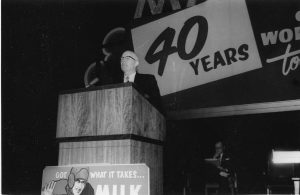
Howard Simmons was the secretary manager when MMPA celebrated its 40th anniversary and continued to lead the cooperative through the next 13 years.

On the cusp of World War II, Simmons took the transportation improvements of Bernie Beach and strengthened them. In the 1930s and early 1940s, a system of transport units was developed and as MMPA became the dominant transporter of milk, the freight rates, all of which were paid by the farmer, were reduced dramatically. As the U.S. came out of WWII, MMPA had a system of receiving plants, a transportation fleet and the Imlay City processing plant.  This operating system put considerable muscle in MMPA’s marketing program.

Jack Barnes came on the scene as the General Manager in 1959 and held that position until 1985. Barnes leadership allowed MMPA to hold control over a major portion of the milk supply and be a part of the merger of fourteen different cooperatives into MMPA. He also led the cooperative through a complete organizational overhaul enabling MMPA to survive and lead the industry through the next three decades.

Walt Wosje took over in 1985 and the strength of leadership continued. Stuck in the muck and mire of a failed McDonald Cooperative Dairy Company, Wosje was able to negotiate the sale of the McDonald Division, the first of many accomplishments realized through the leadership of Wosje. The Remus cheese plant produced great volumes of cheese but had little to no market for the product. Wosje put an end to that when he and then President Elwood Kirkpatrick signed a deal with
Leprino foods to produce mozzarella cheese for four top pizza chains. The result was an instantaneous turnaround of the financial failings of the Remus plant, a long term outlet for member milk and profit sharing from sales of mozzarella made there.

When Wosje retired in 2003 the cooperative was a very attractive market for expanding dairy producers and created a new problem for the new general manager, John Dilland: a need for greater capacity to handle an increasing volume of milk.

Dilland was no stranger to the challenges of running a cooperative. Dilland began in 1975 at MMPA as a controller and director of finance before being asked
to serve as General Manager in 2003. He experienced the United Twin Pines trouble with their delinquent account when they couldn’t pay their milk
bill and the McDonald Dairy debacle. When he took over the general manager position he was well seasoned in adversity and lead the cooperative through the first decade of the new century, retiring in 2010.

Following Dilland’s retirement, Clay Glarneau served as general manager before resigning in 2014. Another leader with great financial experience moved from MMPA’s director of finance to general manager and is serving in that position today: Joe Diglio.

Diglio had the great fortune to celebrate the 100th anniversary as MMPA’s GM and has the same passion as his predecessors possessed for successful cooperative and profitable dairymen as they move down the road less traveled into the next 100 years.

–Melissa Hart

This article originally appeared in the November 2016 issue of the Michigan Milk Messenger. 


Two hundred years ago, the state of Indiana was established. Then, as it is today, the dairy industry was a vital component to the state. To celebrate this bicentennial, the state organized a torch relay to zig-zag across the 36,418 square miles of Indiana, unify communities and create “One Indiana.”

The relay stopped in all 92 Indiana counties, covering 3,200 miles in five weeks, highlighting various aspects of Indiana’s culture and heritage— including dairy—along the way.

“Odds are that the first settlers in Indiana had cows and if not the first, definitely the second!” commented Indiana Director of Agriculture, Ted McKinney during a torch lighting ceremony at Mybrook Farms. “It is only fitting dairy would be part of this celebration of Indiana’s history.”

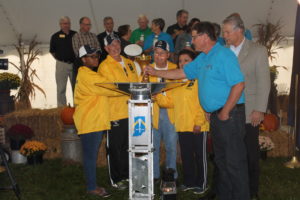
The torch began its journey in Corydon, Indiana on Sept. 9 where the first State Capitol was located and ended on the State Grounds in Indianapolis on Oct. 15. Representing Elkhart County and the dairy industry, one of the stops on the torch relay was MyBrook Farms, an MMPA member farm. The ceremony on Oct. 4 included a torch lighting, breakfast, farm tour and milk toast.

“We planned for about 200 people not knowing what to expect from this whole thing, but had even more people attend. It was standing room only for the ceremony and milk toast,” said Mike Oesch of Mybrook Farms. “It was great to see the support of the community for such a unique celebration.”

To precede the torch relay, Northern Indiana dairy farmers and industry leaders created the Northern Indiana Dairy Trail, another bicentennial event. Eleven farms hosted open houses with farm tours, education booths and free dairy products for their communities as part of the Dairy Trail. These open houses were held over a span of two Saturdays in June to promote June Dairy Month.

Knollbrook Dairy in Goshen, Indiana, and Perkins Twin Creek Dairy in Stroh, Indiana, represented MMPA on the trail. Together, the two farms helped reach approximately 3,000 people by communicating how modern dairy farming focuses on animal care, environmental stewardship and quality milk and products.

Host farms participated in creating educational videos promoted via three social media platforms. Topics highlighted in the clips were cow care,modern technology, “love of farming” and “Why should I visit the Northern Indiana Dairy Trail?” In all, the videos reached 30,700 views on Facebook.

“[Consumers] need a little more education and a little more opportunity to identify how cows are being taken care of, how they are actually getting milked and how much care and concern goes into the welfare of the animals,” Cynthia Adams of Knollbrook Dairy said in one of the promotional videos.

The Northern Indiana Dairy Trail also promoted the Great American Milk Drive. The purpose for the Great American Milk Drive is to raise awareness about the need for milk in food banks across Indiana. “If people ate as good as cows eat, it would be a healthier world,” said Kirk Perkins of Perkins Twin Creek Dairy.

Feedback from the Northern Indiana Dairy Trail yielded positive comments from participants on their trust in Indiana dairy farmers for animal care and the environment. The event
committee will pursue continuing the trail next summer.

For more information, visit DairyTrail.com. Indiana farms interested in hosting a tour next summer should contact Jackie Barber, Producer Relations Coordinator at American Dairy Association of Indiana at barber@nullwinnersdrinkmilk.com.

–Krista Schrock

This article originally appeared in the November 2016 issue of the Michigan Milk Messenger. 


In 1950, MMPA realized the importance of shining the spotlight on a farm family who was progressive in their management practices, above average in their leadership skills and were pillars of their community. And so began the Outstanding Dairy Couple competition.

Since its inception several members have been honored through six decades with this title that has changed from Outstanding Dairy Couple to Outstanding Young Dairy Cooperator (OYDC).

Some things have changed while others have stayed the same explains Sheila Burkhardt, MMPA senior director of member and government relations.

“The MMPA OYDC program has been an integral part of MMPA’s history over the years and has played a key role in the strength and success of our cooperative,” she says. “We have made a few changes to the program over the years, but the intention of the program is to identify and develop young dairy leaders has remained.”

Sixty-six years ago, Anthony and Mary Kreiner of Brown City were the very first Outstanding Dairy Couple deemed worthy of the title by a panel of judges and went on to represent the MMPA at the National Milk Producers Federation’s annual meeting in Minnesota.

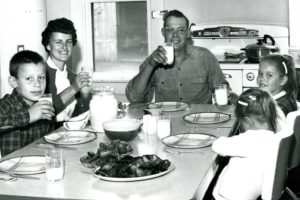
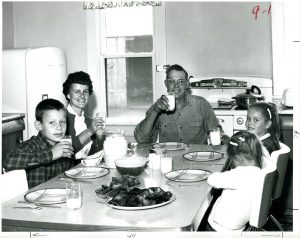
In 1964, Harold and Lillian Gremel of Sebewaing were gracing the cover of the Michigan Milk Messenger as the Outstanding Young Dairy Couple.  Starting from scratch in 1953, this young couple purchased their first farm entirely on credit with Harold’s dad standing behind them to get a loan.  There was no family partnership, no chance to share machinery and no one to bail them out if they got into trouble.

While the place they bought was set up for crops and hogs, it did have three shorthorns that came with it and that was the beginning of their herd.  Harold added his one Brown Swiss and Lillian added her 4-H project, a Holstein, and a couple of years later they were up to ten cows and ten sows.

Today, Starward Farm is run by the second and third generations: Harold and Lillian’s son Walter, son-in-law and daughter, Darwin and Kathy Sneller and grandchildren Eric and Cassie Sneller.

img697

The 1964 Outstanding Young Dairy Couple, Harold and Lillian Gremel, with their three children Walter, Cathy and Marie.

“Having an informed and involved membership has been an important component of MMPA’s success over its 100 years,” Burkhardt explained.  “The OYDC program provides the opportunity for our younger members to be exposed to the state and national issues impacting the dairy industry while gaining a greater understanding of the role of MMPA in the marketplace. MMPA has been fortunate to have great OYDC representatives over the years who have gone on to be leaders within MMPA, other agriculture organizations and their community.”

Bruce and Jennifer Lewis of Pleasant View Dairy, in Jonesville and were named OYDC in 2005. Jennifer explained the benefits of the program, “It’s very important to be involved in your co-op at any age. The OYDC program at MMPA gives younger members the chance to experience everything the co-op offers to its members plus the additional opportunity for leadership development. That experience gained gives these members a better understanding of the decisions our co-op makes and opens doors for personal involvement down the road. Not to mention the networking gained from others involved in the program.”

Bruce and Jennifer have taken that leadership piece a step further holding leadership positions in MMPA and Farm Bureau. And in 2013 the Lewis Family was named the Michigan State University Dairy Farmer of the Year. This year, she returned to the OYDC program by serving as one of three judges in the selection of the 2016 OYDC Darrin and Barbara Siemen.

Networking with other young dairy farmers was an important piece of the puzzle for Lyn Horning of Horning Farms in Manchester.

“I liked meeting the other OYDCs. When we were in the program I was still very ‘new’ at dairy farming. I only knew what was happening on our farm.” Lyn continued, “The OYDC program is a great way to learn more about our co-op and discover all it does for us. It is also an opportunity to network with other dairy farmers our age and discuss our ideas—those that worked and even those that didn’t.”

Lyn and her husband, Jeff, were named OYDC in 2004, and thirty-four years after Jeff’s parents, Earl and Diane, were the OYDC.  Time will tell if the next generation will follow the two earlier generations in becoming OYDC. Jeff’s daughter, Katelyn, and her husband, Joe Packard, have joined the Horning Farm operation as the sixth generation.

From members who are young and full of ideas to mature and experienced members, MMPA has molded 100 years of success around every member of the co-op because they realized no matter what age or stage, they are stronger together.

–Melissa Hart

This article originally appeared in the October issue of the Michigan Milk Messenger.

dsc_3838

Just five miles west of Lake Huron rests Prime Land Farm, where Darrin and Barbara Siemen are pioneering their own path for their farm, their family and even agriculture promotion.

The Siemens were named the 2016 MMPA Outstanding Young Dairy Cooperators (OYDC) after attending the OYDC conference in late August. They own a dairy, beef and sugar beet farm in Harbor Beach, Michigan.

Ever since he returned home to the farm after college in 2001, Darrin has assumed a large role in the farm and the couple took over full ownership in January 2013. The fourth generation farmer has followed his parents example, and continued the progressive charge on the whole operation, in many areas from milking to breeding to cropping. And standing by his side through the process is Barbara, who has built her own niche on the farm and in the agriculture community.

In December 2014, Prime Land Farm welcomed four new additions: robotic milkers. The Siemens installed an automated milking system (AMS) to milk a large portion of the herd.

At first, they continued to use the old parlor to milk a select group of cows. They began phasing out the parlor, but found their four robots were not enough to keep up with the needs of their herd. Darrin called the AMS supplier and in less than a month a fifth robot was added to the “tollbooth” setup in their freestall barn. The barn is arranged with robot rooms parallel to each other on either side of the feed alley. As the herd continues to grow from within, the Siemens have a plan to add a sixth robot in the near future.

Though the transition was not easy on the cows, today they have adjusted to the robots. The atmosphere in the barn is tranquil as cows enjoy the freedom to eat, drink, rest and be milked when they please. The cows are milked an average of 3.2 times per day.

“The cows are way more relaxed now than before the robots.” Darrin said.

“Our cows are so content, you can see them laying in their sand freestalls just chewing their cud,” Barbara added.

The Siemens also found milk quality improved after the switch due to better consistency. The cows now know what to expect when they are milked and the farm does not need to worry about employees being inconsistent. In 2015, the Siemens averaged a somatic cell count of around 140,000, a lower count than their quality figures five years prior.

Over the last 15 years, Prime Land Farm enhanced technology and sustainable practices by implementing variable rate fertilizer, grid soil sampling and adhering to their Certified Nutrient Management Program (CMNP).  Darrin says he uses “a fair amount” of technology while managing and monitoring the farm’s 1,500 acres of sugar beets, alfalfa, corn and wheat.

Other sustainable practices include geothermal heat, reclaimed water across the operation and cover crops. Several years ago, the farm installed solar panels and are now pricing out additional solar panels to feed energy into the grid to generate what they use.

Led by his parents progressive example, Darrin’s first major change after returning to the dairy was to the cows themselves.

“As a kid, we had only purebred registered Holsteins. But as the farm moved commercial, I noticed more herd health issues,” Darrin recalled. “After graduating from college, we began crossbreeding to build a more durable herd.”

In pursuit of this goal, they artificially inseminated their Holsteins with Montbéliardes. The next generation was bred with Swedish Red and then with Holsteins, using colored ear tags to monitor where each cow was in the cycle. The crossbreeding program has reduced illnesses and eased calving difficulties.

But when they reached Holsteins again, the calving issues returned. Now Darrin is breeding his virgin heifers with Jersey. It’s a move to continually improve herd health, but one also well-approved by the next generation.


dsc_3796
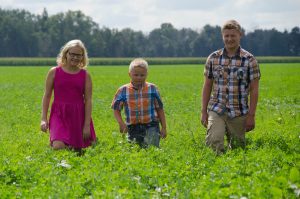
The Siemens are raising their three children–Adriene, Riley and Elliot–on the farm in Harbor Beach, Michigan.

“I like Jersey calves!” the Siemen’s seven-year-old son, Riley, piped in, describing his favorite calf whom he affectionately named Wiley.

Riley and the Siemen’s two other children—Elliott and Adrienne—help out with chores by feeding chickens and goats in the morning each day before school. The kids are also on the monthly schedule to feed calves, along with the farm employees. To Darrin and Barbara, it’s important the children develop good work ethic by being involved in the family operation.

Barbara ensures the kids stay involved and the family stays close. She focuses on the needs of the family, handles bookkeeping for the farm and pitches in wherever needed.

“I do whatever is necessary.  I know because I do what I do, Darrin is available to do what he needs to do for the farm,” Barbara described. “The majority of the time he can focus on the farm and not worry because I am taking care of the family and finances. He gets the best of both worlds.”

On top of that, Barbara runs a business of her own: The Chick Wire. A self-described “agvocate,” she began promoting agriculture and dairy ever since she married Darrin and moved to the farm. In 2014, she began blogging as Farm Barbie to open up the life of her family and farm.

The blog gathered a decent following and Barbara used the space to connect with consumers and give them a name and face to a farmer. However, she was unable to retain using the name because of a trademark dispute. Despite putting up a tough legal fight, ultimately she was forced to change her name. But she did not just change her name, instead she used the opportunity to refocus and found a new project.

“I wanted to rise above this situation and use my struggle for good. I am now using my literal voice for agriculture, when they wanted to shut me down altogether,” she explained.

The Chick Wire, as Barbara outlines, is a network of women that shares values, cultivates understanding, and inspires without judgment. She interviews women on podcasts—digital audio files posted on the internet for downloading—to share their stories through “values-based messaging.”

Barbara’s concentration on women is strategic. She says she’s learned studies show millennium moms are an influential audience and she is trying to reach that group specifically. The women she has interviewed—such as the bee keeper or the athlete—are used to bridge the agriculture community with consumers and eliminate the “ag vs. everyone” mentality.

“Through all of these women I am interviewing, there’s a common thread, an agricultural foundation. I’m reaching a new audience with each episode because her friends and family tune in to hear her, then they hear the tidbits about ag that I share. This allows listeners to begin to understand and trust,” she adds, explaining how her podcasts promote agriculture.

To the Siemens and many in the agriculture community, farming is about family. They enjoy working with family, something Darrin admits can be easy to take for granted.

“I was immediately attracted to farm life because of the strong family aspect,” Barbara, the former “city girl” revealed. “I enjoy the family and intergenerational focus. Our kids get to work alongside Dad and Grandpa. Not many kids get that opportunity.”

This emphasis is important when considering the future and with each pioneering move.

“Our goal for the farm is to grow as we can in beef, dairy and land,” Darrin explained. “We want to be able to give the next generation—our children—a chance.”


More about Darrin and Barbara Siemen

Owners of Prime Land Farm in the Huron Local, District 8

Children: Elliott (13), Adrienne (11) and Riley (7)

Herd size: 320 milking cows, 360 total dairy; 800 beef cattle

Acres farmed: 1500 of sugar beets, alfalfa, corn and wheat

Education: Darrin and Barbara both attended Michigan State University. Darrin has a bachelor’s degree in food industry management and agribusiness. Barbara has a bachelor’s degree in English and a teaching certificate from Saginaw Valley State University.

Agriculture, Dairy and Community Involvement: Darrin is the past president of the Huron County Farm Bureau and served on the board for nine years. He has also been on the Sand Beach Township Planning Committee and a basketball coach for Harbor Beach Community Schools. He has served as a delegate for his MMPA Local, and is also a delegate for United Producers Inc. Barbara is an MMPA Dairy Communicator and was also involved in the Huron County Farm Bureau. In addition to The Chick Wire, she has promoted agriculture by guest blogging and being involved with various programs such as: Common Ground, Ask the Farmer, AgChat Foundation, Michigan Agriculture Council and the Pure Michigan blog. The farm was involved in the 2016 AgVenture Day in Harbor Beach.

This article originally appeared in the October 2016 issue of the Michigan Milk Messenger.

Centennial farms are scattered around the state and are prominently marked with green signs indicating the same family has been on that farm for at least 100 years.

Greenstone Farm Credit Services is marking their 100th anniversary this year as they were established on July 17, 2016, when President Wilson signed the Federal Farm Loan Act into law.

And as MMPA continues to celebrate its centennial birthday, the automatic question is: how? How does a business last ten decades through wars, a depression and the ever changing social fabric of the farm and the consuming public?

Is it because the farmers who own the cooperative remain in control of it? Is it because the three-sided triangle of producers, marketing and processing have stayed in equal balance for the last century? Or is it simply because the people involved are in sync and are willing to sacrifice personal gain for cooperative strength?

Retired General Manager, John Dilland points to the people as the reason for the longevity of the cooperative. He wrote, “First and foremost for cooperative longevity, the co-op must have a loyal membership base, which believes their elected coop representatives and management are working in the best interest of all members.”

While the members make the coop and are the people who determine what happens with the cooperative, Leona Daniels of W-R-L Daniels Farm conveyed that the MMPA staff has not forgotten that they work for the individual farmer. She believes the secret to their longevity springs out of the communication of the MMPA leadership and its membership.

Jack Barnes, General Manager from 1959-1985 pointed to the enlightenment of the producer as one of the reasons for MMPA’s success. Up until the mid 1950’s members never inquired about or perused the financial statements of the cooperative. But Barnes noted that the expectations of the members changed as their general education level went up and they demanded more marketing information and more details about their cooperative.  The MMPA leadership delivered and they began publishing the annual report in the Michigan Milk Messenger.

Current General Manager Joe Diglio cast a light on the longevity of the employees of the cooperative and the responsible management of the financial foundation. He elaborated on the longevity of the employees and their knowledge of the industry on a national level that has helped build the strength of the cooperative. Diglio also said that there is a strength in this business and over the years the financial position of the cooperative has remained strong and has been managed very well.

CEO of Co-Bank, Robert Engel echoed the sound financial stability of MMPA when he commented, “The fact that Michigan Milk has endured for that long is a very unique accomplishment.  More important, over that period of time they have obviously done an awful lot of things right to be able to keep that membership support and to provide value to that member.

“You cannot exist for that period of time without strong financial stewardship.  But it’s also been in finding the balance of value as a customer and as an owner, how do we continue to drive the appropriate profitability and returns to our members while investing for a future that’s very different than it looked 100 years ago, 50 years ago, 10 years ago, even a year ago in a business that moves like this.” Engel concluded, “The fact that Michigan Milk has been able to do this, at the end of the day, points to one thing they’ve been very successful at and that is having the appropriate leadership. Leadership at the board level and leadership at the management level that have been great stewards of this organization.”

Leadership at every level has played an important role in the past 100 years and many of those leaders came from multigenerational farms throughout the state like Preston Farms of Quincy, Michigan.

As the fourth generation on Preston Farms, Brian Preston became involved with MMPA and has witnessed first-hand how the co-op has helped farmers for the past century.

“The co-op structure has given our farm a lot of stability,” Preston continued. “We’ve had a consistent place to send our milk and a consistent source of income. And we have the stability of knowing we can have a part of the decision making and an influence in where we send our milk.” Being a part of MMPA “gives a chance to producers to own processing further up the line and add value to their product and that’s really important in today’s agriculture.”

MMPA has not achieved perfection, nor has every decision been made with ease and agreement.  History has provided a solid blueprint for MMPA to use as a strong foundation but anticipating the trends of the future are important as well.  In Jack Barnes words, “You can’t drive far by looking only in your rear view mirror. It goes forward by looking ahead.”

–Melissa Hart

This article originally appeared in the September 2016 issue of the Michigan Milk Messenger. 

Several leaders, past and present, were asked to offer three characteristics that describe MMPA and here’s what they said:

“Integrity, stability and honesty.”- Deanna Stamp, retired board director.

“Trust, transparency, dedication.” – Ken Nobis, board president.

“Progressive, financially sound and member oriented.”- Velmar Green, retired board treasurer.

“Family, Honesty, Integrity.” Gary Trimner, retired director of member services.

These powerful words fit the description of the heart and soul of the cooperative that has seen the ups and downs of a volatile industry though one hundred years. Milk prices through the years would make the most thrilling roller coaster look like child’s play and yet Michigan dairy producers have faced unpredictability with sheer determination.

In 1916, it was no secret the dairy farmers of Michigan were in great need of milk pricing reform. Deciding to take matters into their own hands, they forged a milk cooperative that would make the production of milk in Michigan a more satisfactory occupation. That fateful Tuesday in May of 1916, the forward thinking, determined group of dairymen made it their business to bargain for their own milk price and MMPA was born.

Past president Jack Barnes wrote, “At that meeting, (in 1916) the dairy farmers chose from their members, a board of directors and ever since that first meeting, the Association has been owned and operated by its farmer-members.  MMPA has been successful because it is owned by dairy farmers, services dairy farmers and is controlled by the dairy farmers it serves.”

With a bargaining association in place, dairy producers were set for better days ahead as they moved from being price takers to price makers. Leadership was a key role in this monumental task and as they moved through the years, the member leadership would provide the one constant needed to face the unforeseen struggles of the Great Depression and beyond. The dairy industry would survive the depressed decade of the 30s and move into the war torn years of the 40s, 50s and 60s.

Former board member and treasurer, Velmar Green was initiated into the cooperative in the late 50s and early 60s when farmers were desperately seeking better milk prices. He commented, “The prices were extremely low and the farmers thought that striking would produce a better price. Fortunately, we had probably the greatest leader in Glenn Lake at that time and as president he was very articulate with the members and convinced them that Michigan Milk was fair to everyone.”

Fluid milk consumption began to drop in the early 70s and that proved to trickle down to MMPA with consequences that would last a decade. Twin Pines Dairy and United Dairy merged to make United-Twin Pines Dairy in the early 70s and were purchasing several million dollars’ worth of milk from MMPA. When they couldn’t pay the bill, MMPA took action. John Dilland, the newly hired controller, commented about the havoc that existed as he moved into his new position, “The management commitment made at that time was to continue the pay back the capital retain investment by members on the same ten-year cycle but without a fixed obligation. Members, of course, had to approve this change in capital structure at an annual meeting, which they did even after being told that some of their certificates of indebtedness would be applied against their share of the allocated loss related to United-Twins Pines Dairy.” Dilland continued, “While no one liked making these changes, MMPA members stepped up and did what was necessary to save their cooperative.  I have never forgotten that commitment and the loyalty members showed to their cooperative.”

McDonald Cooperative Dairy Company was another casualty of tanking fluid milk sales.  MMPA took on the McDonald Cooperative’s 800 member’s milk and struggles ensued. When Walt Wosje took over as General Manager he noted that while the membership was well organized, the business organization needed some attention and McDonald Dairy was at the top of the list.

As the new General Manager, Wosje wanted to gain the trust of the membership and began riding along with milk haulers to get to know the producers who entrusted him to manage their milk co-op. Green commented, “There was no one like Walt, he could talk to the farmers in their language.”

Wosje moved MMPA out of the milk bottling business and into the cheese making business by convincing Country Fresh to buy McDonald Dairy and entering into a partnership with Leprino Foods. This provided an additional outlet for the large volume of milk that needed to be manufactured. And it provided much needed flexibility in utilization of milk production and helped balance the fluid market requirements.

Gary Trimner commented about the leadership styles of Wosje as General Manager and Elwood Kirkpatrick as President, “They were different people with different personalities but very strong leaders and led MMPA very well into the 90s”

From the 90s until present day, milk prices continue to be volatile and members continue to be progressive allowing for plant expansions, new technology and adjustments to consumer demands.

Trust, transparency and dedication are three words Nobis used to describe MMPA. He concluded, “As the leadership has been transparent for the past one hundred years, I feel a tremendous responsibility to pass that transparent leadership forward to hopefully another hundred years.”

–Melissa Hart

This article originally appeared in the August 2016 issue of the Michigan Milk Messenger.