MMPA is committed to cooperative social responsibility and sustainable business practices throughout our entire supply chain. At the farm level, MMPA members are also on a sustainability journey. We’re checking in with a handful of member farmers leading the charge with this sustainability spotlight series. 


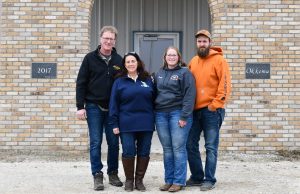
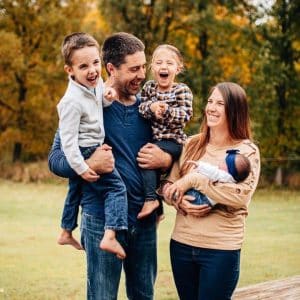
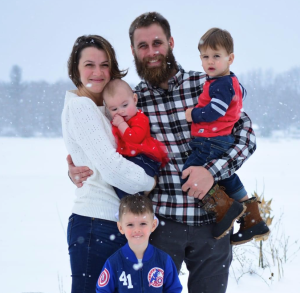
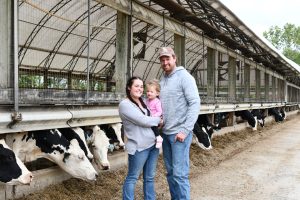
Pictured back to front, left to right: Mike Martin, Ben Martin, James Martin and Kyla Martin

It is all about the health of the soil for dairyman Mike Martin, who grazes 400 New Zealand Fresian Jersey crossbred cows on 170 acres of pasture in Wakarusa, Indiana. “To me sustainability and the health of the soil are very similar, from what I’ve learned is that having something green and growing on the soil is very healthy for its biology.”

Wakiana Dairy, a combination of Wakarusa and Indiana, began in 1984 when Mike and his wife Sue moved to the farm and started with 24 milking cows. Over time the couple expanded the operation and passed on their passion for farming to their son Ben, who works full-time on the farm.

Their mission is to, “Run a business that honors God by operating with integrity and honesty, producing healthy food for people, and using farming practices that are sustainable from generation to generation.”

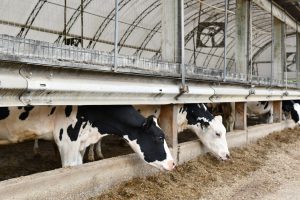
For the Martins, the soil, cattle, and financial advantages are the primary components of their system, each complementing the others to facilitate the seamless functioning of the operation. “The soil thrives when it’s covered in grass and is grazed. Being out in the grass and grazing is healthier for the cattle. The grass is our cheapest and highest quality forage, therefore helps cut our cost of production.”

Their system begins with the soil. “We follow the growth of the grass. The growth of the grass is measured using a rising plate meter every 7-10 days, and the information from the meter is plugged into a spread sheet, from the University of Missouri, to track the growth rate of the pastures.” Cows are rotated to a new pasture twice a day, and fed baleage and a grain mix at the bunk as needed.

If pastures need to be seeded, a no till drill is used to sow a pasture seed mix. Mike explains, “I opt for Italian ryegrass as its very fast establishing, perennial rye grass for its high energy content, and clover because it grows well in the summer. Thanks to our high stocking rate, we only purchase a small amount of nitrogen fertilizer for the pasture.”

The Martins are also focusing on soil health by recently integrating an irrigation system. “In 2012, after a drought, we put in center pivots. In the summer when the pastures are dry, we give it water, and grass loves water.” Ben explains, “If you over apply then the ground gets too soft then the cows tear it up. We’re motivated to keep plenty of water for the grass to grow but not so much that it makes a mess, and costs more to run.” Plans are in the works to install water sensors that will provide feedback on moisture levels in the soil, allowing for more precision when making irrigation decisions.

They’re not just efficiently utilizing water; they’re also ensuring it remains within the soil, rather than flowing through the tile system. “It has taken us five years to gain 1% of organic matter in the soil and we are up to 5% organic matter today. When you have high organic matter soils you’re holding a lot more water in your soil, and that’s also holding your nutrients instead of washing them out,” Mike said. The Martins estimate that they have essentially zero erosion due to their diligence towards soil health. “It is amazing what grass can do.”

Mike is pleased with not only the quality of his soil but also in the welfare of his cows. “I am impressed with how long cows on grass can remain productive. Currently, we have 90 out of 400 cows over eight years of age. The cows last a long time and their milk and meat have a better nutrient profile, and so it is healthier for people to consume when the cattle are grazing.  There is a better ratio of omega 3 to omega 6 fatty acids.”

To maintain economic stability in a volatile market, the Martins focus on keeping costs low. “We cannot control the price of milk, but we can focus on keeping costs low enough. That’s why there are no big barns here. We utilize the acreage we have to feed and house our animals.”

Mike’s advice to other producers is to, “Learn to think differently and beyond yourself. Sustainability is not just doing the same thing again and again; we must consider what is best for the future of the land. That’s what motivates me. I’m not going to be here forever, but I can do my part for as long as I am here to help things be sustainable.”

KEYWORD

No Till Drill: Farmers use a no-till drill to plant in fields that they don’t till. The special no-till drill creates a channel that is just spacious enough for seeds to be planted, minimizing soil disturbance. No-till practices can minimize wind and water erosion and protect soil from high temperatures and moisture loss. In addition, organic matter from previous crops enriches the untilled soil.

Rising Plate Meter: A rising plate meter is a measurement tool to estimate the approximate forage available in a pasture. It’s more accurate than just measuring pasture height, because it takes into account the density of the pasture.

Center pivot irrigation: A self-propelled irrigation system in which a single pipeline supported on towers rotates around a central point. These systems are typically about one quarter mile long and serve 128-to 132-acre circular fields.

SOURCE: U.S. Department of Agriculture
FARM

Wakiana Dairy
Wakarusa, Indiana
HERD

400 milking cows
LAND

227 acres of pasture and 145 acres of hay

VERIFICATIONS

MMPA sustainability survey, FARM* Animal Care and FARM* Environmental Stewardship evaluations.

This article was originally published in the May/June 2024 issue of the Milk Messenger. Subscribe »

By Doug Chapin, MMPA Board Chairman

Highly Pathogenic Avian Influenza (HPAI) was found in dairy herds in Texas in March, since then the situation has continued to evolve and reach other parts of the country. While we continue to learn more about the virus every day, our industry is collaborating to navigate the changing situation.

We know that HPAI is affecting not only dairy cattle but is harmful to the poultry industry. We need to do our part to prevent the spread of HPAI to not only be a good neighbor, but to assure our consumers of a safe, healthy food supply. We have to let our neighbors and consumers know that we are all hands-on-deck and doing everything we can to prevent HPAI and keep our food supply safe. Biosecurity is really the only tool we have without a vaccine and treatments to protect the dairy and poultry industries.

The focus of biosecurity is greater than us because the virus is more than our own farms, more than our own cooperative and more than our own industry. HPAI requires a collaborative effort between everyone to really think about how people, animals and equipment are moving on our farms and looking for ways to reduce risk in those areas.

On my own farm, we’ve put signs up to help direct traffic in ways that lessen our risk. We have separate farm entrances for employees, visitors and delivery trucks, and we’ve talked to our vendors to make sure they know about our updated traffic patterns. I’ve installed boot washes at all door entrances in the barn and only allow essential people into our cow facilities. We’ve targeted personnel that travel from farm to farm because that elevates the risk level. We work with our hoof trimmers, DHIA technicians, equipment maintenance personnel and others who visit multiple farms to ensure their clothes are clean, they’re either walking through the boot bath or wearing clean disposable booties, and we make sure they sign our visitor entry sign-in to have on record. Will these measures prove effective? I don’t know, but I hope so. All we can do right now is put biosecurity measures in place and think critically about risk areas on our operations.

Fortunately, as an industry we have resources to turn to that I helped develop as part of the National Dairy Farmers Assuring Responsible Management (FARM) program biosecurity taskforce. When we discussed biosecurity at the time of launching Everyday Biosecurity and Enhanced Biosecurity manuals, we were preparing for a Foot and Mouth Disease outbreak, fortunately, a lot of those same biosecurity practices apply today with HPAI. When developing the resources, we worked collaboratively with the U.S. Department of Agriculture and other agencies to create the most effective course of action that would allow our dairy farms a continuity of business. I encourage producers to check out the FARM program’s biosecurity resources and contact your field staff with help writing a biosecurity plan for your operation. It’s going to take all of us doing our part to prevent the spread of HPAI.

This article was originally published in the May/June 2024 issue of the Milk Messenger. Subscribe »
Adapted from the National Milk Producers Federation

The U.S. Department of Agriculture (USDA) has confirmed Highly Pathogenic Avian Influenza cases in several dairy herds throughout the U.S. While it is uncommon for HPAI to affect dairy cows, USDA Animal and Plant Health Inspection Service has been tracking detections of HPAI in mammals for many years, leading dairy farmers and veterinarians to prepare for this eventuality. Implementing biosecurity measures is essential to safeguarding dairy farms from the threat of HPAI. Below are ten biosecurity tips for dairy farms, emphasizing the importance of protecting cattle and their environment from potential sources of HPAI infection.

1. LIMIT MOVEMENTS OF CATTLE

Movement of animals on and off the dairy can introduce disease to the home herd unless prevention steps are put in place. Take premovement testing of milk samples from lactating cows and nasal swabs for non-lactating cattle by PCR for Influenza A and H5 virus and submit to a National Animal Health Laboratory Network laboratory. USDA is reimbursing all premovement HPAI tests. When moving cattle, keep record of movement using an animal movement log.

2. QUARANTINE NEW ANIMALS

Separate all new or returning animals for a minimum of 21 days. Whenever possible, quarantined animals should not share confined air space, panels/fence lines, feeding or watering space with other animals on the farm. Dedicate caretakers and equipment to these animals or work with them last, followed by cleaning of equipment, boots, clothing, etc.

3. MINIMIZE ACCESS OF WILD BIRDS AND OTHER ANIMALS TO CATTLE AND THEIR ENVIRONMENT

Disrupt habitats like shelter, food and water sources that may attract birds and small mammals.

4. DELAY OR STOP NON-ESSENTIAL VISITORS

Limit cattle contact to individuals who are essential for a dairy’s health and continued operation. Require or provide clean clothing and footwear to anyone entering the farm. Do not allow drivers (milk haulers, etc.) access to animal housing, animals or milk products to be fed to calves. Keep track of farm visitors by using a visitor log.

5. LIMIT VEHICLES AND EQUIPMENT

Limit the movement of vehicles on and off the premises and establish dedicated routes for vehicles that do come onto the farm. Implement and communicate designated hauling routes on-farm for milk, feed, rendering and delivery trucks. Use biosecurity signs to regulate traffic on and off your farm and use a vehicle/equipment entry and delivery log to keep track of vehicles entering and exiting your farm premise. Use trailers to transport only your own livestock and clean using an EPA-registered disinfectant effective against HPAI to disinfect trailer interiors that were used to haul cattle.

6. CLEAN AND DISINFECT EQUIPMENT

Use EPA-registered disinfectants on contact surfaces (footwear, tires, etc.) before entry in and out of milking areas and other cattle areas. Require disinfection of handling, treatment, milk sampling/testing, breeding and hoof trimming equipment, with particular attention to proper disinfection of milking equipment.

Dairy workers should limit contact with other livestock and poultry premises, including livestock and poultry the worker may own. Provide hand-washing stations and disposable gloves, and encourage their use.

7. FOLLOW GOOD MILKING PRACTICES

Follow good milking practices, with special attention to mammary health. Sanitize milking equipment after use with quarantined animals and after sick cattle.

8. ISOLATE SICK ANIMALS

Move animals with clinical signs to a dedicated hospital or sick pen. Whenever possible, this area should not share confined air space, panels/fence lines, feeding or watering space with other animals. Dedicate caretakers and equipment to sick animals or work with them last, followed by cleaning of equipment, boots, clothing, etc.

9. AVOID FEEDING RAW MILK TO CALVES AND OTHER FARM ANIMALS

Feed only heat-treated colostrum and pasteurized milk and milk products to calves and other farm animals, including cats and other mammals.

10. PROTECT WATER RESOURCES

Never use untreated surface water as a source for drinking, to wet down barn or paddock areas animals frequent, in barn misters or to clean equipment that contacts dairy cattle. Fence off ponds and non-draining areas. Consult a wildlife or wetlands professional about managing ponds and drainage areas on farm.

This article was originally published in the May/June 2024 issue of the Milk Messenger. Subscribe »

MMPA members and guests gather to celebrate association’s success

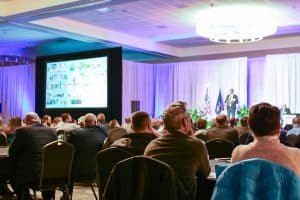
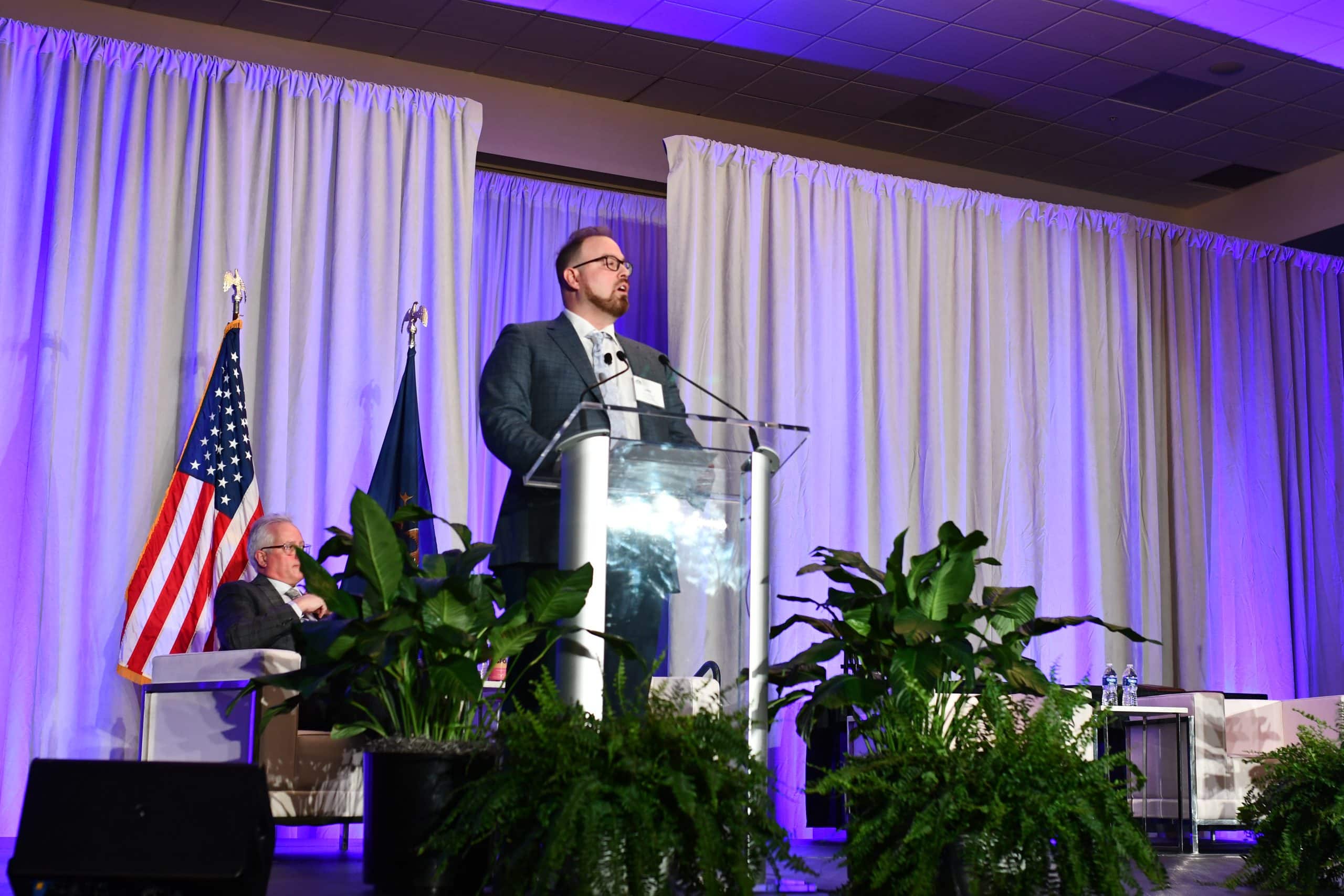
The world is changing at a rapid pace. Today’s consumers are evolving and MMPA isn’t stepping back to witness change but is orchestrating it. It takes change to survive in our industry. And we’re proud to say we’re a different cooperative today than we were yesterday, and even prouder to say we’ll be different tomorrow than we are today. MMPA members and guests gathered in Novi, Mich. for the 108th Annual Meeting on March 20 to learn how we’re evolving, and to celebrate our partners and members who have made this success possible.

During the meeting, attendees learned more about our investment in GoodSport, a brand disrupting the sports drink aisle as we know today; how we are breaking ground on one of the most sustainable ethanol facilities in the world this year as part of our partnership with Dairy Distillery; and witnessed the announcement of a new alliance with Amul, a brand owned by the largest dairy cooperative in the world. And MMPA is doing all of this while remaining committed to producing some of the highest quality milk in the nation.

Award-Winning Members

During the Annual Meeting, MMPA Outstanding Young Dairy Cooperator finalists, members reaching 35 and 50 years of membership, MMPA Dairy Communicator Service Award recipients, and the MMPA Top Quality Award winner were recognized.

Outstanding Young Dairy Cooperators

2023 Outstanding Young Dairy Cooperator
Ryan Benthem of McBain, Michigan

2023 Outstanding Young Dairy Cooperator Runners-Up
BJ & Autumn Benkovsky of Eaton Rapids, Michigan

2023 Outstanding Young Dairy Cooperator Finalists
Bryan & Molly Benson of Cadillac, Michigan
Steven & Whitney Wamhoff of Hopkins, Michigan

Milestone Members

35- Year Members
Roger Weiss of Frankenmuth, Michigan
Marvin J Rubingh of Ellsworth, Michigan
Terry K Lautner of Traverse City, Michigan
David Schultz of Sandusky, Michigan
Glen Sparks of Fremont, Michigan
Rodney Hisler of Charlotte Michigan

50-Year Member
William G Cumper of Marlette, Michigan

Dairy Communicator Service Award Recipients

30-Year Dairy Communicator
Jane Wood of Kingston, Michigan

10-Year Dairy Communicator
Jordan Noll of Croswell, Michigan

5-Year Dairy Communicator
Tammy Spicher of Paw Paw, Michigan

MMPA Top Quality Award Winner

De Grins Oer Dairy of Blanchard, Michigan


MMPA Annual Report: 2023 in Review

  • Members Adopt New Governance Structure
    In March of 2023, MMPA delegates unanimously approved a proposal to modernize MMPA’s governance structure. Originally put forward by the MMPA Membership Structure Task Force, the proposal gives every member farm one vote and shifts the cooperative’s grassroots efforts from a local to a district structure.
  • 96-ounce Bottle Innovation Launches
    MMPA launched a 96-ounce bottle made from Polyethylene Terephthalate (PET) in 2023. The groundbreaking, patent-pending innovation is from Creative Edge, MMPA’s team of creative thinkers focused on pushing the needle and keeping dairy relevant to today’s consumers.
  • MMPA Donates 1 Million Gallons of Milk in 2023
    MMPA is committed to supporting the communities we live and work in, especially in the face of a crisis. As part of the effort, MMPA donated 9,400 gallons of milk from the Superior Dairy plant in Canton, Ohio to residents of East Palestine, Ohio when a train derailment contaminated local drinking water. During periods of water contamination, milk is a safe source of nourishment.
  • MMPA’s Constantine Plant Receives Employee Safety Award
    MMPA’s plant in Constantine, Mich. received an International Dairy Foods Association (IDFA) safety award for outstanding worker safety. The annual Dairy Industry Safety Recognition Awards program, co-sponsored by IDFA and Dairy Foods magazine, honors U.S. dairy facilities and trucking operations for outstanding worker safety. Superior Dairy Acquisition Provides Greater Innovation
  • MMPA Launches Milk Moovement
    In 2023, MMPA announced a partnership with Milk Moovement, a dairy supply chain software provider, to digitize and optimize our supply chain. Milk Moovement digitizes the entire supply chain to optimize production from the farm to the processing facilities. The cloud-based platform tracks all milk shipments and delivers real-time quality and quantity information to all dairy stakeholders, allowing better decisions to be made faster.


This article was originally published in the March/April 2024 issue of the Milk Messenger. Subscribe »

By Joe Diglio, MMPA President & CEO

Early this year, I had the opportunity to participate in a panel discussion during the International Dairy Food Association’s Dairy Forum. During the panel, we discussed evolving consumer behavior and the pressing need for businesses to be responsive. Drawing insights from a McKinsey study on consumer trends, we talked about the intricacies and challenges that companies encounter in meeting ever-changing consumer demands.

On the panel, I had the privilege and honor to represent MMPA and shed light on our own journey from a business-to-business model to a cooperative with a growing consumer-centric approach. This transition was accelerated with the strategic acquisition of Superior Dairy, a move that underscored our commitment to understanding and meeting the evolving needs of consumers. Our approach has been gradual yet deliberate, aligning our strategies with the dynamic shifts in consumer preferences.

During the panel, we talked about how our society continues to see significant shifts, with consumers increasingly expressing interest in understanding the origins of the products they consume. This trend has been further accelerated by the COVID-19 pandemic, which has highlighted the importance of transparent communication and consumer education.

While we continue navigating today’s consumer landscape and the volatile nature of the dairy market, we continue to be committed to fostering innovation and enhancing technology, in a way that’s sustainable on member farms, in our plants and in our communities.

Our investments in ventures such as GoodSport, the pioneering dairy-based sports drink; Dairy Distillery, a ground-breaking alliance that will build the world’s lowest-carbon ethanol plant at our Constantine, Mich. facility; and our new partnership with Amul, using MMPA member milk to bring the well-known international brand’s fluid milk to U.S. markets for the first time, all exemplify our proactive approach to diversifying our portfolio, driving sustainable growth and staying ahead of evolving consumer preferences.

During our Annual Meeting held in March we heard from our partners at Good Sport, Dairy Distillery and Amul. The meeting provided a great example of our company’s resilience and adaptability in the face of dynamic market forces and shifting consumer behavior. Through strategic investments and partnerships, and a relentless focus on meeting consumer needs, we are ready to thrive in an ever-evolving marketplace.

This optimism for the future wouldn’t be possible without the team who works on our members’ behalf. When we consider all the awards our members received recognition for during the Annual Meeting and the quality milk they produce on the farm becoming a wholesome, nutritious dairy product, it’s a testament to the whole system working. We’re primed and ready for the next challenge and opportunity, because as a team, alongside our members, we’ve proven that we can evolve.

This article was originally published in the March/April 2024 issue of the Milk Messenger. Subscribe »

De Grins Oer Dairys’ commitment to family and dedication to quality milk earned them the MMPA Top Quality Award in 2023.

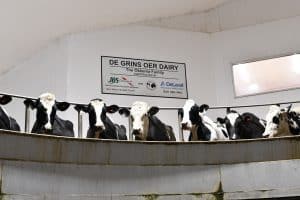
Family. It is everything to Tjerk Okkema. In 1999, fueled by a dream to establish a dairy farm according to his vision, he relocated his wife, Ramona Okkema-Clark, and three children-Evelyn Okkema-Damveld, Cora Okkema and Dirk-Thomas Okkema-from The Netherlands to America. Together they have built a healthy herd in Blanchard, Mich., with milk quality that sets them apart from Michigan Milk Producers Association’s membership, earning them the cooperative’s coveted title of Top Quality Award Winner in 2023.

“We don’t have a somatic cell count goal. Our goal is to have healthy animals that produce high quality milk,” said Tjerk. “Consistency is key. Do the same thing every day.”

The Okkema family places great value in the health of their cows and quality of milk. It is their consistently low average somatic cell count, a common milk quality indicator, of 49,000 proves they’re doing something right.

Family First

Everyone in the Okkemas immediate family is involved on the farm in some form, helping De Grins Oer Dairy succeed.

“The youngest daughter, Evelyn, is completely involved 100% as the herdsperson. Cora, our middle one, is somewhat involved, working mainly with Michigan State University’s Dairy Extension Team. And Dirk, the oldest, is a realtor, but he wants to keep his roots in dairy as he is in charge of the farm’s social media and promotion, and helps out around the dairy when needed,” said Ramona.

Ramona, former calf feeder and cow handler, now works mostly in the office handling bookkeeping, paperwork, phone calls, etc. As the owner, Tjerk oversees big picture things but doesn’t shy away from getting his hands dirty. “I enjoy working with the cows the most. I like everything except feeding calves. The summer and fall time are especially my favorite, I enjoy being outside.”

Aaron Damveld, Agricultural Equipment Foreman, is a jack of all trades, ranging from mechanics and fieldwork to tending to the heifers, he enjoys working with all aspects of the dairy. “I can do almost everything on the farm. I learned a lot from working for my grandfather and uncle growing up.”

The Okkema’s contribute their success to the strength of their family unit and their faith in God.

Ramona states, “Working with family, I mean that’s all I’ve ever done. Your family has your back. No matter how the day ends, you know your family has your back. We all have a silent understanding of what everybody’s going through as far as when it comes to the farm scene.”

The Beginning

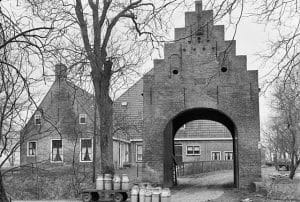
Groot Deersum 2, Achlum, The Netherlands. Built in 1658, this was Tjerk’s farm home. He grew up here and it is where Tjerk and Ramona first met and started their family after they married in 1991.

Tjerk and Ramona’s story begins in 1982 when she traveled from America to the Netherlands through a 4-H program. There she met Tjerk who was working with his father on their dairy farm. They married 9 ½

years later, Ramona moved to Achlum, and they grew their family. During their time in the small village in the Netherlands, Tjerk took over operations of the family farm milking almost 50 cows. Not long after

Tjerk came to Ramona with a proposal.

Ramona states, “[Tjerk] came to me and said, ‘What would you think, because of the milk quota here, of moving to America? Fast forward, we went through the immigration process and moved here June 1, 1999. He’s been making improvements and transforming this dairy ever since.”

Tjerk was quick to add, “Well, we showed up June 1st, but I had to do a lot of cleaning before we started milking in August. I started by buying a load of seven milkers and the others were springers that came from Canada. The first load of milk for shipment had a 350,000 somatic cell count as the agitator couldn’t even reach the milk tank.”

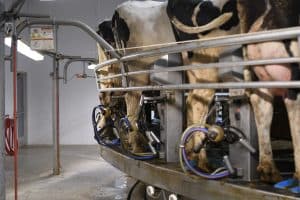
They have come a long way since then. Now milking 700 cows, three times a day, in a 40-stall rotary and producing the highest quality of milk.

Today’s Practices

The dairy’s mission reads, “By exemplifying high standards through animal care and progressive practices, we commit ourselves daily to creating quality milk for everyone near and far.”  Not only have the Okkema’s stayed true to their mission but they have had success in knowing that they could not have gotten to where they are alone. Before their expansion of the newest barn and rotary in 2017 the family prayed to God over the land. Their accomplishments have been attributed to the profound influence of their faith, with the belief in God playing a pivotal role in their journey to success.

Industry professionals and technology are resources that the family has taken advantage of to be as efficient as possible.

Fleckvieh cows make up 1% of the Okkemas herd. They are a dual-purpose breed incorporated for their reduced mastitis and somatic cell counts, increased protein content in milk, and increased longevity and overall health. Pictured is Honey, or 5409, the first calf born on the dairy and is now 6 years old and going strong.

“Every couple of months we have a management meeting and I work personally with a lot of the companies that we hire to help us on the farm such as our vet office, nutritionist, etc.,” Evelyn shared. “The company our nutritionist is with has a calf specialist, so we work closely with them as well.”

The implementation of ear tag monitors five years ago has aided in monitoring herd health and becoming more precise with breeding protocols.

“It tracks the cow’s eating habits, by monitoring how often they’re flipping their ears. If a cow feels sick her ears will droop and may be an indicator that she has mastitis. The tags catch illness a lot faster than somebody just quickly walking through the barn who may overlook her. The sooner we are aware she is ill the quicker we can treat her and have her healthy again”, states Evelyn.

Another technology that has improved milk quality but also solved a labor issue, is the use of a post dip robot arm for the rotary. “The robot has a camera on it so that it can find the teats and it is 99% accurate. We have been able to take two people from the parlor and reduce our somatic cell count,” Tjerk said.

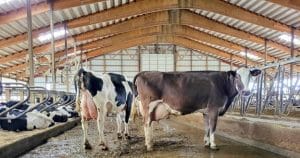
The Okkemas take pride in their cleanliness on the farm. They bed the stalls with clean sand every week and scrape the stalls three times a day.

As members of MMPA for 25 years, they’ve utilized member services such as milker trainings and educating employees through the Dairy Care Academy Program. “I utilize the Dairy Care Academy courses for the calf feeders and MMPA’s Spanish milker trainings for the people in the parlor,” states Evelyn.

“The key to improving milk quality is in the details,” Tjerk said. “The little things and the consistency. If you’re doing it right, you’re doing it right. Our goal is not to have the lowest somatic cell count, but to produce high quality milk.”

This article was originally published in the March/April 2024 issue of the Milk Messenger. Subscribe »

Steve and Whitney Wamhoff

Hometown: Hopkins, Michigan
District: 2

Steve and Whitney Wamhoff are all about diversification on Wamhoff Family Dairy Farm LLC. The couple recognizes the advantages of multiple revenue streams and knows what it takes to make it happen. They raise quality heifers and steers for sale and have pushed to grow more cash crops. These two can’t do it alone though, Steve’s father and brother help operate the dairy and they are raising three kids, Jameson, Makenzie, and Haley.

Q&A:

Q: What’s your farms greatest achievement?
To be able to continue as a family run and worked farm for 6 generations now.

Q: Is what you’re doing now what you dreamed of doing as a kid?
I always thought I’d be tied to the farm somehow when I was growing up.

Q: What do you love about being a farmer?
Working for myself, knowing that I’m building my own future, not someone else’s.

Q: What’s the key to running a dairy farm?
Hard work and communication.

Q: What’s your favorite chore? Why?
Breeding cows because it helps push the farms genetics and bottom line forward.

Q: Ultimate cow? Sired by who? Average production?
1004, Sired by Billy (one of our own bulls raised bulls), 92lb average over days milked.

Q: Why do you milk cows?
I grew up in a barn helping milk cows and feeding calves. After finishing my degree, I couldn’t stand the idea of being behind a desk or in an office for 40+ hours a week. An opportunity arose on the farm, and I jumped into it with both feet.

Q: Describe your farm management style in three words.
Full Family Effort.

Q: What’s one practice you’d try on your farm if you knew it was impossible to fail?
Putting cover crops on all field while grazing cattle on the cover crops.

Q: What does your farm look like in 30 years?
Hopefully full of healthy cows, luscious soil, and a beautiful great family.

On their farm:

On their dairy in Hopkins, Michigan you’ll find Holstein cows being milked in a double eight parallel parlor. With monitoring systems on the cows and the Delpro parlor system they use technology to gather information and make decisions on an individual cow and whole herd basis. The Wamhoff’s continually strive to grow and be better every day. They move to grow as a family and farm to ensure that they have a chance to do it again and again.

This article was originally published in the March/April 2024 issue of the Milk Messenger. Subscribe »

Bryan and Molly Benson

Hometown: Cadillac, Michigan
District: 3

Sustainability is the name of the game for Bryan and Molly Benson. These fifth-generation farmers have their family front of mind as Bryan’s father continues to work on the farm, and they have three children as the upcoming generation: Fenton, Hartley, Josette, and Alicia. At Benson Dairy LLC, their six Lely robots, LED light installation and thermostat run fans are all practices that are helping keep their farm efficient and sustainable for future generations.

Q&A:

Q: What’s your farms greatest achievement?
Being here for 152 years, we’re the 5th generation.

Q: What do you love about being a farmer?
Creating a sustainable business for generations to come!

Q: What’s the key to running a dairy farm?
Hard work, always willing to adjust the ways we think and work!

Q: What’s your favorite chore? Why?
Anything field work. I love putting up high quality feed for our cows. And just being good stewards of the land God has blessed us with!

Q: How can someone easily improve their milk quality?
Cleanliness and consistency

Q: Why do you milk cows?
To produce the highest quality milk for consumers!

Q: Describe your farm management style in three words.
Visionary. Participative. Goal-setting.

Q: What’s one practice you’d try on your farm if you knew it was impossible to fail?
Processing our own milk.

Q: What does your farm look like in 30 years?
Hopefully still here and the 6th generation chasing their dreams!

On their farm:

If you visit their farm in Cadillac, Michigan you may run into one of the many tour groups that Molly helps organize. Working with Congressmen and the Traverse City Home School Group, the dairy opens their doors to share dairy knowledge with the public. The couple is very active in their community as well, delivering bags of food to students in need through the Cadillac Area Backpack Association as well as being active members of the Living Light Church.

This article was originally published in the January/February 2024 issue of the Milk Messenger. Subscribe »

Start your new year off right by making sure your employees are up to date on all things animal care.

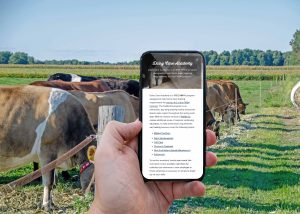
Dairy Care Academy is a free MMPA animal care training program for farm owners and employees. Designed to help farms meet Farmers Assuring Responsible Management (FARM) program training requirements, it also educates employees and improves performance.

MMPA members have access to an on-demand, FARM program compliant online training platform. The resource covers Milking Practices, Calf Management and Dairy Stockmanship along with the latest FARM program required training areas of Euthanasia, Non-Ambulatory Animal Management and Fitness to Transport. Recently added, the Milking Practices course is also available in Spanish.

The six different topics are complete courses with videos and resources compiled by the MMPA Dairy Care Academy team from reputable sources, making it easy for members and farm employees to complete the course relevant to their role on the farm, take a quiz covering what they have learned and receive a printable certificate if they score 80 percent or better on the quiz.

This training resource is available year-round for unlimited use. To access the online platform, MMPA members can visit the member portal and select the Dairy Care Academy link on the homepage or ask your member representative for details.

Successful dairy operations rely on quality employee training because training keeps all animal caretakers on task and performing best practices. Therefore, Dairy Care Academy teaches farm employees how to provide excellent care to animals. Farms that benefit the most from training are those that commit to incorporating best procedures taught to employees on their farm. Setting expectations and evaluating adherence to procedures long-term are surefire ways to build a successful farm team.

MMPA farms interested in on-farm training, contact your member representative to schedule classroom-style or other training opportunities.

Online Dairy Care Academy Courses:

  • Milking Practices (available in English and Spanish) – learn best milking practices and key ways to improve milk quality and udder health.


  • Dairy Stockmanship – learn how to work with a cow’s pressure zone, how the environment has an impact on cattle movement and why good stockmanship increases milk production, improves herd health, and reduces animal and handler injuries.


  • Calf Care – understand why calf housing should be clean, dry, draft free and ventilated, why the quality of colostrum is impacted by equipment cleanliness and milk storage, and how to properly sanitize calf equipment.


  • Fitness to Transport – study the importance of animal comfort and safety when handling, moving and transporting dairy animals.


  • Non-Ambulatory Animal Management – learn proper care of down animals, acceptable methods of non-ambulatory cow movement and employee safety while moving non-ambulatory animals.


  • Euthanasia – understand acceptable methods of euthanasia, correct anatomical sites for euthanasia and indicators of unconsciousness in dairy cattle.

This article was originally published in the January/February 2024 issue of the Milk Messenger. Subscribe »

By Doug Chapin, MMPA Board Chairman

MMPA member involvement is key to our success and sets us apart from other cooperatives. Our members’ involvement strengthens our association, and it has helped us succeed through volatile dairy markets. While it’s critical that members participate in elections and cooperative business, it’s equally important that our cooperative remains successful in the future. To do that, we must attract the right leadership talent which only comes from having informed and involved member owners.

During our Annual Meeting last March, the membership recognized how our association has changed through the years and unanimously approved a member-driven proposal to update our governance structure. We’ve seen our industry change and farms consolidate, and it’s no surprise that what may have worked a century ago was no longer working in today’s environment. The proposed changes led us to change from a delegate system to giving every farm one vote, and we redistricted to better align ourselves with the number of members we have today.

As a result of the changes, we held virtual membership briefings over the summer to provide an update to membership on our cooperative business. The management team at MMPA shared industry happenings and gave insight into MMPA’s market strategy.

In December, we held District Meetings for the first time where all members were invited to attend and conduct cooperative business. The meetings were a good chance for members to interact and learn about the cooperative, while meeting with staff. The attendance was encouraging, and I appreciated the questions that members asked. Overall, the district meetings allowed every member to participate in the governance of the cooperative, a critical component of a successful cooperative.

The changes to our governance structure also allowed us to evaluate our member committees and how we share information with our membership. It’s led to the development of a legislative group for members interested in legislative affairs. It’s also created CORE, an opportunity for members to get involved and learn more about MMPA. While CORE is just getting off the ground, we’re excited to officially share dates with our members and invite them to participate.

The first CORE program will be MMPA 101, which will be a good chance for members to understand their milk check and the tools MMPA has from the lab work to field staff involvement. MMPA 101 will also include a tour of our laboratory in Novi and will fill in a lot of blanks for those who haven’t been as involved before. Following MMPA 101, members will have the opportunity to participate in a Sustainability Summit to recognize what we’re already doing on the sustainability front and what areas we are working to improve in the future. We’re also excited to bring members to our Canton, Ohio plant as part of the CORE program in April. As a key part of our association’s initiatives, the acquisition of that plant was a significant investment and I encourage all members to learn how your money is being spent.

These opportunities are great to learn the key parts of our association’s initiatives and understand how members’ investments in the cooperative is working for them. As owners of the cooperative, our members have a significant investment in our business, and I encourage everyone to participate in the co-op and learn what that investment is doing for their operation.

This article was originally published in the January/February 2024 issue of the Milk Messenger. Subscribe »

As members of the dairy community, we know that milk has a lot of goodness. With 13 essential nutrients, it is ultra-hydrating, has high-quality protein and is an excellent source of calcium and vitamin D to support bone health.

It took a creative mom looking for a better sports drink solution for her son during his sports games to realize how the goodness of milk could create a healthy, natural hydrator that works better than the leading sports drinks for her kid and other athletes in the world. Milk’s goodness inspired GoodSport’s Founder to create a clear, refreshing sports drink by extracting the electrolytes and carbohydrates from milk, simultaneously creating a new format to consume dairy and disrupting the sports drink aisle as we know it today.

A born and raised Michigander with college experience at both Michigan State University and the University of Michigan, Michelle McBride, proud mom and founder and CEO of GoodSport Nutrition is the first to admit, “I have no background in dairy. I’m an attorney. I was a nonprofit executive. And I came up with this idea of GoodSport because I didn’t want my kids drinking sport drinks filled with artificial ingredients.”

“My husband and I had read about athletes who drink chocolate milk to recover after working out, so we started to bring our son that as a healthier alternative for after sports,” McBride said. The problem remained though that milk wasn’t his beverage of choice before and during a sport activity.

“We tried all the natural sports drink options, and my son didn’t like the taste, and then I came to learn that they don’t provide any level of hydration beyond plain water anyway,” McBride explained. “There was something inside of me that said, ‘I wonder if you could make a natural sports drink from milk that would work better.’”

That’s how the idea of GoodSport was born. “You have the traditional sports drinks that are made with artificial ingredients and too much sugar. And you’ve got the natural sports drinks, but they don’t hydrate any better than water,” McBride said. “GoodSport fills the void in the space of by being a sport drink made with only natural ingredients that’s backed by peer-reviewed published studies to hydrate not only better than water, but better than traditional sport drinks as well.”

After spending a year mulling over the ground-breaking idea of a dairy-based sports drink, McBride finally pursued it. She did the research and turned to experts to make the idea into a reality.

“After some research, I learned that milk is not only packed with electrolytes, but it is significantly more hydrating than water and traditional sports drinks as well,” McBride said. “I figured there has to be a way to extract milk’s hydrating components to create a better sports drink, but I knew I needed some experts to help me with it.”

McBride turned to Dr. Bob Murray, the current GoodSport Chief Science Officer and the previous founder and director of the Gatorade Sports Science Institute. “Dr. Bob is an internationally renowned expert on sports hydration. He has worked with the biggest athletes and teams in the world and is an extraordinarily well-published scientist.”

Initially, a milky formula was created. After testing it with consumers, McBride and Murray found that while the idea was appealing, athletes wanted something that had the mouthfeel and tasted more like a traditional sports drink. This revelation led them to working with the Center for Dairy Research at the University of Wisconsin.

“Working with the Center for Dairy Research, I was taught that you could use ultrafiltration to remove the protein and fat from milk (the milky part) and extract its electrolytes, carbohydrates, and B vitamins in a clear liquid to make a sports drink,” McBride said. “I also learned that we didn’t necessarily have to go out and buy tankers full of milk and ultrafilter it myself and waste the protein that I didn’t need for my sports drink because dairy processors, like Michigan Milk Producers Association (MMPA), ultrafilter milk to make products like protein powders, and have no use for the nutritious part of the milk that we would need to make the sports drink.”

As one of their early suppliers of GoodSport’s milk permeate, the main ingredient in the product, MMPA was an obvious partner when it came to moving the needle for GoodSport. The partnership that began as supplying their permeate has now turned to MMPA taking brand equity stake in the company.

“MMPA’s partnership means the world to us because it is a vote of confidence from the dairy industry and from the farmers themselves. Together, we’re really going to help make every drop of milk count,” McBride said. “It’s such a fantastic strategic alliance because MMPA has its own objectives and priorities in terms of innovation and product diversification to help keep dairy relevant for consumers going forward, and those same initiatives are relevant to GoodSport.”

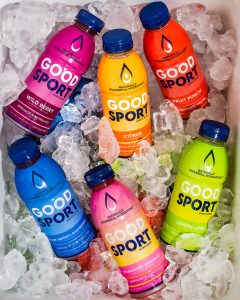
GoodSport’s four flagship sports drink flavors are Lemon Lime, Fruit Punch, Wild Berry and Citrus, with Fruit Punch and Wild Berry as their two most popular flavors. In January, GoodSport launched an additional two flavors: Strawberry Lemonade and Blue Raspberry.

The Center for Dairy Research and MMPA weren’t the only relationships that McBride made in the dairy industry. Since there wasn’t a database of information on the nutrient content of permeate, McBride relied on Dairy Management Inc. (DMI), part of the national dairy checkoff program, to conduct research and strengthen the case for GoodSport being a solution to the problems she faced as a mom.

“DMI really helped support us with insights, information and research.,” McBride said. “We knew we had the components of a really well formulated sports drink, but we hadn’t had any type of study done that proved GoodSport hydrates better than the traditional sports drinks, so that’s where we started.”

Their research found that the goodness of dairy did make GoodSport better. The sports drink is a natural hydration option with 3X the electrolytes and 33% less sugar than traditional sports drink. The research also found that GoodSport hydrates better than water and traditional sports drinks and improves exercise performance.

“There are sports drinks that come and go from retail shelves all the time with little difference except for the names. When you look at consumer research and what consumers are looking for when they’re making purchases in the beverage aisle, the top three purchase indicators are whether the product is natural, whether it has proven efficacy, and whether it is sustainable,” McBride said.

And how does GoodSport stack up? “We have an all-natural product that’s proven to hydrate significantly better than water and traditional sports drinks and is upcycled certified because we’re upcycling a component of milk that otherwise would not get used,” Michelle said. Then she humbly added, “It’s a pretty good product-market fit.”

Really, it’s a nearly perfect product-market fit, and exactly what McBride was looking for when she set out to make a sports drink that was “good for you, good for sport and good for the planet.”

As for what’s next, GoodSport’s partnership with MMPA includes utilizing a recently awarded grant from the Dairy Business Innovation Alliance to work on a new format of GoodSport. The partnership and funds are guaranteed to continue innovating the future of dairy because McBride recognizes that “honest to goodness, there’s a lot of good here.”

This article was originally published in the January/February 2024 issue of the Milk Messenger. Subscribe »

From former employees to owners of the dairy, BJ and Autumn Benkovsky, the 2023 MMPA Outstanding Young Dairy Cooperator Runners-Up, have embraced the challenge of taking over Lyon Farms in 2021 after the unexpected passing of their beloved mentor Mike Lyon.

It is not every day that one has the opportunity to take over and carry on the success of a dairy farm. Although unfortunate circumstances have lead BJ and Autumn Benkovsky to take ownership, the couple accepted the challenge without hesitation, doing all that they can to carry on the dairy’s legacy in Mike Lyon’s honor.

“I was working at the elevator at the time, and I had planned on coming back to the farm in July. Then Mike went downhill fast and passed away June 3rd. There was a whole month that I wasn’t here full time because I was still at the elevator,” BJ said.

Obstacles continued to arise for the couple in 2021 as Mike’s father, who was a sounding board for any and all questions concerning the operation, passed in September. Later that winter, a virus travelled through the herd, meaning long nights testing and treating cows. But there was lots of joy to be found in October 2021 with the birth of their first child Olivia.

“The transition was great because it was a huge blessing, but it was difficult”, Autumn admitted. “We’re just now catching up two years later. This past summer, I finally feel content at where we are on breeding and everything else,” BJ added.

OYDC Runner-Ups, BJ and Autumn have fully immersed their lives into making sure this dairy succeeds. “I’m CEO, Chief Everything Officer, breeding, feeding, accounting, the buck stops with me,” said BJ. “I am in charge of the calves. I work a full-time job outside of the farm, and then I feed calves at night, and then mornings and nights on the weekends. I also help BJ milk in the mornings and on the weekends,” said Autumn.

Looking Back

Although Autumn was raised on a dairy farm in Mason, Mich., dairying was not BJ’s initial career goal when he began his studies at Michigan State University (MSU).

“I started working here, in Eaton Rapids, Mich., at Lyon’s dairy while I was going to MSU. I didn’t know what I wanted to do, but I wanted to do something in ag and I was actually leaning towards the beef side of things,” BJ said. “Ultimately what I came to love about this is that you see the cycle from calf to cow. I was hooked, and for some reason Mike thought I was crazy enough or smart enough, to give us this opportunity.”

Autumn also became close to Mike through her work with the calves. “I was fortunate to be around when Mike was feeding calves because he taught me a lot. I grew up on a farm and I fed those calves, but every farmer has different perspectives and I was fortunate to be able to learn his ways,” said Autumn.

Autumn and BJ speak very highly of not only the ways in which Mike lead by example while operating the dairy, but his innate cow-sense.

“He was so good with cows. BJ said several times he could tell when a cow was going to be sick before it even got sick, his cow sense was unbelievable.” said Autumn.

Looking Ahead

“I don’t think a whole lot has changed since I have taken over. On the employee management side nothing has changed,” said BJ. “The core value of the farm is to have an impact. There are more ways to do that than having the fancy shiny tractor out front. There are people’s lives that I can have an impact on. There’s more to this job than making money and making milk, it’s having an effect on kids’ lives.”

BJ and Autumn take great pride in not only ensuring that the cows are taken care of, but that their employees are too. It is Mike’s morals and leadership values that have influenced BJ to continue making an impact on the lives of his employees.

“BJ’s doing a lot of things that Mike has done too,” Autumn said. “At Mike’s funeral there were a lot of young people. He was such a good mentor, the people that he hired really needed people there for them, and you could tell that Mike was there for them.”

When asked what motivates the couple every day, both answer that it is their daughter Olivia. “We try to do better than we have before, to always strive to become better,” said BJ.

At his core BJ loves being a dairy farmer. His journey to becoming one may not have been conventional, but he truly enjoys working with his cows.

“It’s not the employees. Not the paperwork. I really do love the cows,” BJ stated. “If the day ever comes that the cows aren’t here, then I would much rather rent my farmland out. The cows are why I’m a dairy farmer.”

Now that BJ and Autumn have settled more into their new position as dairy farmers, they have plans to build a new barn with a much more advanced parlor. “It’s a flat barn right now, we’re milking in the 1970’s here. Everything is in the works to go to a double 10 parallel and slowly grow the 88-cow herd from within over time,” said BJ.

Over a year ago they’ve started using bolus health monitoring technology to help manage their cows on a more individual basis. BJ explains, “They get installed into the animal, and it shows you which cows to dry off, who to breed, what health checks to make, and who’s about to calve.”

The couple also works alongside their nutritionist, consultants, and MMPA field representatives to help them along the way.

“When I first got this position, I was aware that there would be those who will try to pull one over my eyes, but the amount of people that are actually willing to share some of their knowledge and experience has been overwhelming,” BJ said. “We have a community of dairy industry people with plenty of great resources that are willing to help.” It is evident that together the Benkovsky family can persevere. With the right people by their side there is no challenge they cannot face together.

This article was originally published in the November/December 2023 issue of the Milk Messenger. Subscribe »