The Michigan Dairy Ambassador program gives youth the opportunity to network with others, develop leadership skills and learn how to communicate their passion for dairy. The goal of the program is to equip each ambassador with the communication skills and tools necessary to represent the dairy community and industry in a positive way. Ambassadors participate in trainings and represent the dairy industry at promotional and outreach events throughout the year.

    Madison Halfman

Hometown: St. Johns, Michigan

Growing up on her family’s dairy farm instilled a sense of pride for the industry that she’s excited to share with others. Madison Halfman, daughter of Mike and Laura Halfman, works on her family’s farm T&H Dairy Farm in Fowler, Michigan. There, she has gained practical hands-on experience of what it takes to run a dairy farm and as a 2020 Dairy Ambassador is gaining the skills it takes to share the lifestyle with consumers. Madison has plans to attend Michigan State University to pursue a Crop and Soil Science degree before returning to her family’s farm.


Anna Moser

Hometown: Dansville, Michigan

As an incoming senior at Dansville High School, Anna Moser takes advantage of any and all opportunities to grow herself and her leadership abilities. She is actively involved in 4-H, FFA and the Michigan Junior Holstein Association, holding leadership positions in each organization. After graduating from high school next spring, Anna, the daughter of Stan and Laura Moser, has plans to attend Michigan State University with the goal of learning more about agricultural business and marketing. She wants to remain active in the dairy industry and continue promoting dairy products.


Adalee Thelen

Hometown: St. Johns, Michigan

Adalee Thelen is a senior at Fowler High School this year where she is involved in the National Honor Society and plays volleyball and softball. Adalee, the daughter of Jeff and Patti Thelen, grew up on her family’s dairy farm in Saint Johns, Michigan, caring for calves and sick cows. Her dairy background led her to taking a job at a neighboring farm along with pursuing other opportunities to gain dairy industry knowledge through groups like 4-H and FFA. In the future, Adalee plans on attending Michigan State University to receive an animal science or agribusiness management degree.


Abby Vandyk

Hometown: Kalamazoo, Michigan

A graduate of Heritage Christian Academy, Abby Vandyk is the daughter of Sara Vandyk and a 2020 Dairy Ambassador. This fall, Abby is attending Michigan State University with the goal of receiving her dairy management certificate before pursuing a degree in agriculture business management. Abby is very involved in 4-H where she shows a variety of animals at her county fair and takes advantage of many leadership opportunities. She works at Vlietstra Dairy Farm as general farm labor, gaining a variety of hands-on practical dairy knowledge.


Katelynn Webster

Hometown: Barryton, Michigan

Katelynn Webster loves everything about dairy cows and the environment around them. As a 2020 Dairy Ambassador, she is passionate about sharing with consumers how farmers love and take great care of their animals. She was inspired to share the dairy story because of industry member’s passion for what they do to nourish the world every day. Katelynn is currently entering eleventh grade at Chippewa Hills
High School where she is active on the school’s track team. Outside of school, she works on a dairy farm gaining practical knowledge about the industry that she’s looking forward to applying in her future career.


Elyse Zimmerlee

Hometown: Bellevue, Michigan

Entering her fourth year at Michigan State University, Elyse Zimmerlee has competed on the 2019 MSU Agriculture Technology Dairy Judging Team, helped coach FFA teams and worked at Wing Acres Dairy. She takes mentorship seriously and is hoping to one day be an agriculture educator to help grow the next generation of dairy advocates. What she enjoys most is fostering passion for the dairy industry in others. Elyse, the daughter of Deanna and Todd Waterman, is eager to network with others and speak directly to consumers about the dairy industry.

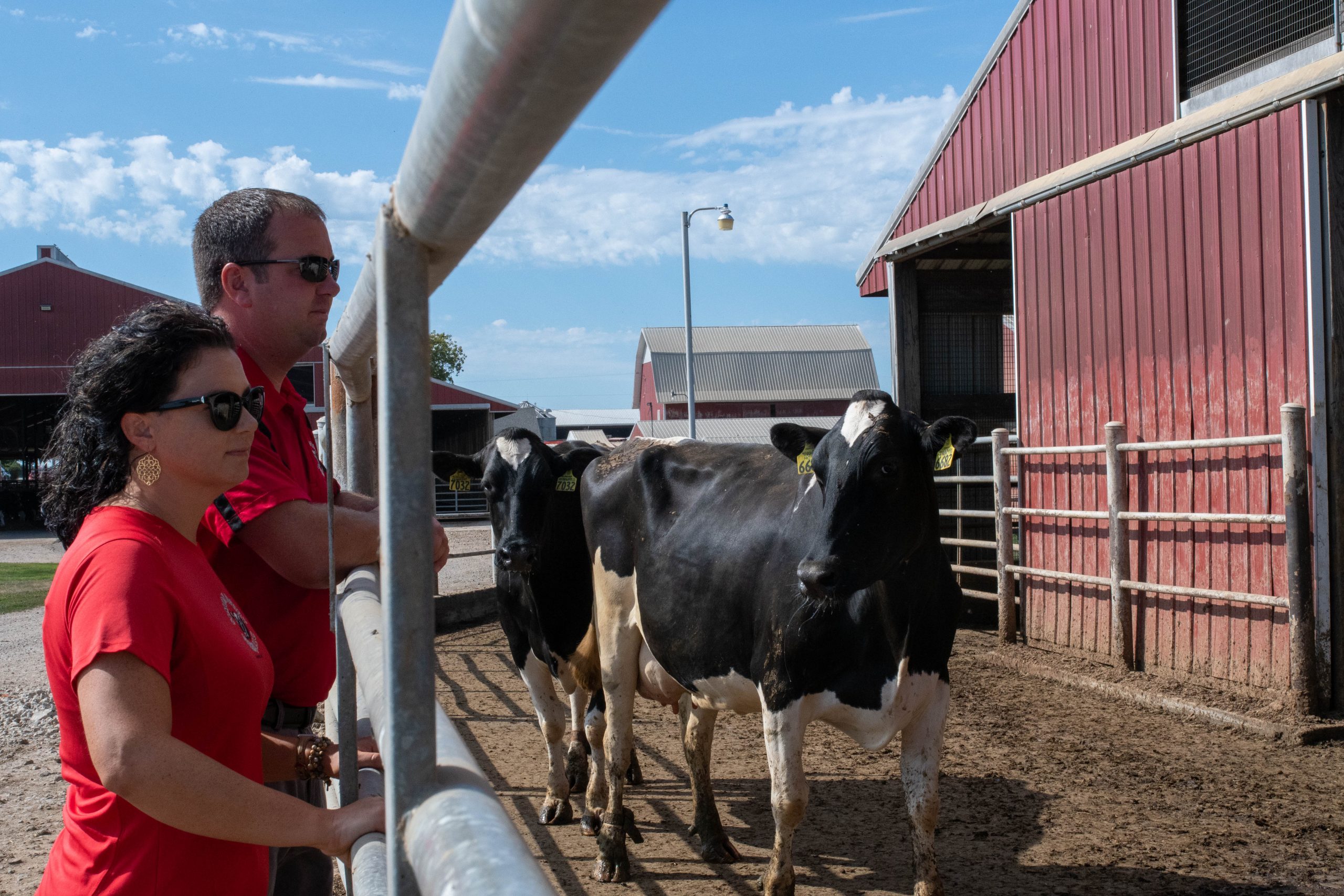
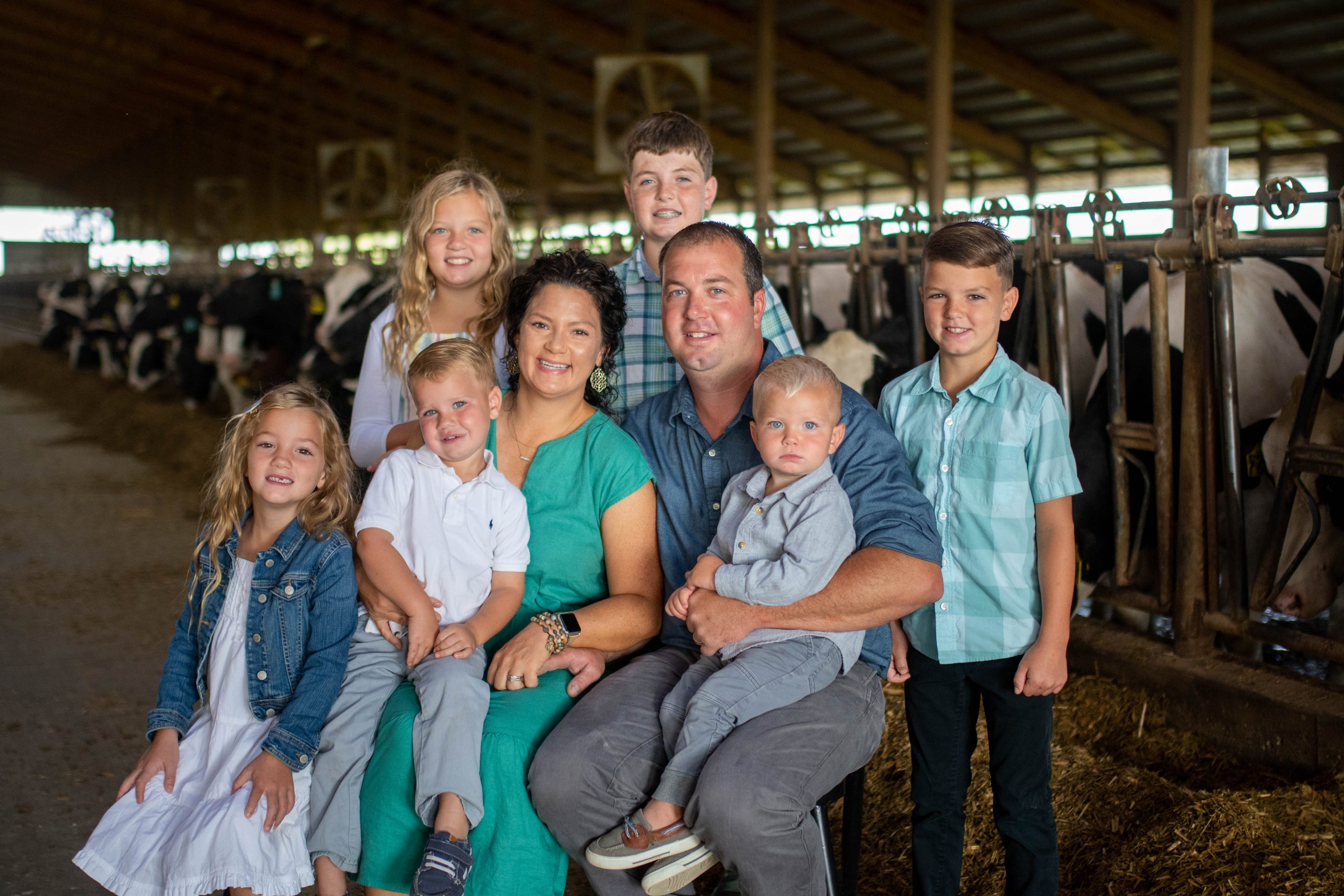
Driven by the goal of producing high-quality milk, Brent and Emily Simon, Westphalia, Michigan dairy farmers, are focused on sustaining their family, employees and livestock for years to come. The Simons were recently selected as the 2020 MMPA Outstanding Young Dairy Cooperators (OYDC) by a panel of judges represented by leaders in the Great Lakes dairy industry.

The Simons operate a quality award winning farm with 930 cows and 2,300 acres. They are members of the MMPA Mid-Michigan Local in District 6 and were one of several finalists invited to the annual OYDC Conference held Aug. 11.

A third-generation dairy farmer, Brent takes on the role of farm manager, overseeing cows, crops and employees. Meanwhile, Emily puts her bachelor’s degree from Davenport University and experience with the State of Michigan to use while directing the farm’s finances and human resources.

Brent’s passion for dairy farming began at a young age growing up on Simon Dairy Farm. “I was probably 10, 12 years old,” Brent said of when he started pitching in on the farm. “I would be outside as soon as I got off the school bus and could throw my backpack in the house.”

Through gradual growth they enlarged the farm to the size it is today. In 1999, they expanded the farm for the first time. When Brent graduated from high school, they began planning the next expansion and they broke ground on the first new barns when he came home after completing the dairy management program at Michigan State University in 2004.

“When I graduated from college is when things started to really progress, and we started to be aggressive with our expansion,” Brent said.

The most recent expansion took place in 2012 that added yet another barn and brought their heifers home. “The growth has been gradual, a good pace for our expansions and transition,” Brent said.

But through growth and managing the day-to-day, Brent and Emily assert that taking the time to go the extra step is crucial.

“Doing things the right way” makes a difference according to Emily.

“Why bother doing the job if you’re not going to do it right. You can’t produce a safe, clean, quality product if you don’t do the right steps to meet those needs,” Brent added.

This focus is evident in their milk quality. A frequent flyer in the MMPA Quality Award program, their somatic cell counts—an indicator of good animal health and a better-tasting, shelf-stable product—average around 100,000 cells per milliliter.

In 2016, the Simon Dairy Farm was recognized as one of the six highest quality dairy farms in the U.S. by the National Mastitis Council. Brent said they follow strict milk procedures, developed with guidance from both MMPA and MSU Extension. But the key to achieving such a prestigious honor, he said, is the culmination of hard work from a lot of individuals, both in and out of the milk parlor.

“It is a big group effort from our employees, consultants, veterinarian, nutritionist—the whole team was part of that nomination. We’re pretty proud of that,” he said.

“A lot of people think that good quality milk comes from the parlor from the guys milking cows, but that’s just a small part of it,” Brent added. “Nutrition and cow comfort play a major role.”

Through meticulous control and monitoring, the Simons ensure their cows are getting the best nutrition to ultimately enable high quality milk production. They utilize weekly visits from their nutritionist and the use of feed watch to track daily dry matter intake, or the amount of moisture-free feed a cow consumes per day. Everyday they track feed inventories and feed bunks for each group of cows, which is delivered directly though a TMR mixer.

“As technology evolves our goal is to evolve along with it to make our farm most efficient,” they said. In addition to the programs they use to navigate their nutrition program, technology and software aids their milking parlor in running “smoothly and efficiently while providing great animal care.”

Sustainability also plays an important role on their farm. “Simon Dairy Farm is committed to producing quality milk while considerately working to conserve resources and manage our waste in a responsible way,” they said.

Sitting kitty-corner to the local high school, Simon Dairy Farm is very visible in their small farming community, but they use their location as way to promote what they do.

“With a school sitting across the street, we always have to be proactive and promote the wellbeing of farming and the animals themselves,” Brent said. “We want to be here for the future. We want to employ kids that come out of that school. We want the public to appreciate what we have here and realize that we do a good job and that we are here to stay.”

They are welcoming to community and industry on a regular basis, even hosting representatives from all over the world with the Alta Genetics showcase tour and being a World Dairy Expo virtual farm tour presenter.

“My parents always had an open door, open driveway policy since before I was involved” Brent said. “They were willing to educate people and just have a conversation. We have nothing to hide. We want people to see our farm, show it off and show the job our employees can do.” Looking toward the future, they hope to sustain their farm and livelihood for the next generation with the same opportunity Brent was afforded.

“My heart and desire were there from a very young age,” Brent said. “I just hope that we are able to continue to do what we love to do.”

Emily says having a future for their six kids—Kaine, Scarlett, Jude, Annabell, Theodore and Gabe—is the ultimate goal.

“In uncertain times it seems the only thing we can do is to work hard every single day showing our families and community the benefits the dairy industry brings to the world,” they said.

This article was originally published in the September/October 2020 issue of the Milk Messenger. Subscribe »

While we are still facing a global pandemic, the undercurrent of pursuing a more sustainable future continues to move in both the private and public sectors. From carbon credits being furthered in the legislative landscape and greenhouse gas emissions being highlighted on product packaging, the agriculture industry is meeting the demands of consumers with visions of a sustainable future.

Fortunately, the agriculture industry is in a better place than many. Agriculture has a good story to tell with data proving how far farmers have come in the past 20 years and the unique ability to capture carbon while efficiently producing a cost-effective and nutrient-dense product.

“For many dairy farmers who have had multiple generations involved in their operations, their definition of sustainability revolves around the ability to leave a family legacy behind,” Sarah Michalek, MMPA sustainability supervisor said.

“Companies across industries have been announcing carbon emissions goals this year, and the dairy industry has naturally positioned itself to contribute to these goals through the continuous improvements and technologies implemented to improve their dairies. The agriculture industry and dairy specifically has a great story to tell and we at MMPA are contributing to that positive story,” she added.

MMPA’s customers are reacting to the mainstream consumer who cares about the future of the planet and have showcased the necessity of developing a sustainability program. To help meet customers’ needs, MMPA is driving sustainability efforts with a mission established by the board of directors:

“To continually strive for a more sustainable future – for our community, our environment, our economy’s health, and for the lives and world around us.”

For MMPA, sustainability is focused around the three pillars of social responsibility, environmental stewardship and economic viability. To keep with their cooperative nature, the MMPA board of directors established a Farmer Sustainability Advisory Council (FSAC), chaired by Tony Jandernoa, Vice Chair of the Board of Directors.

“People are frustrated with sustainability, but the environment is important to everyone,” Jandernoa said. “With the formation of FSAC, we are hoping that we can get a dialogue going with these companies so that we can find a solution that works for everyone.”

The committee is comprised of eight members who will regularly meet with customers who have expressed interest in finding sustainable solutions to implement on dairy farms. This unique pairing of customers and farmers will provide a platform to openly discuss sustainability topics and resources to provide guidance on feasibility of potential sustainable solutions.

“By sitting down with [customers] and coming up with real solutions that work with their idea of sustainability and our idea of sustainability, I think we can have a program that works,” Jandernoa said. “The FSAC will help lead those conversations.”

Meeting in the middle between members’ farms and customer’s corporate headquarters will allow farmers to share their efforts and goals on the farm to individuals equally passionate about the future of the planet.


MMPA Farmer Sustainability Advisory Committee 

The MMPA board of directors formed a Farmer Sustainability Advisory Committee (FSAC) as part of the cooperative’s continued commitment to producing high quality milk in a socially, economically and environmentally responsible manner. MMPA values the feedback and insight members can provide on farm sustainability efforts and have taken steps to formalize member engagement in our sustainability program through a new committee. Appointed by the MMPA board of directors, the committee is comprised of a chairperson and eight district members.

Farmer Sustainability Advisory Committee members

  • Committee Chairman: Tony Jandernoa
  • District 1: Carlton Evans
  • District 2: Richard Thomas
  • District 3: Bruce Riffle
  • District 4: Jeremy Werth
  • District 5: Ryan Benthem
  • District 6: Jamie Meyer
  • District 7: James Weber
  • District 8: Gertie Van den Goor

This article was originally published in the September/October 2020 issue of the Milk Messenger. Subscribe »

Dairy farms are often a generational picture of a family dedicated to the business through hard work and sacrifice. Much like marital vows, for better or worse, and richer or poorer, the dairy industry stands on decades of passionate people passing the torch of determination that never burns out.

The Michigan Dairy Memorial Scholarship Foundation (MDMSF) parallels the dairy industry in the history of funding young people to educate themselves to carry on the family business or support the industry in an allied career. Founded by a group of visionaries who wanted to provide scholarship funds to students interested in dairy science, the MDMSF is now in its 63rd year of awarding deserving students whose career path traverses the dairy industry.

Dr. Miriam Weber-Nielsen, MSU Department of Animal Science and Secretary of MDMSF Board of Directors, explained that the Foundation has awarded more than $1.4 million in scholarships to young people aspiring to careers in the dairy industry.

“Gifts to the MDMSF are used to grow the endowment fund with interest from the principal used to create scholarships and support learning experiences for our students in dairy,” Nielsen said. “The Foundation recognizes individuals, couples or organizations as Foundation Honorees with a $1,000 contribution, over 220 to date and the official number will increase once we can gather again to recognize our newest Honorees,” Nielsen continued.

Eleven individuals or couples have been recognized at a higher level with named scholarships. A named scholarship involves a minimum contribution, currently $50,000, and a conversation with the donors to plan the criteria for awarding of the scholarship.

According to Nielsen, the twofold purpose of the Foundation is one that people can feel good about: honoring leaders in our industry and supporting the education of young people interested in careers in dairy. The Foundation’s endowment has grown about 25 percent in recent years through generous gifts from individuals and organizations in Michigan and elsewhere. Many of these gifts were given to honor the accomplishments of individuals in Michigan’s dairy industry.

Two of the newly named endowments are the Trimner Endowment and the Hazle Endowment. Dana Sue Kirk is the daughter of the late George and Shirley Hazle who not only bred a renowned herd of Registered Holsteins, but as retired dairy farmers, they continued to enthusiastically support the industry.

“[George and Shirley] always had contributed to the scholarship and before dad died, he knew we were going to set up a named endowment for him. So, our whole family chipped in and got the endowment,” Kirk said. “Actually we were way over the $50,000 because we wanted not only to have a scholarship, but we wanted to also contribute to the dairy judging and the dairy challenge teams.”

Kirk said the endowment means allowing another individual to get an education at MSU. “Between Kevin and I and our three kids and their spouses we have ten degrees from Michigan State. And we just want to help others,” she said.

The Kirk’s son had his entire tuition paid through the Glenn Lake Scholarship. “It’s one of the longest running scholarships and it got funding early on,” she said. “With interest rates the way they’ve been in the last twenty years, they have really generated a lot of additional funding.”

Nielsen said MDMSF is kept alive through the generosity of the industry. “The dairy industry is filled with generous people, both those currently working in the industry and those who were associated with it in their past,” she said.

“They are used to contributing to their industry and to their community when they see a need. When our board members recognize a new Foundation Honoree for their industry leadership – whether that’s in an official leadership position, serving others, setting a positive example for others, or contributing to their industry or community in other ways, we find that people are quick to support the recognition with contributions to meet the $1,000 requirement,” Nielsen said. “The Foundation’s purpose of using the funds to support the college education of young people in dairy is attractive to many people.”

Nielsen pointed to a growing need for funding in recent years, “With many of our recipients coming from farm backgrounds, the importance of these scholarships has grown in the last few years with changes in the dairy and agricultural economy,” she said. “Many of our students are working while attending college. The scholarship support relieves their financial burden and allows them to focus more on their education,” Nielsen said. “It is more than just money, however. The fact that the Foundation believes in them enough to invest in them is a tremendous encouragement to our scholarship recipients, whether they come from farm or non-farm backgrounds.”

“I don’t think there is another program in the country like the Michigan Dairy Memorial Scholarship and the way it recognizes not only the student winners but also the dairy industry leaders,” said past scholarship winner, Renee McCauley. “When you look at some of the names
of the forefathers, it’s a great collection of history, and the program has a unique way of paying honor to those foundational people who had a great vision for educating farm kids.”

McCauley said it’s a picture of the dairy industry taking care of their own, “A child of the industry is supported by dairy farmers who share the same values, and the way it’s structured, the scholarship winners have a chance to meet the board members and donors, uniquely connecting the industry,” McCauley said. “It’s humbling to look at those names and see those who participated and gave back to the dairy industry through this scholarship. I’m a big fan of the Dairy Memorial scholarship.”


MMPA President and CEO Joe Diglio thanked Gary and Carolyn Trimner on behalf of MMPA at the cooperative’s annual meeting in March.

Trimner Endowment

Gary Trimner, retired MMPA Director of Member Services, and his wife, Carolyn, established an endowment to support interns in the MSU Food Systems Fellowship Program through the Michigan Dairy Memorial and Scholarship Foundation. As a long-time leader in the dairy industry, Gary and Carolyn established the endowment to benefit organizations and programs that are committed to developing the next generation of industry professionals.

While working at MMPA, Gary helped establish the Food Systems Fellowship Program and realizes the value it brings to Michigan’s dairy industry, a reason the program is at the core of the endowment. “We saw that the number of large animal veterinarians was getting less and less and we knew that we needed more and more.”

Further incentivizing participation in the program through the endowment allows Gary to continue his role in bettering the dairy industry’s future. “The goal of establishing the endowment was to benefit MMPA, the MSU College of Veterinary Medicine and the dairy industry. That’s why we did what we did.”

This article was originally published in the July/August 2020 issue of the Milk Messenger. Subscribe »

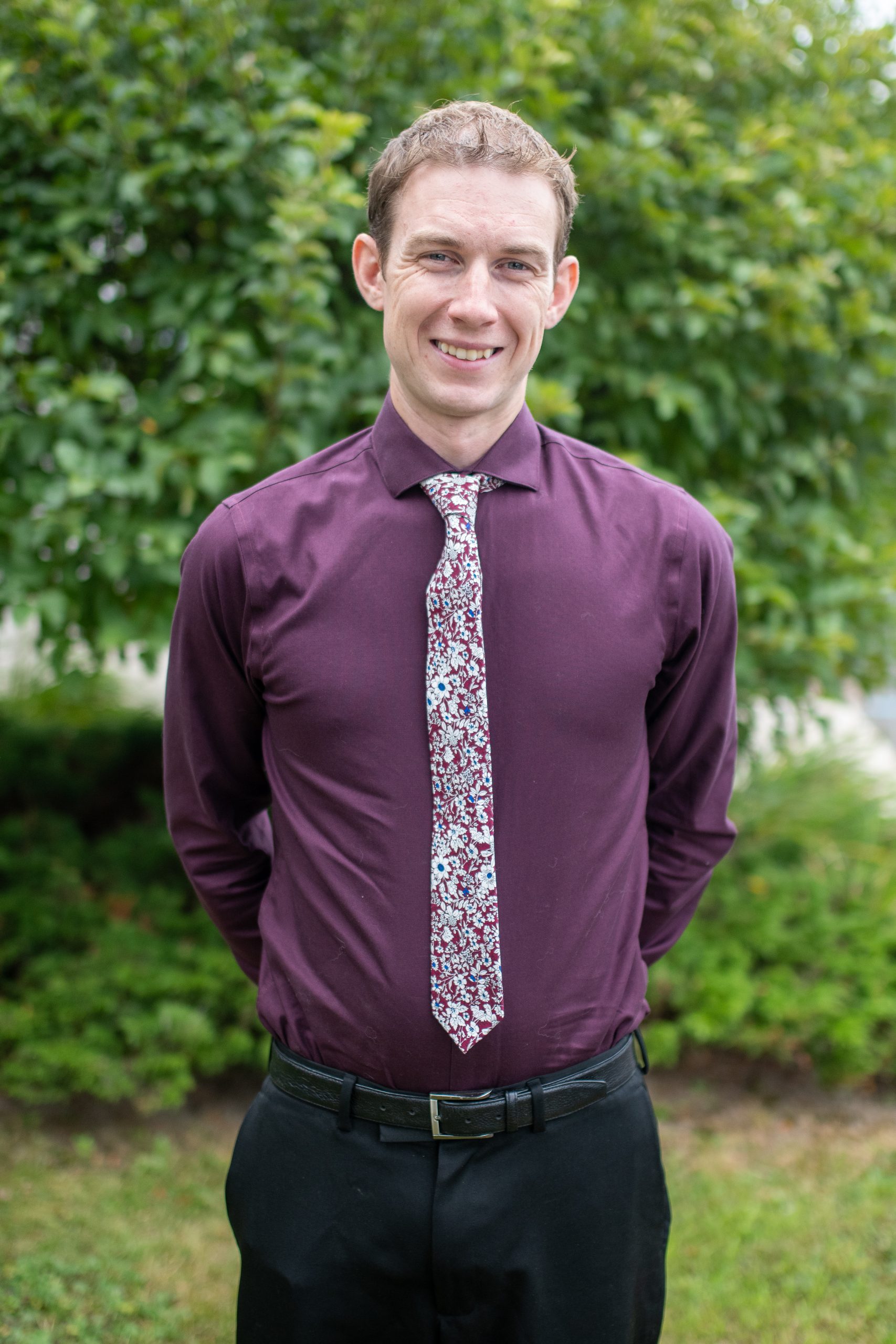
Meet 2019 MMPA Outstanding Young Dairy Cooperator finalist Ross Williams of Homer, Michigan. Ross is a graduate of Michigan State University’s dairy science program and has received the FFA State Degree and American Degree. He’s active in the FFA Alumni Association and Michigan Farm Bureau. Ross believes that everyone who loves milk has a role in reaching out to consumers to help them recognize the value of the product. For this reason, he is a part of UDIM’s Team Chocolate Milk, trying to promote chocolate milk for consumption after sporting events and workouts. An overall promotor of milk, Ross understands the value he has in America’s dairy industry.

Efficiency is the name of the game  at Williams Dairy Farm. Ross makes farm decisions guided by the motive to increase efficiency wherever possible. A decision made years ago, directed by those parameters, was to install robots into the parlor to increase labor efficiency on the 130-cow farm. In the future, Ross is looking forward to building a new heifer facility to encourage better heifer growth and breeding while also being more labor efficient.

What are you thankful for?

1. My family
“I’m thankful for my family. Without their support and hard work, I wouldn’t be the man I am today. They help encourage me when times are hard.”

2. My friends
“I’m thankful for my friends. Without their craziness in my life,
I know I would have gone crazy by now. They support me and help me in any time of need.”

3. My cows
“I’m thankful for animals in my life. They allow me to enjoy every moment with them. Even when I get licked by a coarse cow tongue across the face, all I can do is laugh at times.”

4. My checkoff
“I’m thankful to be able to run under sponsorship for the United Dairy Industry of Michigan. Its combining two of my loves into one. Being able to run and encouraging people to drink chocolate milk as a recovery drink brings me joy.”

5. My industry
“I’m most thankful for one thing in life, and that’s just being a farmer. It’s a completely different lifestyle. It defines everyone in the industry as hard working and devoted to what we love. It’s about doing our best and trying to feed the world.”

This article was originally published in the July/August issue of the Milk Messenger. Subscribe »

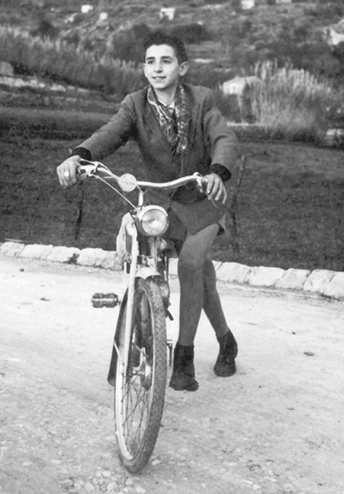
Sometimes – if it’s 1954 – all you need is a bicycle and $500 in cash to “plant the seeds” of a multinational dairy company. At least, that’s how it happened for the Saputo family.

After settling in Montreal, Canada, Lino Saputo and his parents founded a small business—Saputo, Inc.—that has since exploded into one of the world’s leaders in the dairy industry and the 2020 MMPA Valued Partner award recipient.

“After modest beginnings, the company’s founders saw their determination, hard work, passion and vision transform Saputo into an industry leader, both in Canada and around the world,” said Terry Brockman, COO and President of Saputo’s Cheese Division (USA).

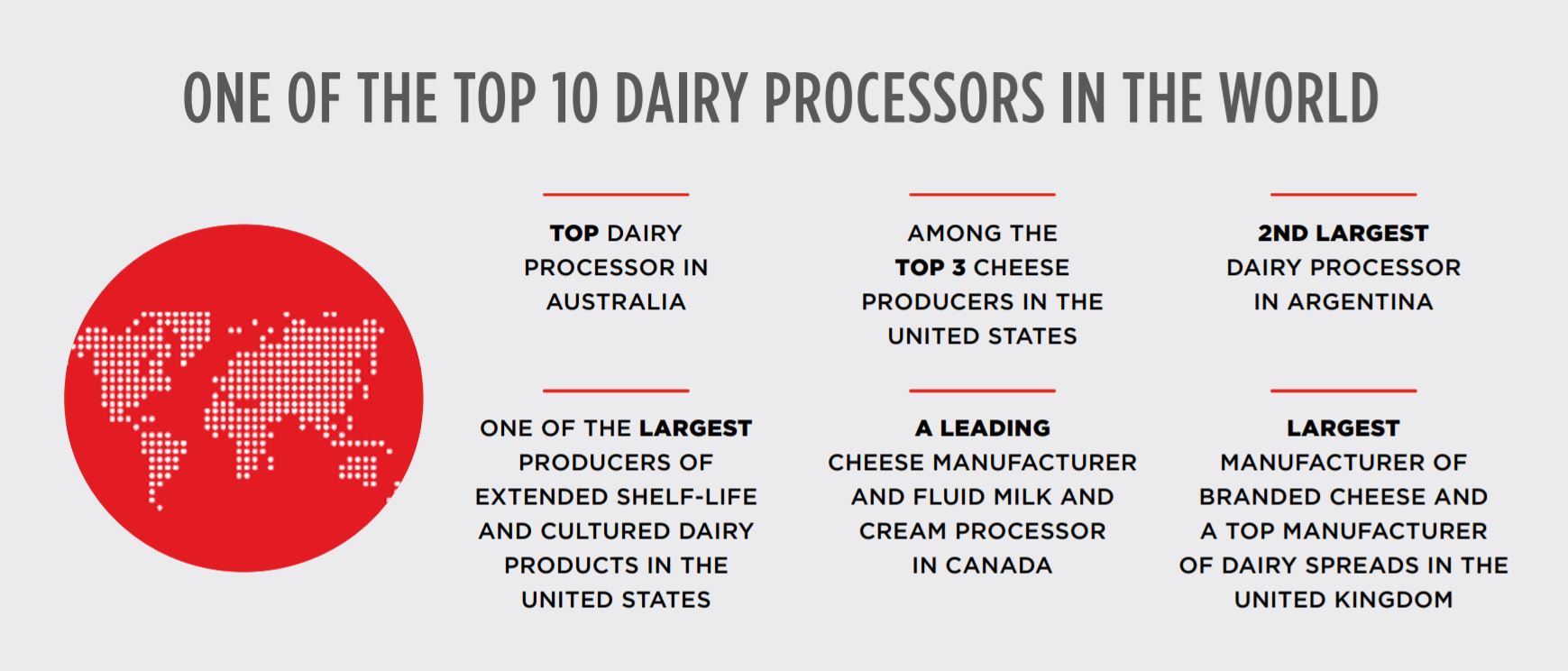
Today, Saputo products can be found in 50 countries under brand names like Joyya, International Delight, Frigo and Dairy Star. The company employs over 17,200 employees and operates 66 facilities worldwide, including 26 in the U.S.

When Saputo started in the 1950s, Lino Saputo Sr. made deliveries on bike. Photo credit: Saputo Inc.

They may no longer use a bicycle as the main mode of delivery, but the Saputo family is still at the helm, with Lino Saputo, Jr. serving as chair of the board of directors. Publicly traded since 1997, Saputo is one of the top 10 dairy processors in the world and among the top three cheese producers in the U.S.

Driving Growth and Innovation

Brockman says that the company has grown significantly, in part, through 32 acquisitions over the last two decades. “Saputo is to be admired for its impressive growth via acquisitions, investments in assets and innovation, and commitment to supporting the communities in which it operates,” he said.

Leaving no class untouched, Saputo makes cheeses, fluid milk, extended shelf-life milk and cream products, cultured products, dairy ingredients, and butters, spreads and oils. MMPA supplies several ingredient products for Saputo, serving both the dairy and cheese divisions of their business.

MMPA Senior Director of Sales Jim Feeney said in addition to sales of raw milk, condensed skim products and cream, MMPA has helped Saputo meet their unique needs with the ultra-filtered (UF) milk system at the Constantine plant.

“Our UF and its customization capabilities has many applications that mesh well with Saputo,” Feeney said. “We worked alongside them to explore the capabilities of the line through test runs and trials to customize what they want and what they need.”

According to Brockman, Saputo invests in innovation and is constantly exploring new projects that align with their goals and vision. This involves partnering with suppliers like MMPA on mutually beneficial products and projects.

Feeney says MMPA helps provide support to our customers like Saputo by aligning with them through the research and development process.

“We work in tandem with their research and development team to know where they want to go and how we can help them,” Feeney said. “We imagine new products not on the market today and envision how we can align to make them possible. Together, we’re driving innovation.”

“Our company prides itself on dedicated research and development. We are always on the lookout for not only new product ideas, but also best practices in the form of technology,” Brockman said.

They have an established research and development process that Brockman says has proven successful. “Our development process incorporates the following: (i) envisioning strategic opportunities through industry dynamics and key insights, (ii) examining how we can deliver on consumer needs through product ideation leveraging R&D and culinary capabilities and (iii) executing a scalable plan to commercialize effectively and efficiently,” Brockman said.

Capitalizing on Consumer Trends

In charge of Saputo’s U.S. cheese division, Brockman says they strive to stay on top of consumer’s evolving needs in this important category.

“The Cheese Division (USA) continues to review current dairy trends to understand the changing needs of consumers to ensure we are delivering the right products for today’s consumer,” Brockman said. “Across key brands, we have launched multiple product formats such as new snacking items and have continued to grow core product types.”

For example, as demand for whole milk has regenerated in recent years, Saputo’s brand Frigo Cheese Heads relaunched its “super string cheese” product with whole milk. According to Brockman, whole milk sales have been up 6 percent since 2016 compared to prior year and have continued to grow. The use of whole milk and “unique fortification” of Vitamin A & Calcium helps distinguish the Frigo product on store shelves.

“As a processor, we’re in a unique position to affect cheese making throughout the entire manufacturing process, staying ahead of ever-changing consumer taste preferences,” Brockman continued.

Looking ahead, Saputo intends to continue charging forward with strategic acquisitions, developing new product developments, and focusing on sustainability and technology. Brockman also pointed to their focus on collaboration among their employees, 6,500 of which are based in the U.S.

Focusing on Passion and Family Spirit

“Saputo’s longstanding unique and commendable culture, which embraces open dialogue and allows every employee to be heard and respected, is something that is very important to the company,” he said.

This has continued through the added challenges of the COVID-19 pandemic. Along with ensuring business continuity, Saputo zeroed in on “supporting [the] frontline.” In addition to adapting production, supporting their local communities and patron farmers, Saputo helped their employees by “mitigating financial, physical and mental health impacts,” going back to the values that guided them to the success they have today.

“Throughout our evolution, we have maintained our culture by staying focused on the values that define us,” Brockman said. “Family spirit, loyalty and passion are the cornerstones of our approach, and teamwork, continuous improvement and quality are at the heart of our every initiative.”

This article was originally published in the July/August issue of the Milk Messenger. Subscribe »

BRUCE AND JENNIFER LEWIS

BRUCE AND JENNIFER LEWIS

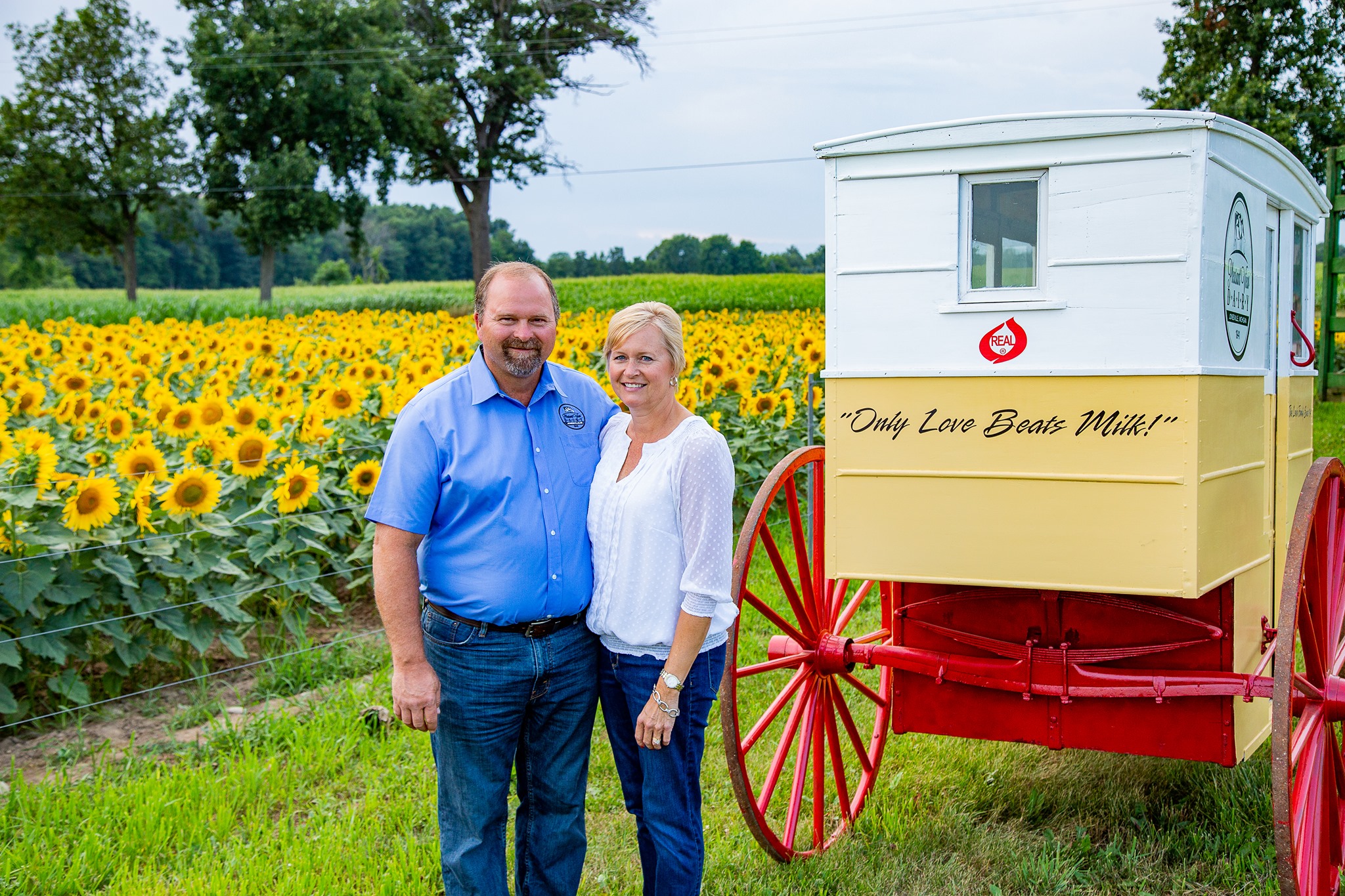
MMPA delegates recently elected Bruce Lewis to serve a three-year term on the MMPA board of directors as a director-at-large. Lewis joins the 12 other dairy farmers on the MMPA board of directors, helping guide the direction of the cooperative and setting strategic goals.

Lewis has been farming since 1984. Today, he operates 3,100 acres and milks 700 cows on Pleasant View Dairy. He is a member of the Hillsdale-Litchfield Local in District 1. He’s been active in MMPA for many years, currently serving as a delegate, a member of the Resolutions Committee and the Hillsdale-Litchfield Local President. Along with being an Outstanding Young Dairy Cooperator (OYDC) in 2005, Bruce and his wife, Jennifer, were named MSU Dairy Farmer of the Year in 2013 and have received numerous other awards in recognition for leadership within the industry.

How has MMPA impacted your farm?
MMPA has always been there for us is the best way to put it. We haven’t had to worry about whether or not the co-op would be there for us and we can count on the milk check.

Why did you want to join the MMPA board of directors?
I have always felt that for any organization that directly impacts our business, there needs to be a willingness to be involved. I just felt the time in my life was right to seek the position and try to give back to our cooperative.

What do you value most about MMPA?
MMPA has consistently been there for us. Through 105 years of history, they’ve been there through pandemics and world wars, continuing to help serve the dairy farmers. Everything that the co-op has been through, they have been able to adapt. Any time a business can stick around over a century, they are doing a lot of things right.

What are your goals and vision while serving on the board of directors?
Right now, it’s still a large learning curve, but as I get up to speed, I have a desire to help move the organization forward, so hopefully it will be in existence in the next 100 years.

What would you tell your fellow members who want to influence the direction of the cooperative?
Be willing to serve if there’s an opportunity to serve. Whether it’s as a delegate or on the Advisory Committee, people need to be willing to be involved. It’s your farm’s co-op, so you need to have willingness to be involved. It is always an amazing adventure when you go to some meetings and gather with farmers around the country and learn that we all have the same types of issues. There is commonality in meeting and finding someone, whether other side of county or other side of country, we’re all in this together.

This article was originally published in the July/August 2020 issue of the Milk Messenger. Subscribe »

Meet 2019 MMPA Outstanding Young Dairy Cooperator finalists Brian and Jill DeMann of Martin, Michigan. Brian & Jill are active in their community. Brian, a graduate of Michigan Fire Academy, is on the board of directors of Farmers Co-Op Elevator Co., member of Allegan County Farm Bureau and holds many positions at Martin Reformed Church. Jill, with a master’s degree in education, teaches at Martin Reformed Church Preschool and recently celebrated her tenth year teaching. Both Brian and Jill are active in their county’s Young Farmer program and participated in the Washington Legislative Seminar with Farm Bureau. The couple has one child, Kinsler (4).

In 2005, Brian and Jill began dairy farming with their family on Clearview Dairy Farm. Their drive to produce quality, commodity goods has encouraged them to adopt efficient and progressive management techniques. Their farm is currently working to expand their social media presence, informing consumers about dairy products and are working on hosting farm tours and internship opportunities with local schools and colleges.

Brian and Jill DeMann

What actions do you take to produce high quality milk?

1. Consistent milking routine
“There are two people on the farm who help manage our milking routines, and at least one of them is a part of every milking. They help enforce and monitor milking procedures, including prep, forestripping, lag time and post dip.”

2. Cow nutrition
“We regularly test our feed dry matter and nutrient value of raised forages, make adjustments accordingly with our nutritionist, frequently test for mycotoxins, and have scheduled feed push-up times.”

3. Cow comfort
“There’s no doubt that stocking density, cooling by fans and sprinklers in warm weather, and frequent grooming and addition of sand to stalls greatly help the milk quality on our farm.”

4. Genetic selection
“We have been strictly AI for years and a mated herd. We choose sires for higher component yield and low SCC, over choosing for production, and can see a difference in the last few generation’s component yield and SCC score on our milk tests.”

5. Milking and cooling equipment maintenance and system cleaning
“Wash analysis by MMPA Field Representative and our dairy equipment dealer help detect and troubleshoot issues before they affect our milk quality in the tanks.”

This article was originally published in the July/August issue of the Milk Messenger. Subscribe »

COVID-19 wrecked havoc on the milk supply chain and tested the minds and bodies of everyone involved in it. After the dairy industry was declared essential in early March, each of us discovered what that truly meant when the world ground to a halt and we were one of only a few continuing to carry on.

MMPA employees responded as fast as they could to the needs of the members and the cooperative: changing the way they work, working longer hours and doing everything they could to ensure that milk continued to be marketed. Without the hard work and effort from the entire team, the situation could have devolved even faster overnight and as those involved in the industry and those who consume dairy products, we owe it to those who kept reporting to work for the milk, cheese and other dairy products in our refrigerator right now.

Thank you to the MMPA employees who continued to show up and give their all on behalf of MMPA members, the industry and consumers.

Letter from MMPA Board Chairman

Dear MMPA employees,

I know with the COVID-19 pandemic, all of you faced different challenges, whether it was childcare, caring for high risk family members, or the concern and anxiety for your own health. I know there is a different situation for each one of you and I appreciate the risk that all of you took each and every day that you came to work for MMPA. I believe that throughout this pandemic that you not only served our co-op members, but our country as well.

Recently, we’ve all been made aware of how connected we are and how much we rely on everyone’s work and efforts. Milk was certainly viewed as essential and important to every household. When people were uncertain of the future, they rushed to the store to stock up on dairy, and your efforts helped give them comfort. The work all of you did truly served everyone.

I speak for the Board of Directors and all of our member owners when I say thank you for your continued commitment to MMPA and the important work that you do every day.

Wishing you and your families the best,
Doug Chapin, MMPA Board Chairman

Thank You

April A., Christine A., Craig A., Derek A., Greg A., Ma Luz A., Matthew A., Michael A., Robert A., Alan B., Alexus B., Andrew B., Brandon B., Brionica B., Candice B., Chad B., Corey B., David B., David B., Debra B., Dennis B., Duane B., Franklin B., George B., James B., Jennifer B., Josep B., Kassondra B., Kent B., Kimberly B., Marianne B., Mathew B., Matthew B., Matthew B., Megan B., Michael B., Nancy B., Patricia B., Payton B., Ralph B., Rebecca B., Sheila B., Thomas B., William B., Zachery B., Adam C., Adam C., Alicia C., Allen C., Andrew C., Anthony C., Benjamin C., Brett C., Carol C., Cody C., Douglas C., Ernest C., Gasper C., James C., Jason C., Jeremy C., Jerry C., Katheryn C., Luke C., Madison C., Mark C., Molly C., Oscar C., Patrick C., Tara C., Timothy C., Zachary C., Anna D., Calvin D., Christina D., David D., James D., Jeffrey D., Joseph D., Kayla D., Kimberly D., Rebecca D., Sarah D., Shawn D., Brandon E., Kody E., Lyndsay E., Takheim E., Darren F., Deryck F., Donald F., Duane F., Gary F., James F., Jeremy F., John F., Nickolas F., Robert F., Stephen F., Steven F., Teresa F., Timothy F., Troy F., Austin G., Bryan G., Deborah G., Dennis G., Dylan G., Frank G., George G., Jared G., Jared G., Jennifer G., Julie G.,
Kennith G., Klmmala G., Laura G., Lindsay G., Roger G., Adam H., Almeta H., Andrew H., Ashley H., Ashley H., Carl H., Christopher H., David H., David H., Douglas H., Garry H., Marcus H., Martin H., Matthew H., Mercedes H., Michael H., Nathaniel H., Nicholas H., Patricia H., Roger H., Stephen H., Steven H., Terrence H., Travis H., Billy J., Clifton J., Daniel J., John J., Mark J., Sudeep J., Theresa J., William J., Daniel K., Debra K., Emily K., Emily K., Jeremiah K., Kaylan K., Kelly K., Michael K., Tad K., Terry K., Amber L., Daishawnae L., Daniel L., Dean L., Dean L., Dennis L., Jason L., John L., Lihua L., Michael L., Michael L., Richard L., Robert L., Steven L., Tyler L., Adam M., Allison M., Brandon M., Brodrick M., David M., Devin M., Elizabeth M., Gavin M., Jeffery M., Jeffrey M., Jesse M., Kyle M., Matthew M., Nancy M., Nathan M., Nicole M., Phyllis M., Robert M., Robin M., Robin M., Sarah M., Susan M., Susan M., William M., Glen N., Joseph N., Kenneth N., Randy N., Stephanie N., Anthony O., Clyde O., Elizabeth O., Michael O., Carol P., Emily P., Eric P., Gary P., Jeffrey P., Joseph P., Katie P., Kevin P., Kristopher P., Leroy P., Mark P., Michael P., Noland P., Robert P., Ryan P.,
Sirisha P., Suzanne P., Timothy P., Twyla P., Wanda P., William P., Timothy Q., Trisha Q., Adam R., Brian R., Christopher R., Donald R., Edward R., Jason R., Larry R., Matthew R., Meredith R., Mike R., Mike R., Nichael R., Nicholas R., Raymon R., Ryan R., William R., Andy S., Bela S., Bradley S., Chase S., Cheryl S., Christopher S., Dennis S., Eric S., George S., James S., Jason S., Jeannie S., Jeremi S., Kaden S., Kerry S., Kyle S., Madison S., Matthew S., Melanie S., Michael S., Nicholas S., Roxanne S., Ryon S., Stephanie S., Taylor S., Theodore S., Thomas S., William S., Zachary S., Brian T., Brittni T., Dennis T., Eric T., Greg T., Jordan T., Joshua T., Joshua T., Mark T., Patricia T., Steven T., Suzanne T., Therese T., Matthew U., Annette V., Artemio V., Bradley V., Cody V., Jaime V., Luis V., Brent W., Colleen W., Donald W., Jeanette W., Jessica W., Kay W., Nathaniel W., Patrick W., Phillip W., Thomas W., Todd W., William W., Brian Y., Nelson Y., Karen Z.


This article was originally published in the July/August 2020 issue of the Milk Messenger. Subscribe »

By Sheila Burkhardt, MMPA Senior Director of Member and Government Relations

In the early stages of dealing with the impact of COVID-19 on the dairy industry, it was clear the dairy industry was heading into unprecedented and catastrophic times. The sudden closure of food service venues such as schools, colleges and restaurants were going to severely impact milk sales since nearly half of cheese and butter produced are consumed in foodservice markets.

To help address the severity of the situation, we worked closely with our national and state partners such as National Milk Producers Federation (NMPF), International Dairy Foods Association (IDFA) and Ag Leaders of Michigan (ALM) to communicate the dairy industry’s urgent need for assistance. NMPF and IDFA worked together to develop a comprehensive proposal with a unified message to present to the United States Department of Agriculture (USDA) and the White House to help the dairy industry address the challenges created by the pandemic. NMPF represents dairy farmer owned cooperatives and IDFA represents the dairy processor community. A joint proposal between the two organizations helped send a unified message on behalf of the dairy industry.
The comprehensive and unprecedented proposal was needed to address the dire situation suddenly confronting the dairy industry and once it was released, the relationships that we established over the years came to the forefront. It did not take long to realize that the relationships built in the good or normal times are ones that you can count on during the unprecedented and challenging times.

We, along with others in the dairy industry, utilized our contacts to members of Congress, USDA and even the White House to communicate the crisis the dairy industry was facing. Members of the MMPA team communicated with contacts in Washington D.C. via conference calls, speaking with Congressman John Moolernaar, Senator Debbie Stabenow and Jamie Clover Adams at USDA and others about the current milk price situation, impact of the abrupt drop in foodservice sales, decreased access to export markets and importance of dairy product donations to the food bank system in the trying times. The message on those calls was clear: additional assistance would be needed because dairy producers simply could not withstand the prices the futures market was showing at the time following five years of depressed markets.

Following the outreach efforts, details of the Coronavirus Food Assistance Program (CFAP) were released and fortunately contained several support features for dairy producers including direct payments, a paycheck protection program and government purchases of dairy products. The dire situation we had communicated came to fruition as we saw milk prices dip to historic low levels for April and May production. The importance of government assistance programs combined with risk management programs like the Farm Bill’s Dairy Margin Coverage (DMC) program all play an important component in helping to offset the low milk prices currently being experienced.

While we are thankful for the brighter market outlook for the last half of 2020, there is still more work to do in lessening the current and future impact of the pandemic on the dairy industry. We are continuing our efforts in reaching out to the relationships we established in the normal times to help us through what lies ahead.

This article was originally published in the July/August 2020 issue of the Milk Messenger. Subscribe »

Delegates in District 3 recently elected Bill Stakenas to serve a three-year term on the MMPA board of directors. MMPA’s District 3 covers eight counties in West Michigan, along the lakeshore of Lake Michigan. Stakenas joins the 12 other dairy farmers on the MMPA board of directors, helping guide the direction of the cooperative and set strategic goals.

Stakenas owns Stakenas Farm Inc in Free Soil, Michigan, along with Carl Stakenas. They milk around 550 cows and farm 1,500 acres. He is a member of the Muskegon Local in District 3. He and his wife, Terri, have four children: Hailee, Lyndsay, Kyle and Alec.

Prior to being elected to the MMPA board of directors, Stakenas has held various local and district leadership positions with MMPA since the 1980s. In the Muskegon Local, he is the current president and previously served as the local secretary/treasurer. Stakenas has also represented District 3 on the MMPA Resolutions and Advisory Committees. In addition to MMPA, Stakenas is active in Michigan Farm Bureau, local Soil Conservation District and Acres Cooperative. He has an associate’s degree from West Shore Community College and took an agriculture short course at Michigan State University.

How has MMPA impacted your farm?
Since our farm joined MMPA in the 1950s, we have had a positive appreciation for the service MMPA provides, including our field staff, the Messenger and all the meetings. Even through bad times, being part of the co-op helps you keep your chin up and feel like you’re part of something bigger than yourself. Being part of the Local leadership, Advisory Committee and Resolutions Committee has helped me strengthen my skills as a manager of my own farm.

Why did you want to join the MMPA board of directors?
I have always been active in MMPA. I started as a Local board member and have been part of other committees. I went as far as I could go and so the board became the next step and has been a lifelong ambition of mine. The past board members have done a good job. I have big shoes to fill. I don’t think I will come in and change the world, but I will try to make a small impact.

What do you value most about MMPA?
I value being able to get involved in the co-op. I know that in some small way I have contributed to MMPA and the industry. That’s a value to me. Even if your impact is really, really small, it is something. You have to start somewhere.

What are your goals and vision while serving on the board of directors?
Survival. Not only for me as a farmer, but for the health of the co-op. In recent years, the board has done a good job diversifying our product mix, including taking on Heritage Ridge Creamery. I support what they’re doing, and I hope to continue going down that same road. We need to be aggressive in the face of challenges.

What would you tell your fellow members who want to influence the direction of the cooperative?
MMPA is cool in that it doesn’t matter if you milk 50 cows or milk 5,000 cows, if you choose to participate and have the mindset for it, you can make an impact. I encourage everyone to be involved. Some things we can change, some things we can’t change, but you need to be active to let your voice be heard. The world is run by people who show up.

This article was originally published in the May/June 2020 issue of the Milk Messenger. Subscribe »

Where there is a will, there is a way.

Dairy producers have made a lifestyle out of managing the obstacles or as some would say, making the pivot.

Milk prices too low, they pivot. Feed prices skyrocket, they pivot. TB hits the Michigan dairy industry, they pivot. And each time they make those adjustments to maintain their livelihood, they discover another layer of resiliency they had no idea existed.

Today they are pivoting to adjust to the COVID-19 outbreak and the havoc it’s wreaking on the industry from the parlor to the store shelves. While producers cannot control what happens at the processing and retail level, they are pivoting to the pandemic as it reaches the farm level. And the allied industry has joined in lockstep, virtually, for the benefit of everyone.

Kip Siegler, an MMPA member from Imlay City, Michigan, runs the YouTube channel, “Dairy Farming with Kip Siegler.”

Dairy Farming with Kip Siegler

“I think I can do that!”

Those were the words that began a new virtual community for MMPA Member Kip Siegler of Imlay City as he contemplated starting a YouTube channel. With the help of wife, Rochelle he launched “Dairy Farming with Kip Siegler” and over the past eight months he has gained nearly 12,000 subscribers to the platform and a million total views.

As Siegler hauls manure, milks the cows, shows the feeding process or starts his spring planting, he takes his audience along for the ride. While he is considerate of telling the responsible story of dairy farming, “I just go and it is, what it is. People like you raw.” Siegler, an MMPA Dairy Communicator, said. “If you’re funny, do that. If you’re serious, be yourself, because there is only one you out there. And there are so many people on YouTube watching every day, your people will find you.”

As a former member of the military, Siegler enjoys a large following from fellow veterans. Retired farmers also find their way to Siegler’s channel.

“It’s really rewarding to hear what the retired guys say, they tell me I bring back a lot of memories from their earlier years in farming with their grandfathers. I also have guys who sold their farms and watch the channel with their kids to show them what farming is like.”

Having followers from over fifty countries and hearing from viewers from coast to coast spurs Siegler to keep showing his day to day activities on the farm. Encouraging others, especially during difficult times is something Siegler specializes in, “People are looking for positivity. And they are looking for a solution to their problems. I know I’ve reached someone when I hear someone say, ‘I came on here to learn about farming but what I’m really doing is learning about life.’” He added, “It’s pretty cool when I can touch someone like that.”

With a recent family emergency, Siegler discovered the dedication level of his followers. His niece was in a bad accident and he asked for prayer.

“Hundreds and hundreds of people were saying they are praying for my niece and then they wanted updates. People get emotionally attached and I didn’t mean to do that, but they just want to know what’s going on and that’s really neat,” Siegler said.

The United Dairy Industry of Michigan hosted a virtual farm tour on Facebook Live in April. Moderated by UDIM Youth Wellness Manager Amiee Vondrasek, the video has since racked up nearly 10,000 views.

Virtual Farm Tours

Dairy Farming with Kip Siegler videos have been used in several public schools but they aren’t the only dairy-friendly videos showing up when the bell rings. United Dairy Industry of Michigan (UDIM) continues to provide virtual farm tours (VFT) for students of every age. In 2019 they hosted, for the first time, four live VFT’s for classrooms that had signed up previously. During the live broadcast schools could submit questions about what they were watching.

When COVID-19 hit, UDIM decided to tap into the technology that people are using to bring the farm to those who’s education has been interrupted by the pandemic. Using the combined talents of the UDIM team, UDIM Director of Industry Relations Jolene Griffin took everyone to her family’s farm and showed the viewers how they care for calves and cows and the feed they prepare for the cows each day. During the tour, Griffin talked about the nutritious and delicious dairy foods created from the milk the cows produce.

Supporting the VFT’s are a library of resource materials for schoolteachers and parents to download and use during instruction time at home. A scavenger hunt to use while watching the VFT’s and FAQ’s that are often asked during the farm tours are available along with other Milk Means More educational resources.

“This is such a dire situation and kids are having their lives uprooted and everything is changing. I feel for parents trying to do their job while maintaining the home and teaching their kids, it’s just so hard right now and we wanted to provide resources to help families and share about dairy,” Griffin said.

UDIM is also helping spread the word about where families can get free meals in their area that will include a serving of milk for each student for every meal.

“The UDIM website is a one stop shop for fun, education and nourishment for families,” Griffin added.

The MSU Extension Dairy Team offers weekly virtual coffee breaks. The topic “Improving the Targeting of Your Antibiotic Use,” involved a discussion with Animal Science Department Chair, Dr. Pam Ruegg (left) hosted by MSU Extension Dairy Educator Marianna Buza (right).

Virtual Coffee Breaks

While daily dairy is essential for everyone, some consider coffee to be an essential part of their day and the MSU Extension Dairy Team is hosting Virtual Coffee Breaks on several platforms.

MSU Extension Specialist Phil Durst said they started brainstorming about the idea last year. “We were simply looking for new ways to reach farmers with information, so we planned this series of coffee breaks and it turned out to be very timely.”

The coffee breaks took place live each Wednesday morning in March and April and are conversations lasting less than a half hour. They are available on YouTube on the MSU Extension Dairy Team YouTube channel along with other audio platforms like Spotify.

Covering everything from building consumer ag literacy and employee team building to producing quality milk and recommendations for 2020 corn silage planting, the coffee breaks provide another layer of programming from MSU Extension.

“MSU Extension really cares about dairy farmers and we want to help producers any way we can. We know it’s a very difficult time and yet we want farmers to know that they are incredibly important to us,” Durst concluded. “We praise them for their work, day in and day out, to produce healthy food products and we thank them for their work. So, we want to be a good partner with them as they produce quality food for our state, our nation and our world.”

This article was originally published in the May/June 2020 issue of the Milk Messenger. Subscribe »