
Three generations of women reflect on leadership, farming and the evolving role of women in MMPA
Women have always been essential on the farm. They’ve milked cows, raised calves, worked in the fields, balanced the books, raised families and made decisions that kept the farm moving forward. But having a role on the farm hasn’t always meant having a formal voice in the cooperative representing that farm. At MMPA, that started to change decades ago.
In the 1930s, the Milk Messenger magazine was already recognizing the influence women had on farm and cooperative affairs. By 1946, an article asked, “How Active Should Women Be in the MMPA?” The answer was rooted in a simple observation: if women were an important part of farm management and milk was the farm’s most important source of income, they should have a voice in the association managing that income.
Beatty shared that same perspective decades later; “I see no reason at all why women shouldn’t take part in farm-related organizations,” she said. “After all, women are an important part of virtually every farm operation.”
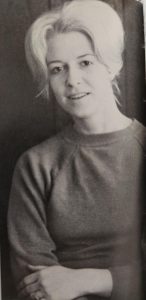
It would take nearly 30 more years for that voice to reach MMPA’s Annual Meeting. In 1973, Joan Beatty became the first woman to serve as an MMPA delegate, representing the Imlay City Local. Beatty and her husband, Ron, had moved from the Detroit suburbs to Imlay City in 1970 to start a farm. Beatty couldn’t have known that her decision to step forward would become part of MMPA history. But 11 years later, another woman would take the next step.
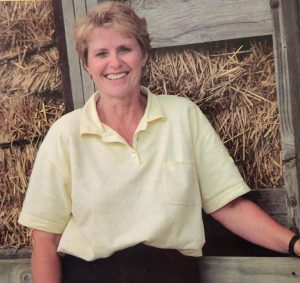
In 1986, Deanna Stamp became the first woman elected to MMPA’s board of directors.
“Maybe I was naive,” Stamp recalled, “but I think I stepped into that role feeling as an equal and I was treated as an equal.”
Nearly 40 years later, Amy Gingrich sits on that same board.
“I felt like one of the group.”
Stamp’s path to the board wasn’t driven by a desire to make history.
“It felt natural to me to run for the board,” she said. “I never felt like it was anything special for me. It was just like something that kind of evolved into place.”
Stamp had always been involved with her family’s farm. Through Michigan State University Extension programs and milk marketing classes, she became increasingly interested in the cooperative and the role it played in farmers’ businesses.
When an opportunity opened in District 8, she ran. Then she became the first woman to sit on the board. Still, she said the experience felt surprisingly ordinary.
“I don’t think I was treated any differently,” Stamp said. “The jokes still went around the board table before the meeting started and I just became one of the group.”
For Stamp, that sense of equality started on the farm.
“I always felt treated like an equal in our own operation,” she said. “It felt natural to me.”
That experience gave her confidence to bring her perspective into the boardroom.
“I think women do bring a different perspective in a group that’s mostly dominated by men,” Stamp said. “We might have just a slightly different perspective that we can bring to the table and help balance out the decision making in some ways. My opinions weren’t always agreed with, but they were heard, and that’s okay, because that’s life.”
Stamp’s years on the board also changed the way she viewed the cooperative.
“It really gave me a firsthand understanding of the challenges that cooperatives face and the benefits,” she said. “You really understood why you had to make the decisions that you had to make.”
Perhaps more importantly, it expanded the way she thought about farming.
“Having the opportunity to learn from so many different perspectives is one of the biggest advantages of becoming involved in any organization,” Stamp said. “That stretches your thought process beyond your own little circle here on the farm.”
Those conversations didn’t stay in the boardroom. Stamp brought ideas home to her farm, whether they involved marketing, production or harvesting. For her, leadership wasn’t just about having a seat at the table. It was about learning from the people around it.
A Role that Feels Natural
Amy Gingrich’s experience on the board is similar. For Gingrich, being a woman on the board is simply part of being a farmer.
“I am the farmer,” Gingrich said. “I’m not the farmer’s wife. I am the farmer.”
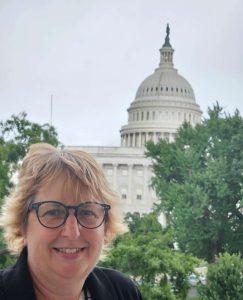
Gingrich grew up on the farm, eventually taking over the operation with her family. Today, she farms with her two sons.
Her involvement with MMPA also started at the local level before leading her to the board.
“I just thought, it is our co-op,” she said. “I wanted to know more about it.”
Once she got to the board, she found much the same experience Stamp had decades earlier.
“It’s been great,” Gingrich said. “Everybody treats me like an equal.”
That doesn’t mean the agricultural landscape hasn’t changed. When Gingrich attended Michigan State University’s dairy technology program, there were only two women in her class. Today, she sees how that has changed.
“There are a lot more daughters that have stayed in the business and are being great leaders and owners in their farm business,” she said. “Not just sons, but daughters too.”
That change is visible beyond the classroom. Women aren’t simply helping on the farm anymore. They’re owning farms, making management decisions and stepping into leadership positions. Gingrich has experienced that evolution firsthand.
“You just needed to stand tough.”
Getting there hasn’t always been easy. As a young woman, Gingrich remembers friends questioning why she wanted to return to the farm. While her friends were thinking about what came next, Gingrich already knew: “I’m going to go back to the farm.”
It wasn’t necessarily what everyone expected a young woman to choose, but Gingrich didn’t let other people’s expectations change her mind.
“If I would have caved to my friends and did what they thought girls should do, I wouldn’t be doing what I am today,” she said. “So you just needed to stand tough.”
Years later, some of those same friends see farming differently. Ginrich believes part of that change comes from people better understanding what it takes to run a farm.
“We’re not just milking cows and running tractors,” she said. “There’s so much more involved.”
That’s where Gingrich sees the significance of the women who came before her. She doesn’t believe she has to approach leadership differently simply because she’s a woman, but she recognizes that seeing women in those positions makes it easier for the next woman to imagine herself there.
“Hopefully, I can be an example that you can run for these positions and serve if you have an interest,” Gingrich said.
That’s the progression Joan Beatty started.
Beatty became the first woman to represent her local at an MMPA annual meeting in 1975. Stamp followed 11 years later as the first woman on the board, followed by Gertie VandenGoor. Today, Martin is one of the farmers helping lead the cooperative. Each woman stepped into a role that may have looked a little different than the one before it.
Looking forward
The United Nations’ designation of 2026 as the International Year of the Woman Farmer recognizes the contributions women make
throughout agriculture. For Gingrich, that recognition is bigger than dairy.
“I think it’s pretty exciting that, as the world, they’re recognizing what women contribute,” she said. “Not even just in the dairy industry, but in general.”
Stamp’s message to women considering leadership is straightforward.
“If you’ve got a real interest in it and you’ve got the backing of your family, you can be a valuable asset,” she said.
Gingrich’s advice is just as direct.
“Just do what you want to do and follow your heart,” she said. “Don’t let other people influence you into not doing it because they don’t think it’s acceptable. Just be strong and do what you want to do.”
That’s the common thread connecting these three women. Joan Beatty didn’t set out to make history. She simply stepped forward when an opportunity came. Deanna Stamp didn’t set out to prove women belonged in the boardroom. She walked in feeling like an equal and became “one of the group.” And Amy Gingrich’s path to the board wasn’t about proving she belonged. It was a natural extension of her years as a dairy farmer and MMPA member.
Joan Beatty may have been the first, but she isn’t the last. Deanna Stamp followed her to the boardroom and today Amy Gingrich is helping shape the cooperative’s future. What started as one woman’s willingness to step forward has become a path for the women who follow.
This article was originally published in the September/October 2026 issue of the Milk Messenger. Subscribe »