
Celebrating the International Year of the Cooperative
For more than a century, farmer-owned cooperatives have given dairy producers strength in numbers, stability in uncertain markets and a voice in shaping their own future. The International Year of the Cooperative, as declared by the United Nations, is a chance to reflect on what makes this model so enduring: people coming together not just to market milk, but to build communities, create opportunities and carry forward values that matter as much today as they did generations ago.
What Makes a Cooperative Different?
Every day across the Great Lakes region, hundreds of dairy farm families wake before dawn to care for their cows, their land and their future. On its own, each farm is a family business rooted in care for animals and land, contributing to the fabric of rural communities. Together, through Michigan Milk Producers Association (MMPA), they form something much larger: a cooperative system built on shared ownership and shared purpose.
Unlike investor-driven businesses, cooperatives exist to serve their members. Profits are returned to the farmers who supply the milk, and major decisions are made democratically. It’s a model that has supported farm families for over a century, giving them stability in volatile markets, access to global customers and a stronger voice than they could have alone.
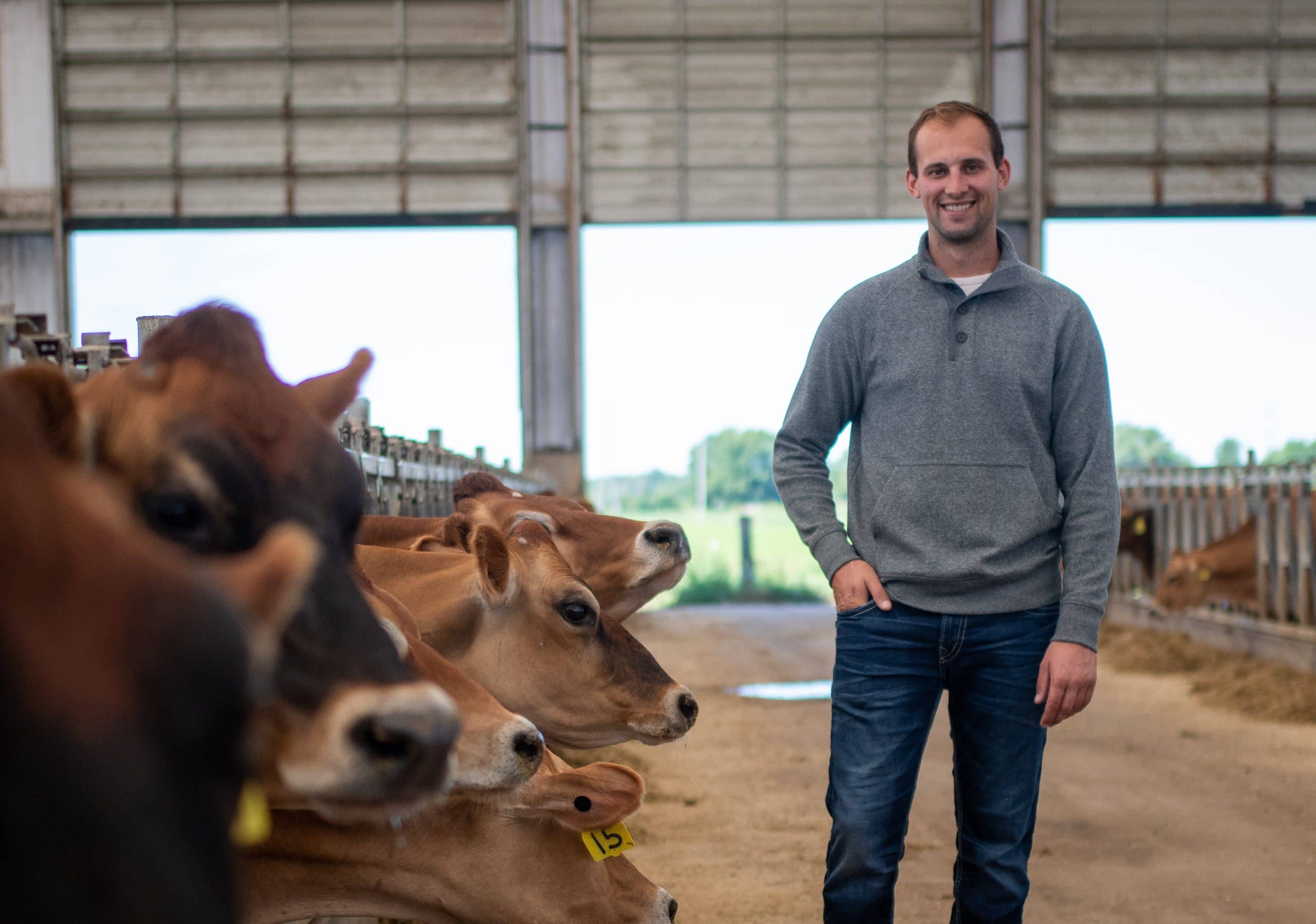
“It’s not just about selling milk,” said MMPA member-owner James Weber. “It’s about shaping the future of our farms by working together.”
What is a Cooperative? A business model built for people. A cooperative is a business owned and controlled by the people who use its services.
The Seven Principles that Guide Co-ops: Voluntary and open membership • Democratic member control • Member economic participation • Autonomy and independence • Education and training • Cooperation among cooperatives • Concern for community
 From Farm to Fridge
Once the milk leaves a farm’s bulk tank, the cooperative network takes over. Plant workers, quality assurance teams and the sales experts all play a role in transforming member milk into products that nourish communities.
For Angela Farley, a plant supervisor in Canton, Ohio, the co-op model gives her work deeper meaning. “I know the farmers who own this milk, and I see the families who buy it,” Angela said. “We’re part of the same community.”
That impact is visible everywhere: from gallons of milk in local grocery stores, to innovative dairy drinks fueling athletes in schools, and to dairy ingredients and finished products carrying members’ milk into international markets.
Behind the scenes, the cooperative makes investments no single farm could achieve alone: state-of-the-art processing plants, food safety labs, innovative new dairy products and more.
Why Belong to a Cooperative? Strength in Numbers. In the early 20th century, dairy farmers faced a challenge: milk spoiled quickly, processors held all the bargaining power, and farmers had little control over price. The cooperative model was the answer. By working together, farmers: secured fair prices, built their own infrastructure and guaranteed a market for every load of milk. Those same reasons still hold true today.

Cooperation Without Borders
One of the guiding principles of the cooperative model is “cooperation among cooperatives,” the idea that working together strengthens everyone involved. For MMPA this principle comes to life through partnerships both at home and abroad.
In the U.S., collaboration with other farmer-owned cooperatives through involvement in national organizations like the National Council of Farmer Cooperatives, National Milk Producers Federation and others creates efficiencies in processing, marketing and advocacy. By aligning resources, co-ops multiply the impact of their work and ensure members’ voices are amplified beyond their local communities.
Internationally, MMPA has built a unique partnership with Amul, a brand owned by the world’s largest dairy cooperative, Gujarat Co-operative Milk Marketing Federation Limited (GCMMF). The relationship allows milk produced by MMPA’s dairy farmers to be processed in MMPA plants with Amul labels destined for Indian markets throughout the U.S. It provides opportunities that benefit farmers both in the U.S. and India, a reminder that while co-ops operate in different markets, their values are the same.
“Co-ops succeed when they work with one another,” MMPA President & CEO Joe Diglio said. “It’s not about borders, it’s about building strength through cooperation.”
Why Do Cooperatives Matter? A Global Impact. Across the world, cooperatives play a powerful role in shaping communities and economies: 3 million cooperatives operate in more than 100 countries, 12% of people on Earth belong to a cooperative and nearly 10% of global employment is linked to cooperatives, making them a driving force in the world economy. What unites them all is the same set of seven cooperative principles. The shared values connect dairy producers in the Great Lakes region with workers, farmers and communities around the globe.

Investing in the Next Generation
As MMPA looks toward the future, its commitment to youth and leadership development stands out. Preparing the next generation isn’t just an idea, it’s an investment already underway.
Each year, the co-op provides scholarships that help members’ families and employees pursue higher education. Programs like CORE equip members with knowledge about cooperative structure, governance and the dairy industry. The Young Cooperator program offers emerging leaders the chance to build networks, develop leadership skills and represent their farms within the broader dairy community.
During this year’s annual meeting, member-owner Ashley Kennedy reflected on the opportunities these initiatives create. “The MMPA Young Cooperator program has given me the tools I need to take a future leadership role in the co-op. The investments that MMPA makes in young members like me help strengthen the co-op’s future.”
With programs like these, cooperatives ensure that they will continue to embrace innovation, strengthen partnerships and keep members at the heart of every decision for generations to come. Because cooperatives aren’t just a business model. They are a promise that when people work together, everyone wins.
This article was originally published in the September/October 2025 issue of the Milk Messenger. Subscribe »