
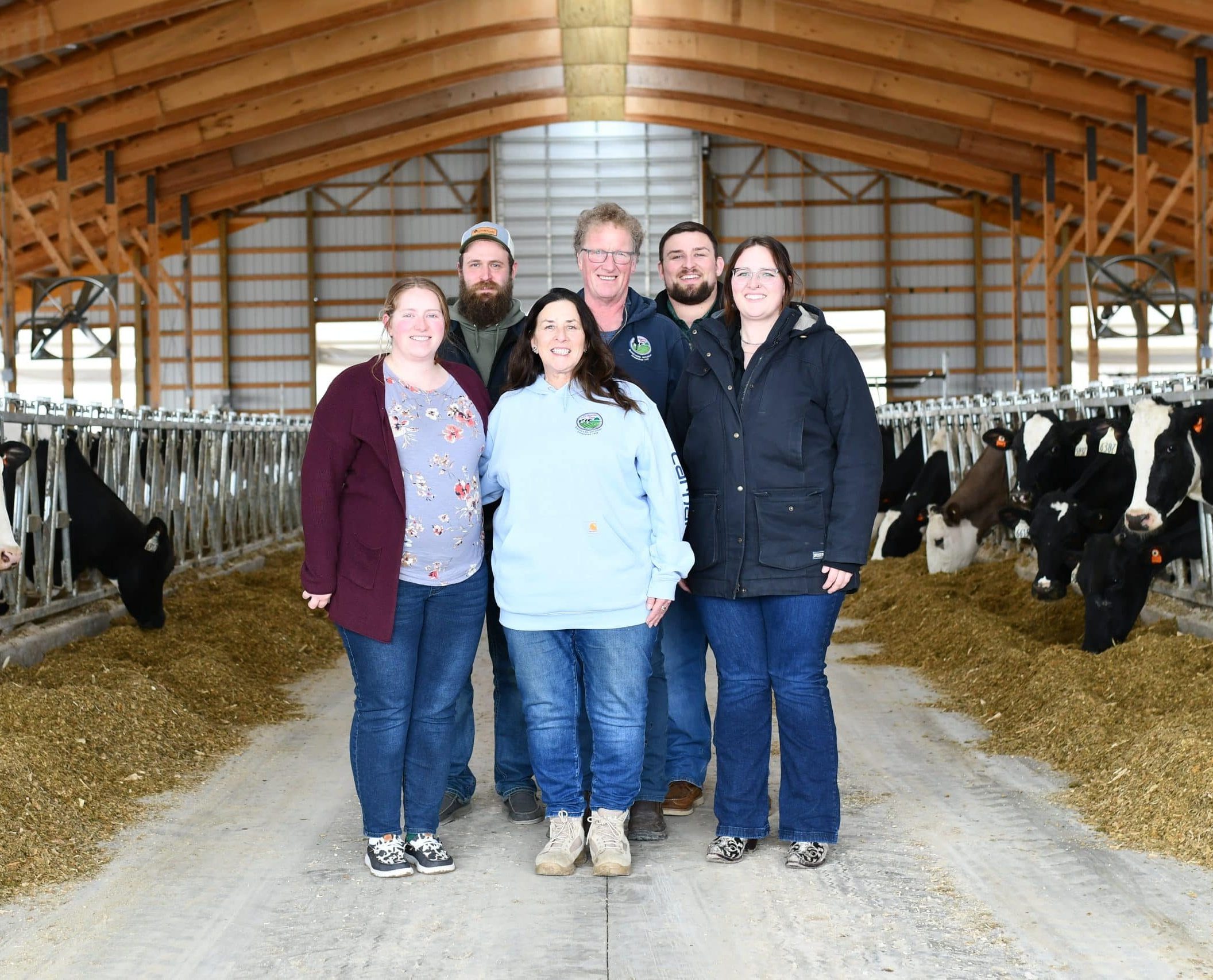
When Tjerk and Ramona Okkema came to Blanchard, Michigan, in 1999 from the Netherlands, they didn’t step into a working farm, they stepped into a challenge.
There were buildings, but not much else; equipment was scarce, and even the shovels were gone. What followed was months of cleaning, figuring things out and building piece by piece, turning something uncertain into something that worked.
Today, the focus is different. It’s not how to build the farm, it’s how to pass it on.
In 2026, that full journey from those early years to where the farm stands today was recognized when De Grins Oer Dairy was named the Michigan State University Dairy Farm of the Year.
But for the family, the recognition reflects more than what the farm looks like now. It reflects everything it took to get there and what it will take to carry it forward.
Growing into the next chapter
Tjerk and Ramona remain at the center of the farm they built, but the day-to-day no longer rests on just one set of shoulders.
“We’re in the process of transitioning,” Ramona explains.
Their children, Evelyn Damveld, Cora Okkema and Dirk-Thomas Okkema, are each part of the farm in their own way, staying connected as the operation continues to evolve. Evelyn, alongside her husband Aaron, are the next generation to take over the farm and they are more directly involved in the daily work. The entire family remains invested in where the farm is headed and that shared connection shapes how decisions are made.
Evelyn and Tjerk, in particular, have taken a close role in refining the operation, focusing on the kind of improvements that don’t always stand out immediately but make a lasting difference over time. That includes changes to facilities, like adding a new barn, as well as adjustments to how cows are handled day to day with a focus on reducing stress, improving comfort and building consistency into the system. Over time, those efforts have added up.
“You just see the difference,” Tjerk said, and the family agrees. Evelyn said, “We were just talking the other day, our second lactation cows are all milking well over 100 pounds.”
The success is not the result of one decision, but many made carefully, and often together.
“It’s not just about our high production, but our hopes for being better and keeping ourselves to a high standard,” Dirk shared.
Sharing the work
As the farm has grown, so has the number of people it takes to run it. Today, that work is shared not only across the family, but with a team of employees who play a key role in the operation. With that comes a different kind of responsibility.
“It’s a lot more management,” Tjerk said.
But on the farm, management doesn’t just mean oversight. It means creating space for others to take on more.
“I’ve focused on splitting some responsibilities out to other employees that want to learn more,” Evelyn said. “One gal was happy that I was even willing to train her on how to do some of the things. She wants to learn and grow with her experience.”
Over time, that approach has helped build a team that works together more fluidly where people understand more than just their own role.
“If everybody knows how to do a little bit of everything, then there’s a lot more teamwork involved and it’s a lot less overwhelming,” she said.
It’s a shift that reflects not just the size of the farm, but the kind of place the family wants it to be.
Taking on more
That same mindset has shaped other decisions as well.
In the past year, the farm took on more of its cropping work in-house, bringing another piece of the operation under its own management.

For Aaron, that meant stepping into a larger role, one that came with its own learning curve.
“I got a 15-minute crash course,” he said of learning how to plant corn. He shared that the trainer said, “Yep, you got my phone number. See you later!”
It was a moment that captured both the challenge and the opportunity.
“It was stressful, but it was fun,” Aaron said.
And like many things on the farm, it became part of a bigger pattern: taking on more responsibility, learning as they go and building confidence along the way. Even with those changes, the reality of the work hasn’t become simpler.
“There are always problems that pop up,” Evelyn said. “You have so many different aspects that you have to manage.”
It’s the nature of the farm with many moving parts, all requiring attention. What has changed is how those challenges are handled. More voices are part of the conversation, more people are involved in finding solutions, and more of the responsibility is shared.
What it all means
For the family, the farm has always been something built over time: through effort, persistence and a willingness to keep going. Now, it’s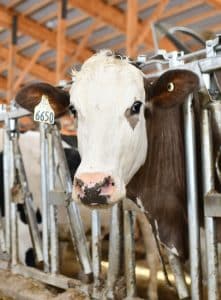 something that carries a different kind of responsibility.
“I think at the end of the day, we all remember what’s important,” Cora said. “We want this farm to succeed and for our family to have a legacy. It takes teamwork to keep this dream alive and make it sustainable for our generation and future generations.”
That sense of purpose remains steady, even as roles shift. The future of the farm isn’t defined by a single plan, but shaped by the same approach that built it, step by step.
“The main goal is the next generation,” Tjerk said. Which Ramona is quick to point out doesn’t mean stepping away completely, “He wants to stay involved till his last days.”
Instead, it means continuing to make space for new ideas, new responsibilities and the people who will carry the farm forward.
“You’ve got to train the next generation,” Tjerk said.
A steady foundation
Through every stage of the journey, from starting from scratch, building the farm and now preparing for what comes next, there has been something constant.
“Faith,” Ramona said. “It seems small, but it’s extremely powerful.”
It’s a visible part of the operation with scripture etched on the side of the barn, but it’s also one that shapes how the family approaches both challenges and success. For a farm that has come as far as this one has, that perspective carries weight.
“God pours far more blessings into the farm than what leaves in a milk tank,” she said.
And as De Grins Oer Dairy moves into its next chapter, that belief, built alongside everything else, remains at the center of it all.
This article was originally published in the May/June 2026 issue of the Milk Messenger. Subscribe »