Life rarely follows a linear path. It often seems more like an approach with three steps forward and one step backwards that ends up with you leaving a zigzagging trail behind you. Regardless of the path though, the moments where you change direction are pivotal, and for Cheri Chapin, the recipient of the Excellence in Dairy Promotion award presented by the United Dairy Industry of Michigan, those moments changed her entire life.

“I was raised in the Detroit area. My brother and I both went up to Michigan State University for college and it ended up that my brother and Doug were thrown together as roommates,” Chapin said about meeting her now husband, Doug Chapin, a dairy farmer. “That’s how I met Doug. I never would have met a farmer otherwise. That doesn’t happen in the college of business.”

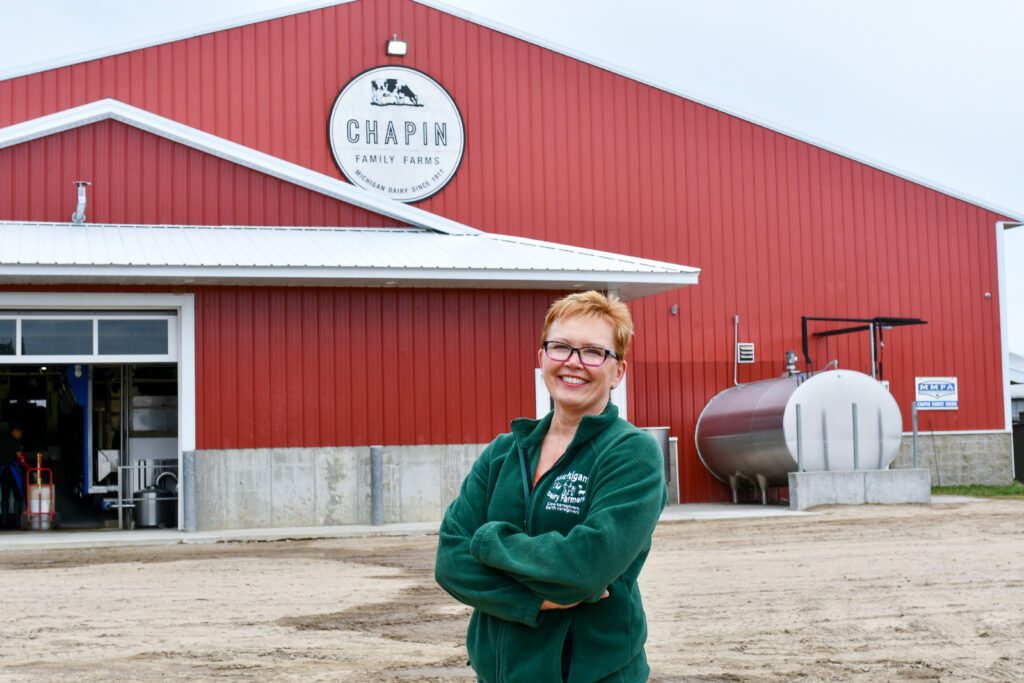
And now here she is, an owner of Chapin Family Farms in Remus, Michigan. Together, along with her husband and current MMPA Board Chairman, Doug Chapin; her son, Sam; and her daughter-in-law, Micah, they milk over 700 cows in a double-18 parlor.

“Who would have thought I’d end up on a dairy farm?” Chapin said. “Honestly even in my wildest dreams, I never would’ve thought.”

A Dream Unimagined

Chapin’s original plans with her business degree were to go into travel, either becoming an interpreter or a travel agent. Now, she’s utilizing that passion to promote dairy on international missions.

“Now I get to travel as much I want to,” Chapin said. “When I was on the National Dairy Board, I got to go to Tokyo and Hong Kong on a dairy mission trip. We were promoting American cheese.”

The mission trips are filled with receptions with key stakeholders, visits to markets that promote dairy products, and trips to area culinary schools. For Chapin, the trip was “six days of non-stop” promoting. “We’d start first thing in the morning and go until whatever reception or dinner was in the evening. It was great.”

“Hong Kong was really cool because that’s the kind of place where I never thought I’d go,” Chapin said. “We went to the top of this huge skyscraper and to look out and see nothing but people and realize how dense their population is, it was very overwhelming to think of how many people they have to feed and how American dairy can be a part of that.”

For Chapin though, her initial interest in promoting dairy and seeing it as a solution to markets hungry for dairy, like what she experienced in Hong Kong, began on her own farm with MMPA’s Dairy Communicator program.

The World of Dairy Promotion

“Doug was an officer for the Alma Local and they had to put someone’s name down on the ballot as Dairy Communicator,” Chapin said. “They wanted to add one more name, so he said, ‘I put your name down.’ And I said, ‘Oh really? What do I have to do?’”
From there, Chapin jumped headfirst into the world of dairy promotion, realizing that she had the background to make a significant difference.

“Because I didn’t have a farm background, I was aware of misconceptions that the general public has, and I thought it was important that we get the right story out,” Chapin said. “I knew what people wanted to know. I knew what kind of questions they had. For example, how many teats does a cow have? Do they all have the same? You know, it sounds like a stupid question, but it’s not. There are no dumb questions.”
Seeing things through consumers’ eyes, Chapin and her sister-in-law began working with schools to do farm tours.

Her sister-in-law would do an ag in the classroom presentation and then Chapin would help her conduct the farm tour.

“We formulated our own stations for the farm tours,” Chapin said. “We had a show cow that we’d bring out so the kids could come up close and touch, we’d have cows in the parlor so that they could actually strip a cow out, and then at the end of the tour everybody got an ice cream bar.”

Their farm tours made a lasting difference in their community. “I’ll talk to people who are adults with their own kids now and say, I still remember going to your farm when I was a kid,” Chapin said. Her promotion work extends beyond farm tours as well, including donating milk to local 5Ks, organizing grocery store dairy sampling and more.
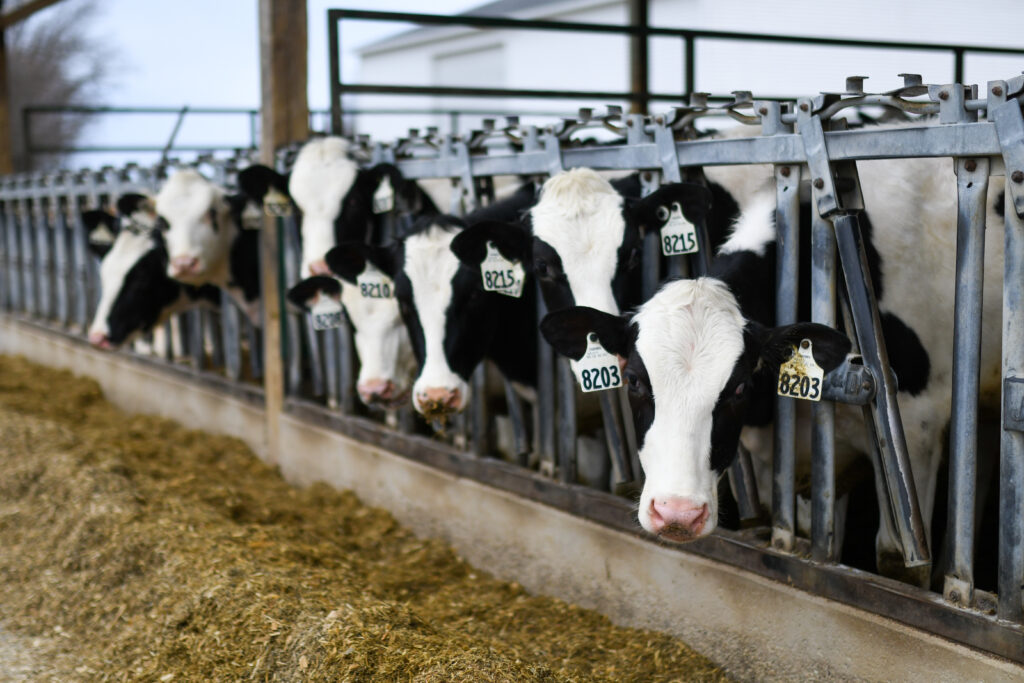
A Story to Tell

For Chapin, every moment can be used to promote dairy. When Chapin Family Farm was hit with a tornado last summer that destroyed a barn and injured animals, she used the commotion from the press to make lasting relationships with news reporters. Those relationships have since made her their contact of choice when it comes to any dairy related stories, and she ensured that she invited them back out after the barn was rebuilt to help share a positive story about dairy, showcasing recovery from the natural disaster and a dairy farm doing what they do best, caring for animals in the best way possible.

While media attention is something that most farmers shy away from, Chapin embraced it. She went from someone who knew nearly nothing about dairy when she first married Doug, to now promoting it around the world. Her success and aptitude for promoting dairy, wouldn’t have been possible without relying on the advice she had received from others over the years.
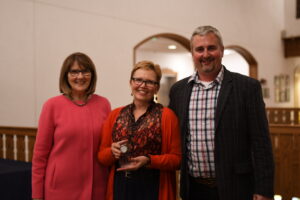
Cheri Chapin (center) with Sharon Toth, past CEO of United Dairy Industry of Michigan (left) and Corby Werth, UDIM president (right).

“I was told right from the get-go, if you ever have a question that you don’t know the answer to, you say, ‘I can’t answer that, but I can find it out for you. Let me get your name and number and I will call the right people.’” Chapin said about the advice she received in the Dairy Diplomat program, a former UDIM program that served as a local outreach arm. “I’ve relied on that a lot of times. I’ve done some research for people when I haven’t known an answer.”

Chapin’s willingness to learn and share what she’s learned with consumers is what earned her the Excellence in Dairy Promotion award announced from the United Dairy Industry of Michigan during the Great Lakes Regional Dairy Conference in early 2022.

“I enjoy it when I can share information that really surprises people. When you can tell them a fact about dairy and they say, ‘Really? I did not know that.” Chapin said. “That makes it all worthwhile. Dairy has a great story, we just have to share it.”

This article was originally published in the May/June 2022 issue of the Milk MessengerSubscribe »

As long-time members of MMPA, 35- and 50-year members’ experiences overcoming the changes in markets, regulations and leadership within the industry over the past many years serve as evidence that moving forward is possible. The knowledge and wisdom that they share within their community ensures the success of the dairy industry and MMPA for many years to come. Our cooperative wouldn’t be the same today without their presence and leadership. Thank you, 35- and 50-year members for your dedication and service to MMPA.

35 Year Members:

  • Everett William Bone
  • Duane G Cumper
  • John W Cumper
  • Brian Eldred
  • Jack D Fisk
  • Martin C Fox
  • Fred Heinze
  • James A Huggett
  • Peter Kurncz
  • Bruce Litwiller
  • Jane Sias Mamarrow
  • Michael J Rasmussen
  • Gary Schultz
  • Iris R Stout
  • Carol Baker
  • David Klamer
  • Edward Adamic

50 Year Members:

  • Richard Fettig
  • Wayne Hecksel
  • Richard Heyboer
  • Donald Judge
  • Kenneth Van Polen


Donald Judge

Hometown: Shepherd, Michigan
Contract Date: March 1972
Number of Generations on the Farm: 4
Milking Herd Size: 475

How was your farm started?
My dad bought it in 1936. He milked 13 cows by hand for the first two or three years and then got a milk machine and it grew from there.

What do you enjoy most about being a dairy farmer?
The cows and calves.

Where do you think the future of the industry is heading?
Well, it’s pretty decent. It’s a lot of up and down stuff all the time.

How has MMPA helped your farm succeed?
Got a good market for our milk.

What words of wisdom would you like to share with fellow members?
Just keep up the good work.


Dick Fettig

Hometown: Petoskey, Michigan
Contract Date: February 1972
Number of Generations on the Farm: 3
Milking Herd Size: 200

How was your farm started?
My dad started it with a stall barn milking about 30 cows in the 50s.

Where do you think the future of the industry is heading?
Looks like it’s getting bigger and bigger farms.

How has MMPA helped your farm succeed?
The milk truck is there every other day! For a long time, I had a 1,300-gallon tank and I filled it and they came every day for 30 years. I just put a new tank in.

What’s made you remain an MMPA member for so long?
Well I’ve been a delegate for the last 25 years.

What words of wisdom would you like to share with fellow members?
I would say take care of the younger ones because they are the generation that’s coming up. Pass the farms on if you can.

This article was originally published in the May/June 2022 issue of the Milk MessengerSubscribe »

Through navigating challenges in the supply chain to seizing partnership opportunities, the Michigan Milk Producers Association was focused on leading the cooperative through the new landscape of 2021 through the fiscal year. MMPA delegates who gathered for the 106th Annual Delegate Meeting of MMPA on March 24 at the Lansing Center in Lansing, Michigan, learned how MMPA is taking charge of that change for the betterment of all cooperative stakeholders.

MMPA delegates and guests learned how the financial success achieved through 2021 laid the groundwork to drive more change within the industry through 2022 and beyond, which included the acquisition of three new subsidiaries: Superior Dairy, Creative Edge and LEL Logistics. The new combined organization creates a manufacturing and innovation campus with four facilities in Michigan, Ohio and Indiana and will provide a greater focus on go-to market strategies.

2021 was full of change—for our communities, our consumers and our cooperative. MMPA delegates gathered to conduct business during the Annual Delegate Meeting to take charge of that change for the betterment of all cooperative stakeholders.

MILESTONE MEMBERS, MARTIN FOX (L) AND MICHAEL RASMUSSEN (R), WERE RECOGNIZED FOR THEIR 35-YEARS OF MEMBERSHIP WITH MMPA AND SHARED THEIR WISDOM AND INDUSTRY INSIGHT WITH MMPA DELEGATES.

Milestone Members

During the Annual Meeting, MMPA members reaching 35 and 50 years of membership were recognized.

35-Year Members:

  • Everett W. Bone, Frankenmuth Local, District 7
  • Duane G. Cumper, Mid-Sanilac Local, District 8
  • John W. Cumper, Mid-Sanilac Local, District 8
  • Brian Eldred, Alma Local, District 5
  • Jack Fisk, Grand Rapids Local, District 3
  • Martin C. Fox, Clare-Mt Pleasant Local, District 7
  • Fred Heinze, Mid-Michigan Local, District 6
  • James A. Huggett, Barry-Eaton Local, District 2
  • Peter Kurncz, Mid-Michigan Local, District 6
  • Bruce Litwiller, Alma Local, District 5
  • Jane Sias Mamarow, Saline-Ann Arbor Local, District 1
  • Michael J. Rasmussen, Alma Local, District 5
  • Gary Schultz, Mid-Sanilac Local, District 8
  • Iris R. Stout, Adrian Local, District 1
  • Carol Baker, Hillsdale-Litchfield Local, District 1
  • David Klamer, Grand Rapids Local, District 3

50-Year Members:

  • Richard Fettig, Upstate Local, District 4
  • Wayne Hecksel, Muskegon Local, District 3
  • Richard Heyboer, Lansing Local, District 2
  • Donald Judge, Alma Local, District 5
  • Kenneth Van Polen, Evart Local, District 5


MMPA Annual Meeting 2022

Joe Diglio, MMPA President & CEO
MMPA PRESIDENT AND CEO JOE DIGLIO DISCUSSED HOW MMPA IS TAKING CHARGE OF CHANGE THROUGH THE ACQUISITION OF SUPERIOR DAIRY, CONTINUOUSLY ASSESSING NEW BUSINESS OPPORTUNITIES AND REMAINING ALIGNED IN PURSUING A VISION.
« of 7 »

MMPA Annual Report: 2021 in Review

Heritage Ridge Creamery Cheese Places in National Championship Cheese Contest

Colby-jack and Pepper-jack cheese produced under the Heritage Ridge Creamery brand at Michigan Milk Producer Associations’ Middlebury, Indiana, cheese plant snagged two third-place awards in the National Milk Producers Federation cheese contest.

MMPA Milk Production Increases

MMPA milk production in fiscal year 2021 increased 3.24 percent compared to the prior fiscal year, with the later part of the fiscal year showing small growth rates.

MMPA Donates Milk to Support Benton Harbor Residents

MMPA partnered with Kroger Michigan Dairy, the United Dairy Industry of Michigan and the Food Bank Council of Michigan to donate milk to the residents of Benton Harbor, Michigan to help in their efforts to combat lead.

MMPA Dairy Care Academy Launched On-Demand Training

Dairy Care Academy, a free MMPA employee training program, launched an online training platform available on-demand at any time.

MMPA Butter Earns National Recognition

In the World Dairy Expo Championship Dairy Product Contest, MMPA won first place in unsalted butter from the Ovid, Michigan plant, while butter from the Constantine, Michigan plant earned second place for salted butter.

This article was originally published in the March/April 2022 issue of the Milk MessengerSubscribe »

By Doug Chapin, MMPA Board Chairman

We have several unknowns in the marketplace today. We’re still facing supply chain and logistic issues from the COVID-19 pandemic, and now are dealing with inflation and the conflict in Eastern Europe. All of these cause worry and concern, but I think we should take a minute and acknowledge the strong position that dairy is in today.

Here, within the U.S., the average person consumed 655 pounds of dairy products. That is a 22 percent improvement since 1975, and an all-time high. Our consumers may have changed the products that drive that consumption, but our dairy products are desired and sought out by our customers, who recognize the nutrition, taste and value of dairy products. We are a staple of almost every home in America.

We also experienced a record year in exports by exporting over 17 percent of the milk we produce. We set a record in both value and volume of dairy leaving the U.S. The world also recognizes and desires the nutrition, taste and value that United States dairy can provide.

This progress is a result of taking charge of change within the industry. The National Milk Producers Federation (NMPF) is heading up efforts to make a positive change in their approach to the Federal Milk Marketing Order (FMMO). They are not content to just tweak it but want to make changes that set us up to move forward in the coming years. NMPF is committed to a plan that works for producers and it is important that the industry goes forward together. We cannot allow the industry to become divided by regional issues. We must be one voice to accomplish the modernization of the FMMO.

An area where your association has taken charge of change is in the purchase of Superior Dairy on December 31, 2021. The acquisition was the culmination of years of working together. Superior’s management team and MMPA’s board of directors met several times over the preceding years. After months of discussion, the path forward was clear. Everyone from our board of directors and our management team to Superior’s management team and ownership, was aligned on the acquisition of LEL and their three subsidiaries: Superior Dairy, LEL Logistics and Creative Edge.

Today, we can use our combined strengths of innovation, processing, marketing, management and a premium milk supply not only to better serve customers but also bring value to all of our member owners. With the purchase completed and behind us, we are looking to the challenges ahead of us. The alignment that all parties had at the purchase, was based on the opportunities in front of us.

I know 2021 was a year of tight margins and I know the dairy markets have been difficult the last several years. I’m not going to deny that we had challenges in the past, that we have challenges yet today and we will have challenges facing us tomorrow. I just hope that as dairy producers, we can take some time to recognize that today we have record prices, record exports and record per capita consumption here in the U.S. We need to relish in that success knowing that the market doesn’t change the focus of your board of directors or management team. We continue to search for opportunities to increase the value of our milk and grow and strengthen the co-op. We are always looking at ways to take charge of change.

This article was originally published in the March/April 2022 issue of the Milk MessengerSubscribe »

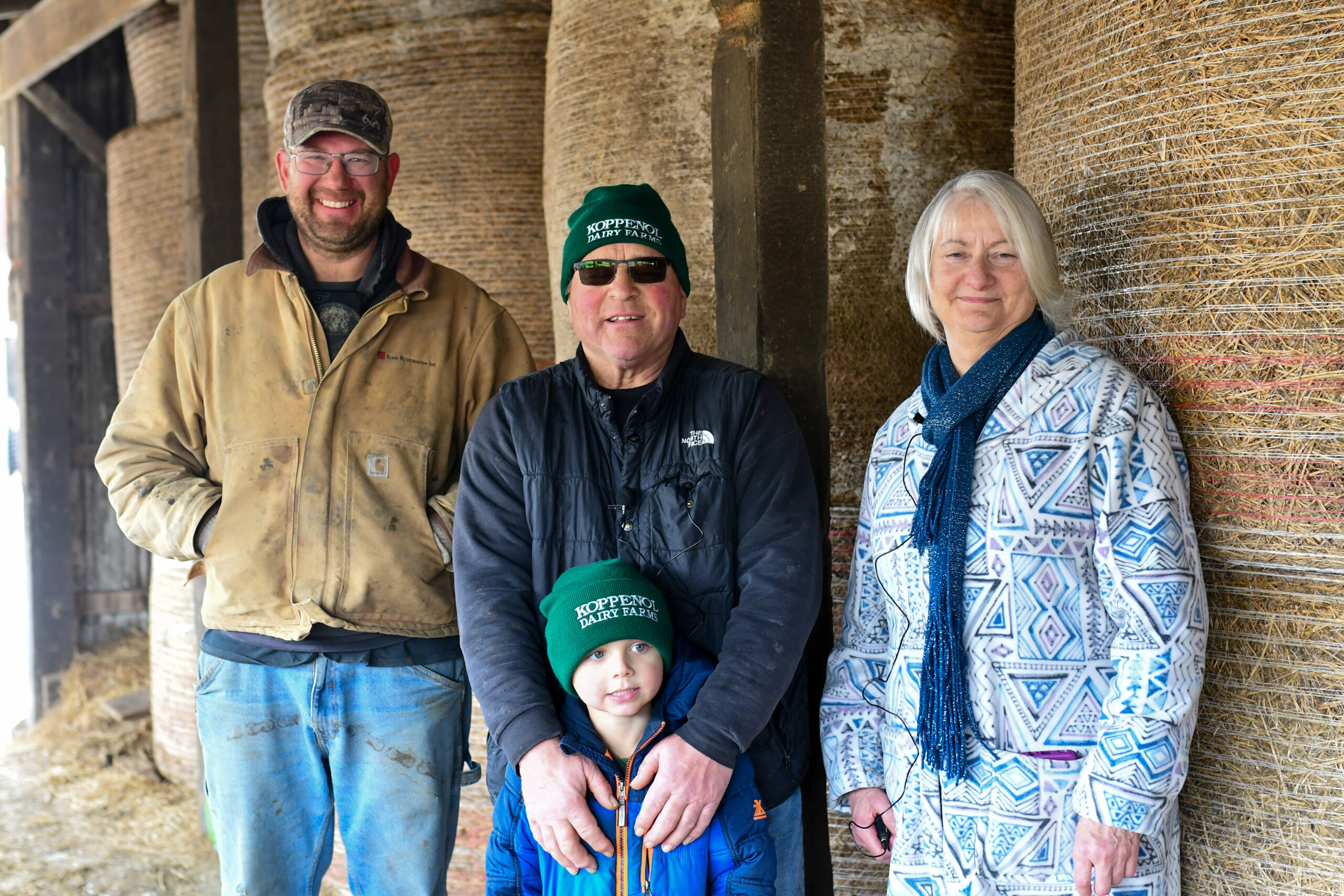
Koppenol Dairy Farms’ down to earth attitude and dedication to quality milk earned them the MMPA Top Quality Award in 2022.

There is no one size fits all approach when it comes to farming. There isn’t a guaranteed route to success. There isn’t a single practice that can bring you to the top of the ranks for milk quality. It all comes down to what fits you and your operation. As a farm who chases quality milk, and this year’s MMPA Top Quality Award Winners, the Koppenol family may know that best.

“Every farmer has his own practices,” Al Koppenol said. “When looking around, I am amazed that somebody can skip certain steps and still do a great job. Farming is a unique business because of that.”

Despite the differences, Al, along with his wife Deb, daughter Robin and farmhand Ken Raterink, know what works on their farm in Coopersville, Michigan. This past year, their herd produced the highest quality milk of Michigan Milk Producers Association with an average somatic cell count of 41,000, earning the the MMPA Top Quality Award.

“Like I said, everything doesn’t work on my farm that seems to work on the neighbors, but I find out what works and then I go with it,” Al said.

For the Koppenols, a major key to their success is enjoying their work and relying on family. With three children of their own and 10 grandchildren, hands are plentiful on the farm and farming is a family affair.

“For some of the grandkids, farming is in their blood,” Al said. “The boys will take and windrow sand. I don’t know if they’ll ever farm, but it is neat to see that they have picked up something from that. And all of them have helped us somewhat, somewhere, along the way.”

In addition to the Koppenol’s focus on family, is their reliance on faith and prayer to face the challenges that are unique to farming.

“The Lord is a big part in how the weather conducts itself for us,” Al recognizes. “If we don’t get the crops in on time or don’t get the rain we need, every year is a unique year.”

Despite the uniqueness, the Koppenols do have a couple tried and true practices that they rely on to produce quality milk. Al has two secrets to success. First, “take advice from different sources and try to be open-minded.” And second, “try to enjoy your job and by enjoying your job, you will do a better job.”

Making Proactive Choices

Al’s focus on enjoying his job lends to making proactive decisions to ensure the health and safety of his herd and employees. Happy cows and happy employees are two fundamentals for the Koppenols, and really every dairy farmer, to maximize the enjoyment they get from a job that can be difficult at times.

“I want cows that can be milked by somebody else and they’ll be done right. We also want them to be able to adapt and have sound feet,” Al said. “If they have an issue this year, they’ll have it next year.”

For example, a cow that’s slow to milk out has a higher risk of developing mastitis, an infection in the udder, and Al and his team proactively prevent problems before they happen. The Koppenols rely on a genetic servicer that matches their cows with bulls that can bring out desired traits, helping guarantee that their herd is
“an honor and joy to milk.”

Finding Joy in the Process

Finding joy in the process is something every Koppenol involved in the farm has in their blood.

“When I was a kid, I would go out in the barn and I’d feed this cow a flat of hay and I’d sit there and watch her eat it. And I look back and it’s just part of me,” Al said. “I can’t tell one car from another, but I can tell my cows from the other.”

This passion for the industry and the work he does is one of the many reasons Al cites for the Koppenols receiving the prestigious award twice in the past decade. First in 2016, and now again in 2021.

“If you can enjoy it, then the rest comes too,” Al said. “I look back and I produce more milk in one day than my dad probably did in a week and maybe even longer.” And Deb is quick to interject, “And the quality can be good too!”

With their extensive history in dairying stretching three generations in the Coopersville area, the Koppenols recognize the changing times and the effect it has had on milk quality, all indicating the continued improvement in the years to come.

“If I look at somatic cell counts 30 years ago, I wouldn’t have believed that MMPA as an organization could have them down where they are, but when I look back at what I’ve done versus where my dad was, we have come a long way,” Al said. “A lot has gone in to get the somatic cell counts down and a lot will go into getting any other problems solved, but it will take tiny steps.”

Recognizing the challenges that are ahead in the industry fuels the Koppenols even more when it comes to producing quality milk.

“With all the different types of milk that they’re trying to come up with, we have to do a good job,” Al said. And with a laugh, “I don’t think almond milk has a high somatic cell count.”

With the challenges ahead, an ever- volatile market and strong legislative headwinds, Al shares this advice, “pay attention to everything you do, try to be consistent and pray.”

For those farmers looking to make a difference in their milk quality, “don’t expect it to jump from 300,000 to 50,000 in one night, because it’s not going to. It’s a slow process. You have to work at it. But, it can be done.”

This article was originally published in the March/April 2022 issue of the Milk MessengerSubscribe »

From Somatic Cell Counts (SCC) to bacteria counts to component testing, the multitude of tests to be performed on milk samples seem to be endless. At times, SCC may seem like the end-all be-all for milk quality, yet there are many more tests used to determine quality and the pay price on your milk check. Bacteria counts—on raw, pre-incubated, and lab pasteurized milk—are tests performed by the Novi laboratory to help determine milk quality. Here’s what you need to know about these bacteria counts, what they mean and how you can improve your results:

Raw Bacteria Count – RBC

Overview: RBC is also sometimes referred to as PLC or official. Prior to testing, milk samples are maintained at 32 to 40 degrees Fahrenheit and then tested on the BactoScan. The BactoScan is an instrument that electronically measures the bacteria levels in milk.

Testing frequency: Once per month minimum, tested more frequently by request.

Premiums: Premium of 5 cents per cwt. is added if raw result is equal to or below 10,000 Colony Forming Units (cfu) per millimeter (mL). There will be a deduction of 10 cents per cwt. for a raw result greater than 100,000 cfu/mL. For more information on premiums, see page 33. The required test performed each month is also a regulatory test. The bacteria count for each producer is shared with the Michigan Department of Agriculture and Rural Development as a requirement of holding a Grade A permit. It is illegal to sell milk with a RBC greater than 100,000 cfu/mL.

Ways to improve results on the farm: High RBC results can be related to poor cooling in the bulk tank; warmer temperatures allow bacteria to multiply faster than cooler temperatures. Dirty milking equipment can also impact these counts. It is also important to ensure udder prep is satisfactory. On rare occasions, a cow can shed enough bacteria in her milk to elevate this count, these cows can be identified by a high SCC.

Excellent Good Warning Action Needed
1,000-5,000 cfu/mL 5,000-10,000 cfu/mL 10,000-50,000 cfu/mL 50,000 cfu/mL and above

Pre-Incubated Count – PIC

Overview: To perform this test, the milk sample is pre-incubated at 55 degrees Fahrenheit for 18 hours prior to testing it on the BactoScan. The 55 degrees Fahrenheit incubation is an optimal growth temperature for psychrotrophic (cold-loving) bacteria. An elevated result could indicate the presence of a spoilage organism.

Testing frequency: Once per month minimum, tested more frequently by request.

Premiums: Premium of 5 cents per cwt. is added if PI result is equal to or below 20,000 cfu/mL.

Ways to improve results on the farm: Hot water used for Clean In Place (CIP) milking equipment should be 160-180 degrees Fahrenheit at the faucet, as milking equipment cleanliness is critical to achieving a good score on this test. Key places to check for cleanliness of milking equipment include: receiver, milking claws, inflations, swingline and bulk tank. The bulk tank should also be cooled to less than 40 degrees Fahrenheit within one hour of the end of milking. Elevated temperatures allow bacteria to multiply more quickly. Poor udder prep can elevate bacteria levels as well, be sure to check the filter sock after each milking shift, a clean sock with little debris will reflect adequate udder prep.

Excellent Good Warning Action Needed
1,000-5,000 cfu/mL 5,000-20,000 cfu/mL 20,000-100,000 cfu/mL 100,000 cfu/mL and above

Lab Pasteurized Counts – LPC

Overview: The LPC is the number of bacteria per ml of milk which survive laboratory pasteurization at 143 degrees Fahrenheit for 30 minutes. Thermoduric bacteria can survive pasteurization because they have developed mechanisms to resist heat and other lethal agents such as sanitizers. Most of these bacteria have an ability to create a protective shell called a spore making it very tough to kill. When looking at the results in the mailer or on the MMPA website, this test is referred to as “PAST.”

Testing frequency: LPC tests are performed by request of the member. Several customers also request/require LPC results on all members serving their facility.

Premiums: LPC is not a regulatory test and there is currently no premium for LPC results.

Ways to improve score on the farm: Prevent higher LPC results by checking the rubber components of equipment, such as milk hoses and line gaskets, for cracks and cleanliness. Any leaky gaskets should be replaced immediately. As rubber parts age, cracks start to form and bacteria collects in those cracks. Overall cleanliness of equipment can also improve results. Extended milking time of eight hours or more can lead to higher LPC results because the longer milking period creates a warmer environment for bacteria to multiply quickly. It is important to change the filter sock every four to five hours and perform at least two complete washes every 24 hours.

Excellent Good Warning Action Needed
less than 10-30 cfu/mL 30-50 cfu/mL 50-200 cfu/mL 200 cfu/mL and above


This article was originally published in the January/February 2022 issue of the Milk MessengerSubscribe »

By Tom Downey, MMPA Chief Financial Officer
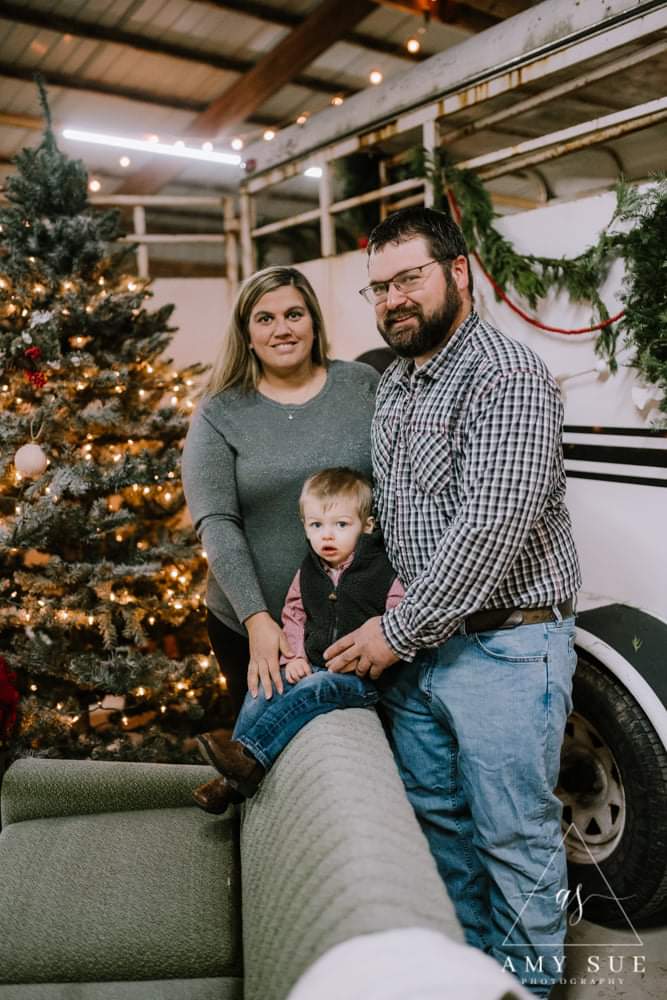
In 2021, MMPA continued strengthening our overall financial position in a variety of ways, an accomplishment the entire MMPA staff contributed to. Though I recently joined MMPA as chief financial officer earlier this year, in this time, I have enjoyed working alongside MMPA’s staff, board of directors and independent auditors to ensure your cooperative is in good financial health.

In the past year, we marketed 4.7 billion pounds of milk, a 3 percent increase year-over-year. Despite the growth in volume, we were able to reduce our controllable costs relative to last year by undertaking multiple expense rationalization exercises. These expense reduction efforts were accomplished via teaming across multiple MMPA departments and represent a significant win given the current inflationary environment.

Looking towards our balance sheet, we have reduced our debt to the lowest level in the past 10 years while also continuing to increase our equity position. Driven by the health of our balance sheet, MMPA made a strategic decision to reduce our net savings in 2021 relative to historical targets which allowed MMPA to return more cash to our members.

MMPA’s long-term debt to equity ratio, an industry standard used by lenders to determine the risk associated with lending to an entity, is extremely strong relative to other market participants. You can think of this value as how much of the co-op’s assets are owned by our members, versus how much is owned by our lenders. Our current debt to equity ratio poises us for future growth, ensuring that we’ll be able to have access to capital markets to facilitate growth opportunities.

As a result of reducing controllable costs and strengthening our balance sheet, the market adjustment was reduced compared to the previous fiscal year. MMPA also paid $23.6 million in producer incentives, returned patronage of $1.4 million to members and distributed 2011 equity of $4.2 million.

During fiscal year 2021, we saw a tightening of the milk market relative to recent historical levels. A number of market dynamics contributed to this tightening (labor shortages, the Glanbia plant reaching full capacity, etc.), but the reduction in available supply has allowed additional plant capacity providing greater flexibility to service our customers.

Overall, MMPA is in a solid financial position that sets us up for future success. Our entire team will continue to take deliberate and measured actions to ensure that we continue to market our members milk to the greatest advantage possible. Thank you to all MMPA members for the opportunity to work for and serve you. I’m excited for what the future has in store.

This article was originally published in the January/February 2022 issue of the Milk MessengerSubscribe »

Ryan and Katie Schumacher

Hometown: Kingston, MI
Local: Deford/Clifford-Mayville
District: 7

Ryan and Katie Schumacher are not afraid to jump in and take charge in leadership positions within their community. Ryan and Katie are active in Bay County Farm Bureau and their local counties’ 4-H programs. They are also parents to toddler Trey, and soon-to-be parents to a new baby Schumacher due March 2022! The future of their farm keeps them on their toes and gives them long-term perspective on the decisions they make today.

Q&A:

Q: What do you love about being a farmer?
Being able to supply quality, nutritional food for my community.

Q: What’s the key to running a dairy farm?
Flexibility.

Q: What’s your favorite chore?
Feeding calves. Who doesn’t like baby calves?

Q: How can someone easily improve their milk quality?
Knowing their herd. By knowing your herd, you can improve genetics and improve overall herd health.

Q: Describe your farm management style in three words.
Improvement never stops.

Q: If you were given $1 million to invest in your farm, what would you do with it?
Improve heifer facilities and our feeding program.

Q: What does your farm look like in 30 years?
Hopefully helping and overseeing the next generation take over the farm and guiding them in managing a successful farm that my parents put their heart and soul into starting.

On Their Farm

The Schumachers know what it takes to implement change on a dairy farm all for the sake of better milk quality. They started milking in their family’s stantion barn and recently transitioned to two robots on their farm in Kingston, Michigan. This change, paired with upgrading their production record system and using the Central Star breeding program has set them up for greater genetic potential and better milk quality.

This article was originally published in the January/February 2022 issue of the Milk MessengerSubscribe »

As we continue to face a labor shortage across the country, it’s arguably more crucial than ever before for farms to invest in their employees. An easy way to help retain the employees your farm currently has is to ensure that in addition to being respected and valued, they are properly trained in how to do their everyday tasks with opportunities to continuously learn and improve.

MMPA offers Dairy Care Academy, a free animal care training program for farm owners and employees. Designed to help farms meet the Farmers Assuring Responsible Management (FARM) program training requirements, it also educates employees and improves on-farm performance.

In-Person Training

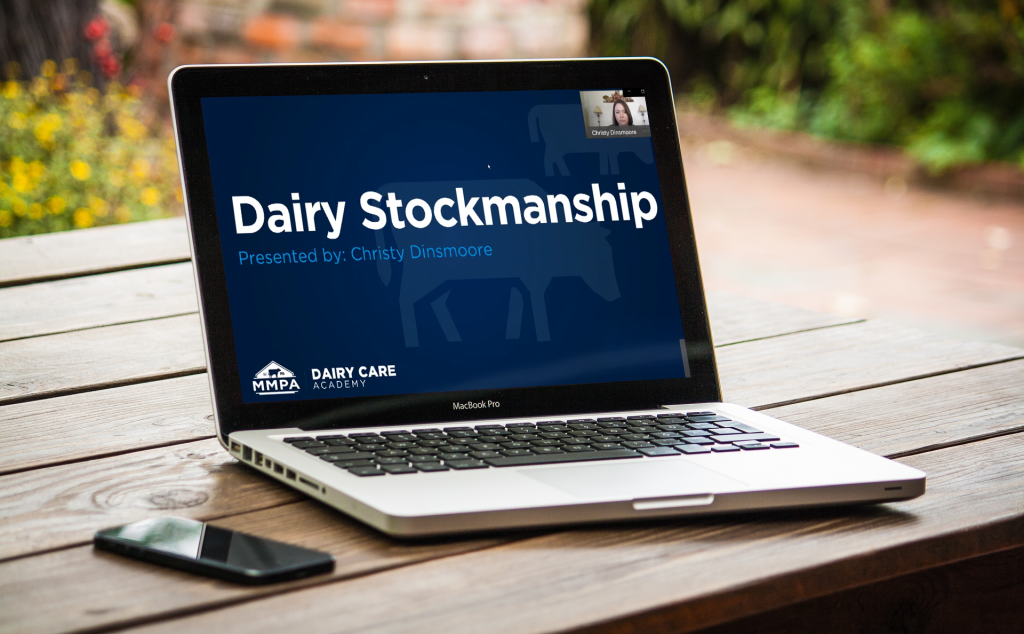
Throughout the month of February, MMPA members can send employees or family members to in-person Dairy Care Academy trainings in Lansing, Michigan on February 15 and in Clare, Michigan on February 23. The interactive, day-long training is broken into three sessions: milking practices, dairy stockmanship and calf care.

During the event, participants will watch demonstrations, participate in hands-on activities and receive a free lunch. Participants in attendance go back to the farm with a printed certificate of completion and each member farm will receive a list of their employees who attended to meet FARM program training documentation needs.

Registration is required to attend and can be completed at https://bit.ly/DCARegistration22. To learn more, visit mimilk.com/DCA or contact your member representative.

Virtual Training

For those who are unable to join the in-person sessions, members and employees can enroll in a virtual Dairy Care Academy training scheduled for February 24. This training opportunity is a virtual replication of traditional Dairy Care Academy programming that will include live training covering the traditional topics of milking practices, dairy stockmanship and calf care.

Just like during an in-person training, participants can ask questions, interact with speakers and will receive a certificate of completion. Each member farm will also receive a list of their employees who attended to meet FARM program training documentation needs.

Registration is required to attend and can be completed at https://bit.ly/DCARegistration22. To learn more, visit mimilk.com/DCA or contact your member representative.

Online, On-Demand Training

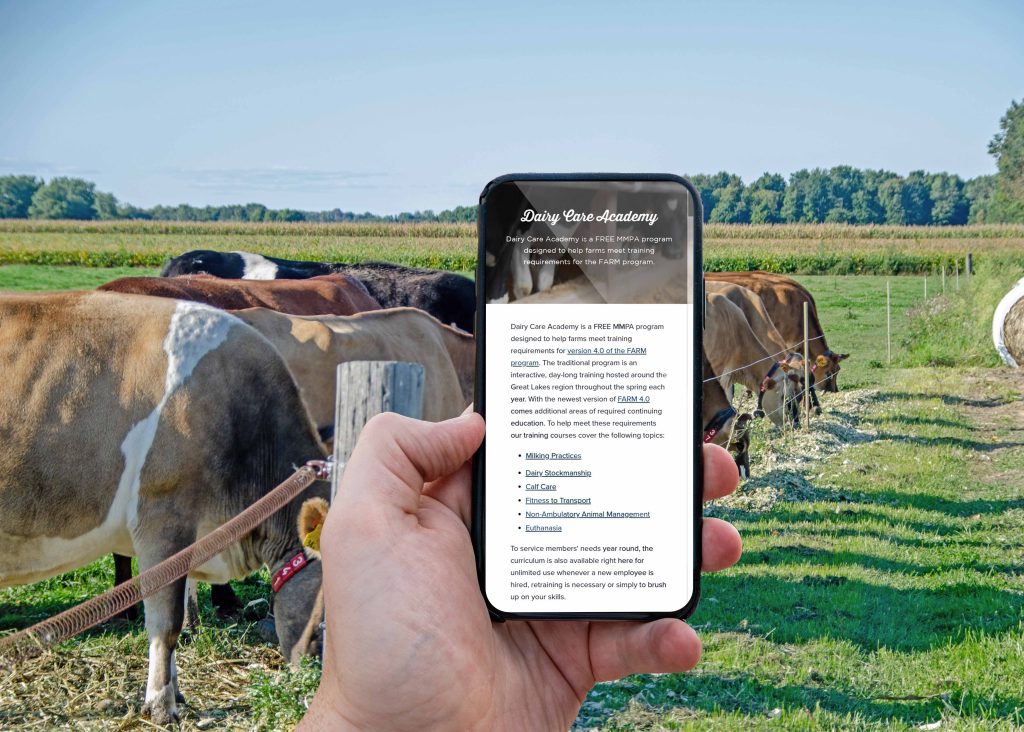
MMPA members also continue to have access to an on-demand, FARM program compliant online training platform that covers the traditional Dairy Care Academy topics of milking practices, calf management and dairy stockmanship along with the latest FARM program required training areas of euthanasia, non-ambulatory animal management and fitness to transport.

The six different topics are complete courses with videos and resources compiled by the MMPA Dairy Care Academy team from reputable sources, making it easy for members and farm employees to complete the course relevant to their role on the farm, take a quiz covering what they have learned and receive a printable certificate if they score 80 percent or better on the quiz.

This training resource is available year-round for unlimited use whenever a new employee is hired, retraining is necessary or simply to brush up on your skills. To access the online platform, visit the Member Portal and select the Dairy Care Academy link on the homepage or ask your member representative for details.

Successful dairy operations rely on quality employee training to keep all animal caretakers on task and performing best practices. Dairy Care Academy teaches farm employees how to provide excellent care to animals, preventing cutting corners and improving adherence to best practices. Farms that benefit the most from training are those that commit to incorporating best procedures taught to employees on their farm. Setting expectations and evaluating adherence to procedures long-term are surefire ways to build a successful farm team.

This article was originally published in the January/February 2022 issue of the Milk MessengerSubscribe »

Superior Dairy brings 100 years of entrepreneurship to MMPA through recent acquisition.

Just southwest of Canton, Ohio, one unassuming plant has sparked change within the dairy industry. Known for the unique cubic shaped milk gallons, Superior Dairy has taken what we know about traditional dairy products and traditional packaging and transformed them to build greater opportunities. And as of the start of 2022, these innovations, this business and these opportunities are now part of the MMPA family. 

Building on a partnership formed seven years ago, Superior Dairy, along with two other LEL Operating Company subsidiaries (Creative Edge Design Group, Ltd., and LEL Logistics, Inc.), recently became wholly owned subsidiaries of MMPA.

“Our intent is for this acquisition to drive change and bring greater value to member-owners. Bringing Superior Dairy into the MMPA family will be a continuation of the course we have charted toward business development and innovation,” MMPA President and CEO Joe Diglio said.

With drive and determination as signature attributes for Superior Dairy, the acquisition will further inject this change into MMPA.
“When most industries start to change, others will hit that little bump and stop. We find a way to continue to change, grow and drive. That’s the best part about this whole company,” Greg Soehnlen, who served as president and CEO of LEL Operating Company prior to the acquisition, said. With LEL Operating Company subsidiaries now under the MMPA umbrella, Greg Soehnlen has joined the MMPA leadership team as Chief Operating and Business Development Officer.

A Century of Entrepreneurship

Founded in 1922, Superior Dairy will turn 100 years old in 2022 and was up until recently a family-owned business. Greg Soehnlen’s father, Dan, was Board Chairman of LEL Operating Company and is part of the third generation leading the business. He attributes the growth and success of Superior Dairy to the family’s entrepreneurial spirit.

“Our business comes from a very entrepreneurial background. Back in the early part of the last century, my grandfather came over from Alsace- Lorraine in France to start making brandy,” Dan Soehnlen said.

Then prohibition came and the brandy- making business ground to a halt. After watching his business go down the drain, Dan Soehnle’s grandfather, Joseph, made a crucial pivot to dairy.

“In order to feed his family, he made a business deal with local farmers and got himself a small pasteurizer and small set of bottles and horse and wagon. That was the start of Superior Dairy,” Dan Soehnlen said.

Through most of the twentieth century, Superior Dairy operated as a traditional dairy servicing Northeast Ohio. They produced the standard milk gallons, half gallons and ice cream and novelty products. Then in 2002, Superior Dairy launched their first innovation:
the caseless gallon.

“Being the entrepreneurs we are as a family, we said there needs to be a better way for the industry. And that’s when Greg became heavily involved in the business. We started this inventive business model that has led to a break in success for Superior Dairy,” Dan Soehnlen said.
Greg Soehnlen said the company was faced with competing against much larger companies within the industry and decided to create a new business model. “That’s where we developed caseless shipping and flexible filling, without a milk crate, to ship milk quite a bit further. We expand our territory from the traditional 200-mile radius to a 2,000-mile radius,” he said. “That’s what we’re doing today.”

Today, Superior Dairy products can be found in 44 states and includes gallons and half gallons of milk, buttermilk, sour cream, cottage cheese, ice cream and decorated ice cream cakes. Most of their products are produced as private label, which means they are sold at retail under the brand names of other companies. Even if the name “Superior Dairy” isn’t on the label, their products can be identified with plant code 39-13.

Building Success through Innovation

Greg Soehnlen says they are able to service a large territory and stand out in the marketplace through innovation. With over 45 patents under their name, Superior Dairy had developed unique processes and transformed their manufacturing operations, from the way the bottle is produced to how they fill and palletize.

Creative Edge, another former LEL Operating Company subsidiary joining MMPA, develops and designs the innovations by operating a strategic think tank.

“We’re always looking out one, five and 10 years. We massage that business model through the innovation cycle. We like to have lofty vision about where we want to see the industry go. Then we communicate that vision to our customers, so they see where we’re going,” Greg Soehnlen said.

Brad Parks, president of Creative Edge, says he works with operations, distribution and all functions of the business to execute new innovations for Superior Dairy. “I am charged with taking Greg’s crazy ideas and finding a way to implement them in a way we make money at the end of the day,” Parks said. “We like to work with our customers and really take an idea to market.”

Superior Dairy’s customers are primarily retailers, including membership-only retail warehouses. Greg Soehnlen says their relationships with customers is not a traditional buy-sell relationship. “There’s an element of progressiveness, element of partnership and element of innovation and change we try to bring to the customers,” he said.

A Future with MMPA

Superior Dairy and MMPA forged a strong partnership over nearly seven years of working together. Combining forces with the acquisition will create a larger, stronger organization with a collective team of 625 employees, four manufacturing locations and a united approach to market member milk.

“Throughout our relationship with Superior Dairy, I have worked alongside Greg to develop synergies between our two organizations. Together, we identified that MMPA and Superior Dairy are united on how we want to go to market, our core values are aligned, and we are committed to the same vision,” Diglio said.

Greg Soehnlen says he sees the alignment evident in how the teams of the two organizations have come together. “When you get our senior team and MMPA’s senior team together, you see the mesh and integration. That is one key thing that I was always say is very important for us to continue to drive. The second thing is MMPA’s farm staff and our field staff, our quality department and MMPA’s quality department are very connected and aligned,” he said.

“Blending MMPA leadership with Greg and the team from Superior Dairy will enable MMPA to create new and innovative opportunities for our combined business,” Diglio said.

For Parks, high quality milk continues to be crucial in making it all work. “Everything starts with the milk and the high quality, which MMPA is known for. That’s what attracted us to MMPA was high-quality milk. We like to say we’ve got nothing without milk. We recognize that that as a key thing, that it starts with quality dairy products,” he said.

Looking ahead, Greg Soehnlen is looking forward to bringing in key customers through the combined organization. “We’ll get hot and heavy on customer growth and product growth. We are going to integrate customers to what we know and what MMPA has to offer. In the process
of bringing food from the farm to consumer, we’ll close that loop in a highly powerful way,” he said.

Dan Soehnlen says he see the acquisition as a great opportunity to build on his family’s success. “To be part of MMPA is like the dream of an entrepreneur,” he said. “MMPA is just what this company needs to team up with to be very, very strong. We can be national—not just Michigan and Ohio—national. We’re in 44 states today, there’s no reason we can’t be in 50.”

This article was originally published in the January/February 2022 issue of the Milk MessengerSubscribe »

By John Fritzler, MMPA Director of Logistics and Plant Production Planning

Milk haulers are a crucial link for our dairy supply chain. They connect milk processors and dairy farmers through their essential work every day. Unfortunately, a growing trend pressuring the efficient flow of milk from farm to plant to consumer is the declining number of truck drivers and milk haulers across the country.

Older drivers make up 80 percent of the current commercial driver work force with 57 percent over the age of 45 and 23 percent over the age of 55. As these drivers get ready to move into a well-deserved retirement, there is a smaller pool of younger drivers ready to take their place. Only 20 percent of drivers are under the age of 45. This is not just a U.S. issue; Europe has a similar age breakdown.

Hauling companies often struggle to attract younger workers for several reasons including lifestyle, compensation, and regulatory age restrictions (must be 21+). These days, people have more options for places to work and many blue-collar jobs are in high demand and are competing for workers. Warehousing demand has almost doubled, and e-commerce shopping has more than doubled during the pandemic. These two segments have pulled resources away from commercial driving and has resulted in carriers having high turnover and struggling to fill open positions. For every nine postings, the trucking industry hires one driver, as opposed to the warehousing industry filling two out of every three postings.

The commercial driving industry and carriers can explore many opportunities to attract and retain valuable team members: 1). Increase driver compensation and benefits. 2). Decrease time on the road. 3). Advocate for lower regulated driving age. 4). Improve diversity and reach out to minorities, women and veterans who may be underrepresented. 5). Follow technology improvements including autonomous trucking, and other advancements that may attract workers due to reduced stress and boredom.

What does this mean specifically to the dairy industry?

With greater competition for resources and dairy needing niche drivers (tanker endorsement and milk samplers license) rate increases are likely, and lack of qualified drivers is a risk. There is potential that carriers hoping to retain drivers by being competitive with similar industries may ask for a change in milking times to reduce driver down time.

Milk hauling companies can explore alternative strategies to attract more drivers:

  • Invest in worker safety and quality of life to stand out for job seekers.
  • Establish a career development program and emphasize opportunities for drivers.
  • Provide on-the-job training to minimize the entry barrier of commercial driver’s license (CDL) and milk samplers licensing requirements.

Fortunately, the dairy industry benefits from the community formed between haulers and farmers. Studies have found that more experienced drivers (greater than 5 years) find driving more enjoyable the longer they drive. This is very evident in dairy with the number of experienced drivers. Drivers and dairymen build strong bonds through daily communication and shared respect.

The dairy industry is made strong through the valuable contributions of the people throughout our supply chain. As we look to the future, it is important to focus on supporting current and future milk haulers so that we can continue producing and marketing milk.

This article was originally published in the November/December 2021 issue of the Milk MessengerSubscribe »

Ben Chapin was just child when he first interacted with MMPA. Dragged along with his family to a MMPA Local Association meeting, Chapin listened to former MMPA General Manager Walt Wosje cycle through transparent sheets of complex graphs on an overhead projector.

Though Local Meetings only come around once per year, Chapin was ingrained in MMPA and dairy farming every day. Growing up on an MMPA member farm in Remus, Michigan, Chapin helped out with chores before school and watched his grandpa lead the cooperative as a member of the board of directors.

“I remember MMPA being a big deal at a big time,” Chapin said. “I grew up with MMPA in my blood and dairy farming in my blood.”

Fast forward a couple decades and Chapin is now working for MMPA as manager of field services, where he leads a team of 14 member representatives spread across the Great Lakes region. In recognition of his service to dairy producers, he was recently named the 2021 Michigan Fieldperson of the Year at the Michigan Dairy Industry Conference. The Michigan Dairy Industry Conference is an annual conference for dairy industry and regulatory professionals which features networking, education and award recognition.

After graduating from Northern Michigan University and trying out a career as a hunting guide, Chapin joined MMPA 11 years ago as a member representative.

“My first day was August 16, 2010,” he said. “I guess I have been pretty happy ever since. I get a lot of fulfilment out of it. I enjoy the people I work with, the staff and the ability to have relationships with members. I always remember who I work for and what I’m here for.”

Chapin points to a few mentors who helped him get to where he is today. “I looked up to Jack Stickler, Gerry Volz, Rick Fluegge and Tom Herremans. Those four were key people in my first years. They taught me how to get through challenges and be a better rep.”

In 2014, Chapin was promoted to area supervisor and assumed assumed his current position as manager of field services in 2017. His current role involves overseeing member representatives across the Great Lakes region and ensuring MMPA dairy farms are best equipped to produce high quality milk and provide excellent animal care.

“My job is a supportive role to staff and to help them align where we’re going as a co-op,” he said. He helps with equipment checks, quality issues and provides back up to member representatives as they work with members to improve their farms.

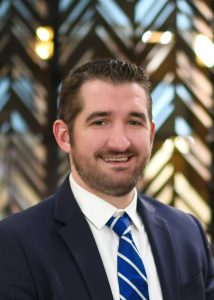
Ben Chapin
Ben Chapin

The day-to-day job varies based on the current needs of MMPA and the members. “I might be working with reps in Alpena one day and then be in Ohio the next. It’s the nature of the job.”

He is also active in the dairy industry through the Michigan Dairy Industry Conference and the National Conference on Interstate Milk Shipments. Chapin stays in tune with the evolving dairy industry and what things may impact dairy producers.

“We see the challenges coming down the road, and do our best to stay out in front of them. Currently, sustainability and dairy farm workforce are big topics,” he said. “Our job is to gain as much knowledge as we can and formulate plans for the membership so we can be a resource. I enjoy working through those challenges. I know these can be difficult topics for members, but we’re all part of a team to help them work through those challenges for the success of the co-op.”

Chapin says his favorite part is the people. “I would not be able to work some place where I’m not in contact with people. I enjoy bringing on new reps, seeing them grow and become comfortable and successful with their work. One of my favorite aspects is to see different regions of our co-op and learn from producers and other dairy professionals.”

Yet what’s the most challenging part of his job? “The people,” Chapin said with a chuckle. “Everyone has different personalities, you need to tune into what drives people—employees or producers—and know the best way to communicate with them. That’s ultimately the most challenging thing.”

MMPA has been entrenched in Chapin’s entire life and he hasn’t shied away from making his own positive impact on the cooperative. “I just enjoy doing what I do and working for the people I work for,” he said. “I want see MMPA successful.”

This article was originally published in the November/December 2021 issue of the Milk MessengerSubscribe »