


Koppenol Dairy Farms’ dedication to routine excellence and passion for producing high-quality milk have been the driving forces behind their success, earning them the MMPA Top Quality Award in 2024.
We all know cows thrive on consistency, and nobody understands that better than Al Koppenol of Coopersville, Michigan, a now three-time MMPA Top Quality Award Winner. Since 1982, Al has maintained the same best practices—ensuring his herd receives the highest level of care day in and day out.
Al was born into farming and has never left. His father bought the farm in 1945 and grew his herd to 45 cows by the time Al graduated high school. “I graduated in 1972’ and then ten years later Deb and I took over the dairy farm. So, I never had an outside job other than on this farm.”
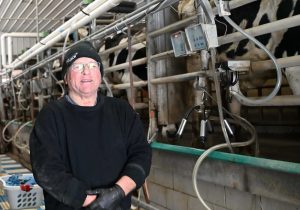 For the Koppenol family, farming is more than a job—it’s a way of life built on hard work and togetherness. Al’s wife, Deb, has long cared for the calves, while their daughter, Robin, assists with milking and has taken over bookkeeping. Longtime farmhand Ken Raterink, who started in high school, has also been a key part of the team. Now, the next generation is helping, with Al’s grandsons working in the parlor.
“It’s nice having my grandkids around,” Al shares. “They all live close by, and some help with milking or will ride along in the tractor. I really enjoy spending this time with them.”
As far as Al’s role, he is up at 2:30 a.m. milking all 200 cows in their 10 stall tandem parlor and then again twelve hours later for the afternoon shift. Being hands on and really knowing his cows is much of what Al attributes to his impressive overall average 48,750 somatic cell count, a common milk quality indicator, in 2024.
“He touches the cows at least once, if not twice, a day seven days a week,” explains Robin. Al adds, “It is something in my blood, my DNA, there are certain people who can tell every car apart from the other, but I can tell my cows from the other.”
A Labor of Love
Since childhood Al has always preferred tending to the cows over spending time in the field. His unwavering dedication to their care is a true reflection of his passion for dairy farming.
“As a kid, I would sit and watch a cow eat, then give her more hay. It was neat, you know? Watching her turn that food into milk, and then she would birth a baby calf—it’s a miracle.”
For the Koppenols, dairy farming is more than a livelihood. Through the challenges and daily demands, they find strength in each other and the values that keep them going.
“It’s a hard job and some days can be monotonous,” Al admits. “That’s why you have to enjoy what you’re doing. If you don’t, you won’t want to come back tomorrow. Making money keeps us going, but money isn’t everything, you have to love the work.”
Despite his dedication, Al doesn’t take full credit for the farm’s success. For the Koppenols, faith is at the core of their journey, providing strength and guidance through the challenges of dairy farming.
“I don’t know if I want to take credit for everything, I feel it’s the Lord’s blessing. Good health has been a real gift, keeping me motivated. And I certainly don’t mind working. I love where I work, I love where I live and sometimes, I even get along with my kids,” Al jokes.
Milk Quality Practices
The Koppenols’ outstanding milk quality isn’t just about what they do, but the consistent routine they follow to achieve it.
“The routine, doing it as close to the same as possible every day and paying attention. When you have to do it seven days a week, sometimes you’d like to cut some corners and I say that we never do,” Al explained.
From birth they focus on herd health. Their calf barn allows Deb to closely monitor calf health and treat any sickness right away.
“The calf barn is nice as it has helped us work towards better health in our youngstock. When we first got married, Deb fed in hutches outside. In the barn Deb feeds in now, it’s as cold as outside, but there’s no wind and it’s a covered building with lighting. It is much easier to walk through the barn and catch a sick calf and treat them quicker than when they were in the hutches.”
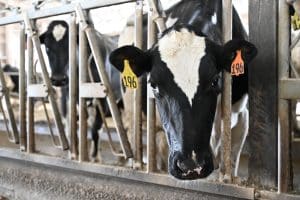
In the freestall barn there are alley scrapers to more frequently clean manure and mattress beds topped with lime and sawdust.
Al explains, “I do not like sand with the machinery, and so that’s why we stayed away from it. Sand is probably your best bedding as far as not passing mastitis along. We’ve had success by maintaining the mats with sawdust. Every day we broom the back third or half of the stall and put a little lime and sawdust down.”
Labor consistency in the parlor has been key to detecting mastitis early.
“We have four milkers, other than myself, that I have provided on-farm training to ensure they can quickly identify signs of mastitis,” states Al. “Having the same team in the parlor, familiar with our cows and knowing what to look for, has made a big difference.”
While his tried-and-true practices are routine now, Al has experimented with many approaches in the past that didn’t work as well. He recognizes that every farm is different and what works on one farm may not work on another.
“Take advice and be open minded,” Al suggests. “What works for me doesn’t always work for the neighbor. That’s the funny thing, farming is unique and individualized.”
This article was originally published in the March/April 2025 issue of the Milk Messenger. Subscribe »